Maudal Musical Machines

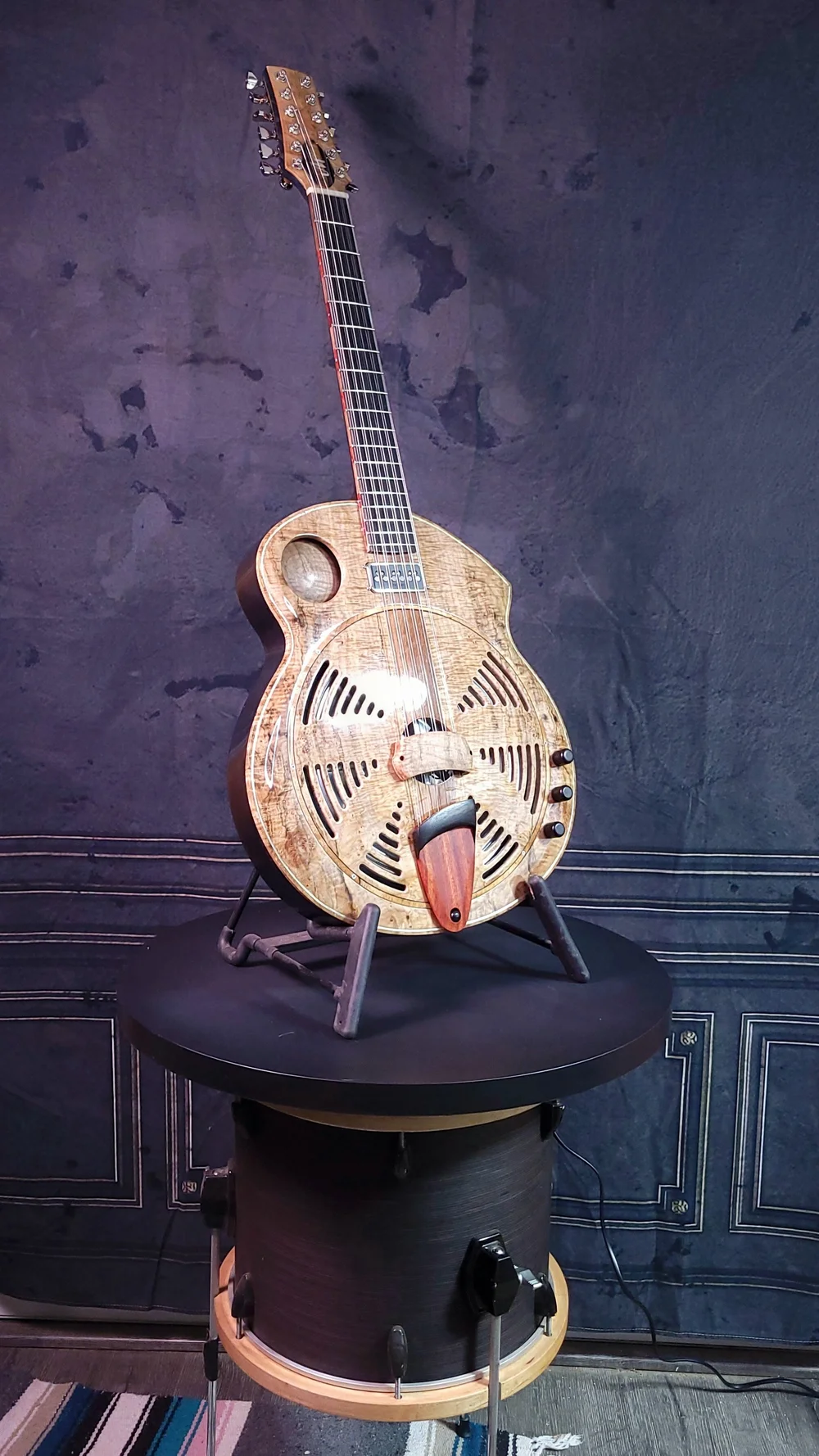
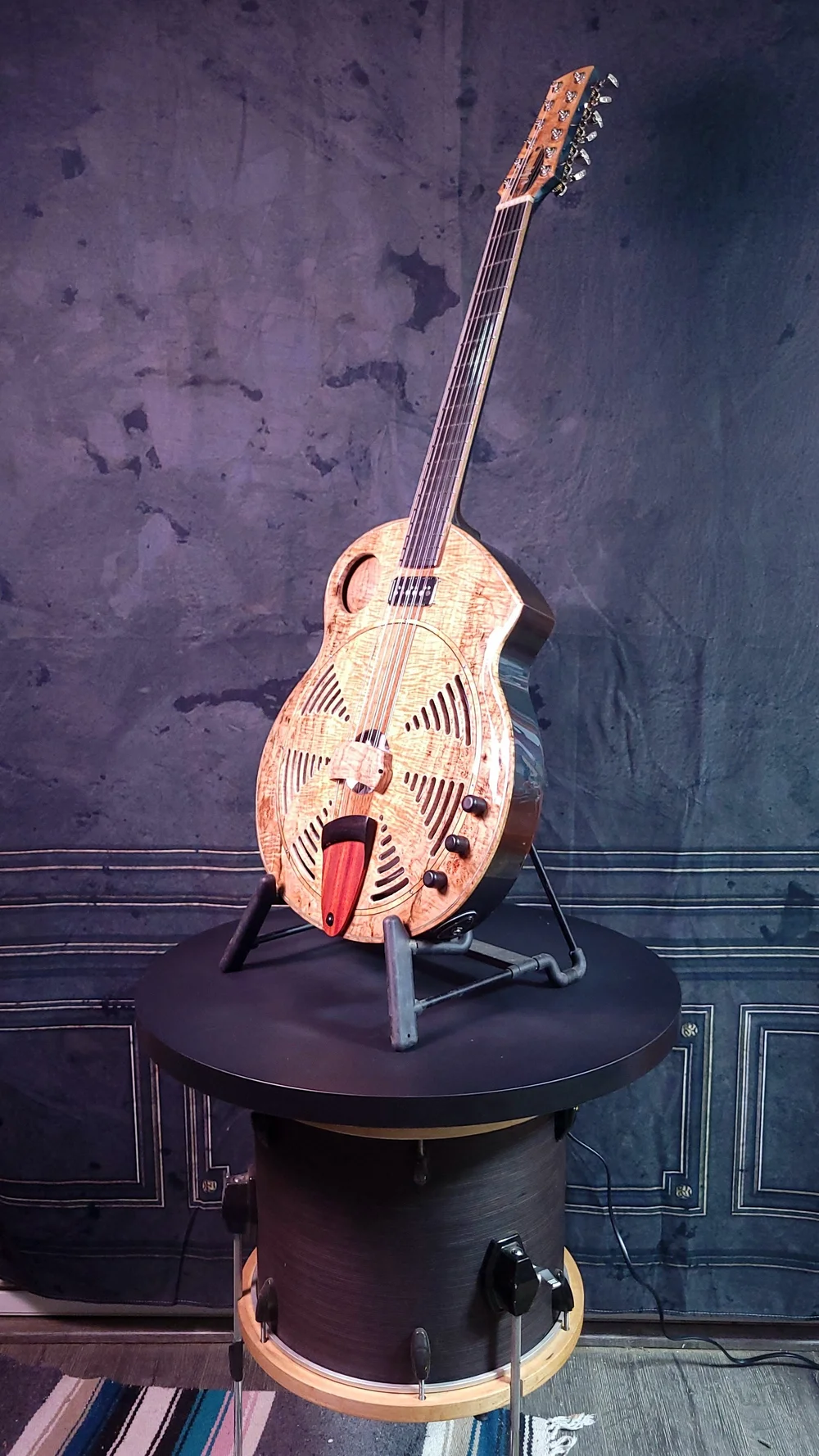
Bullfrog 12

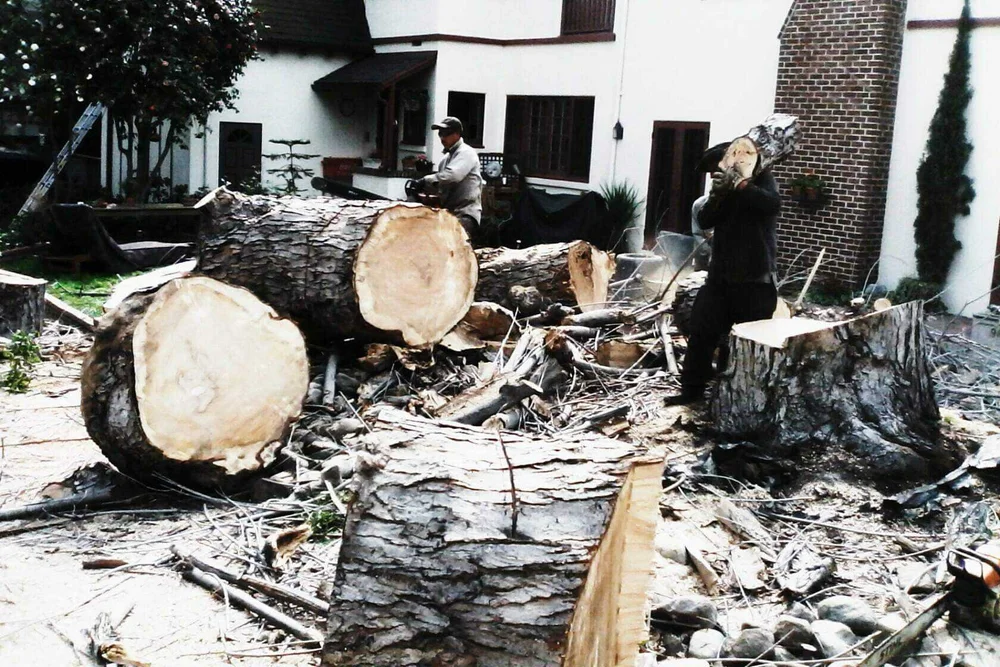
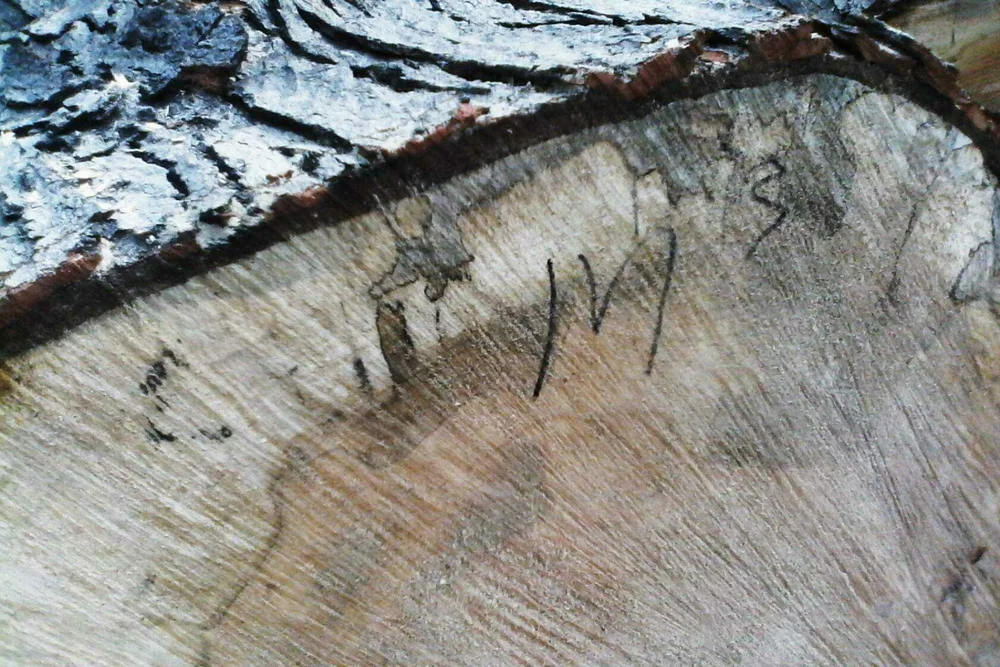
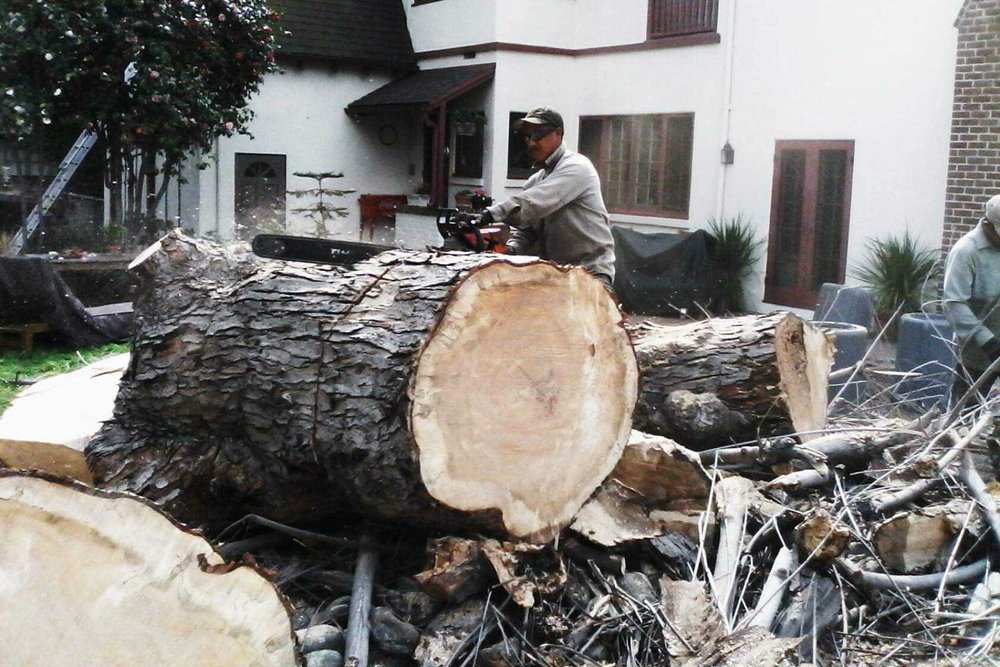
The tree

Silver maple · 11th and Indian Hill, Claremont
Bullfrog 12 Bullfrog 12 Bullfrog 12 Bullfrog 12

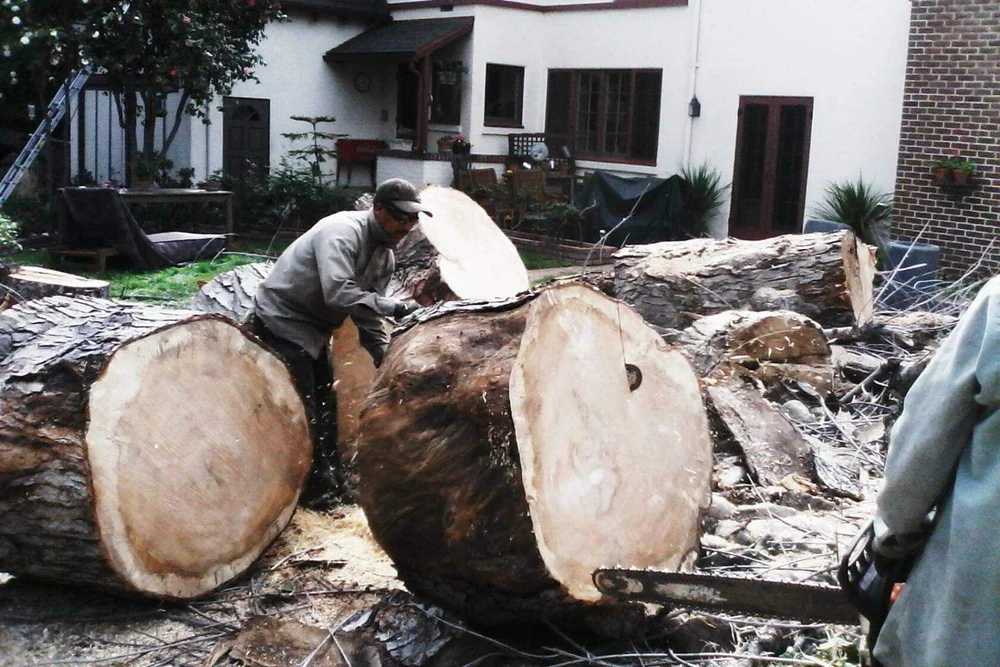
The pile

Bullfrog 12 Bullfrog 12

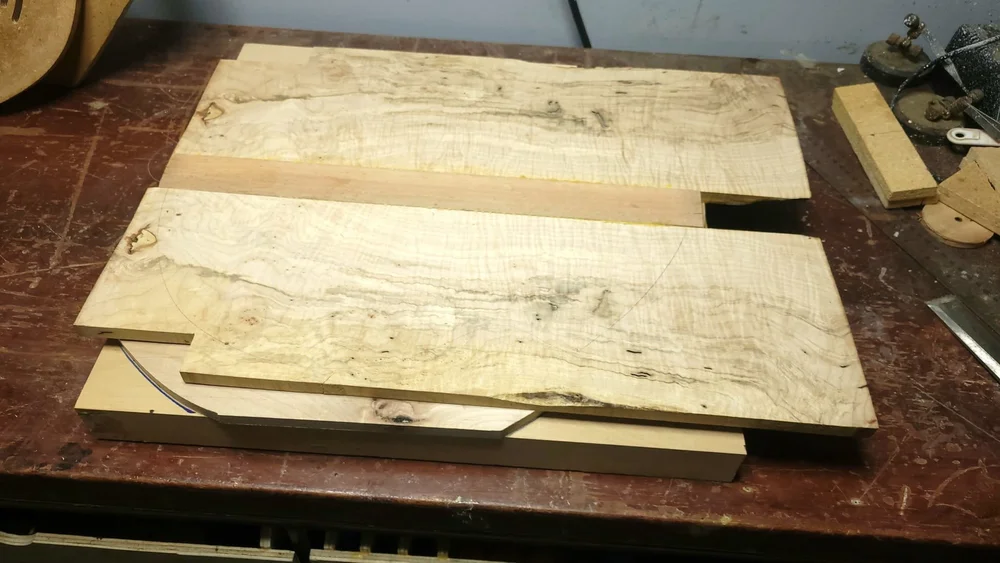
Early process

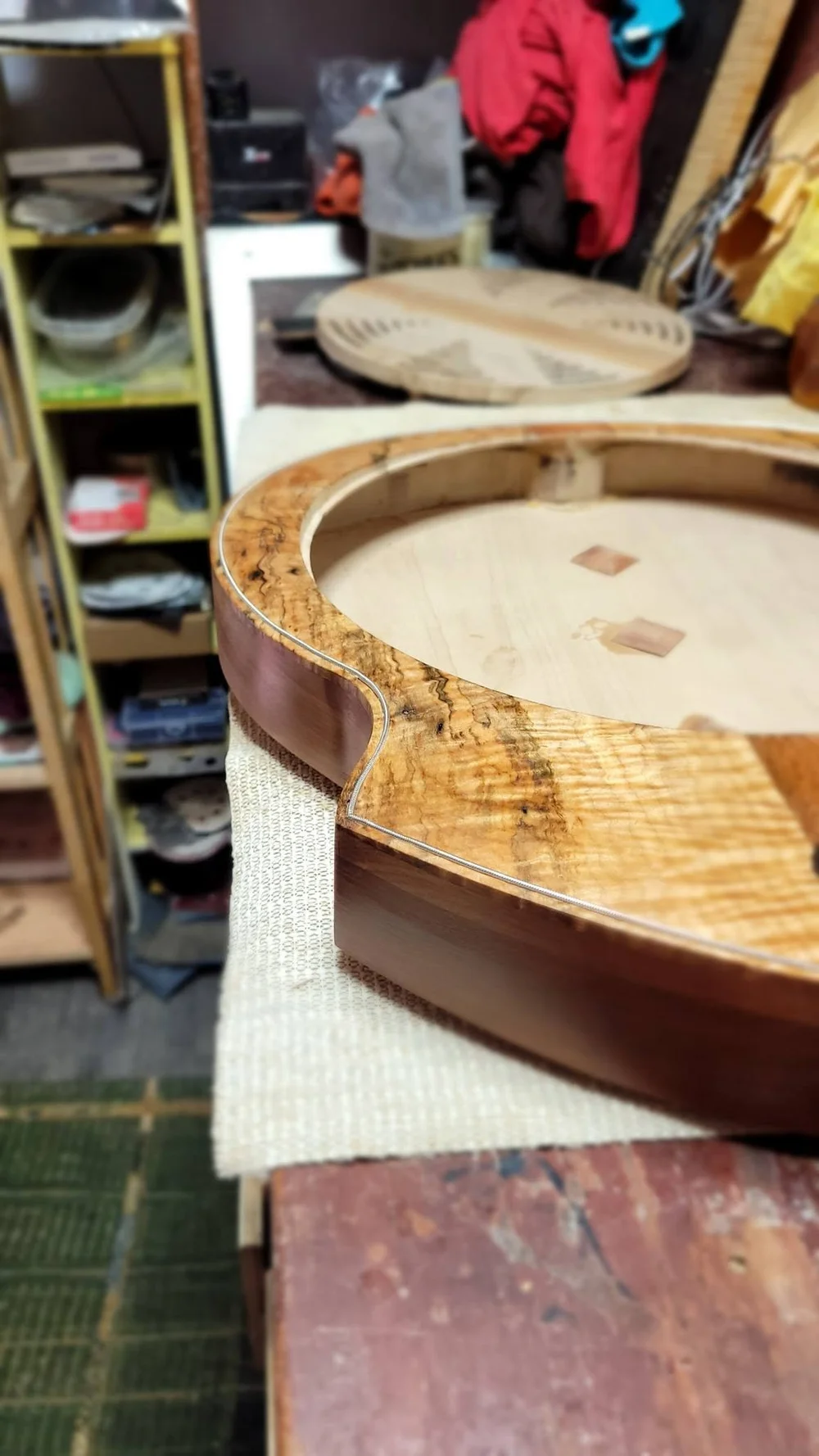
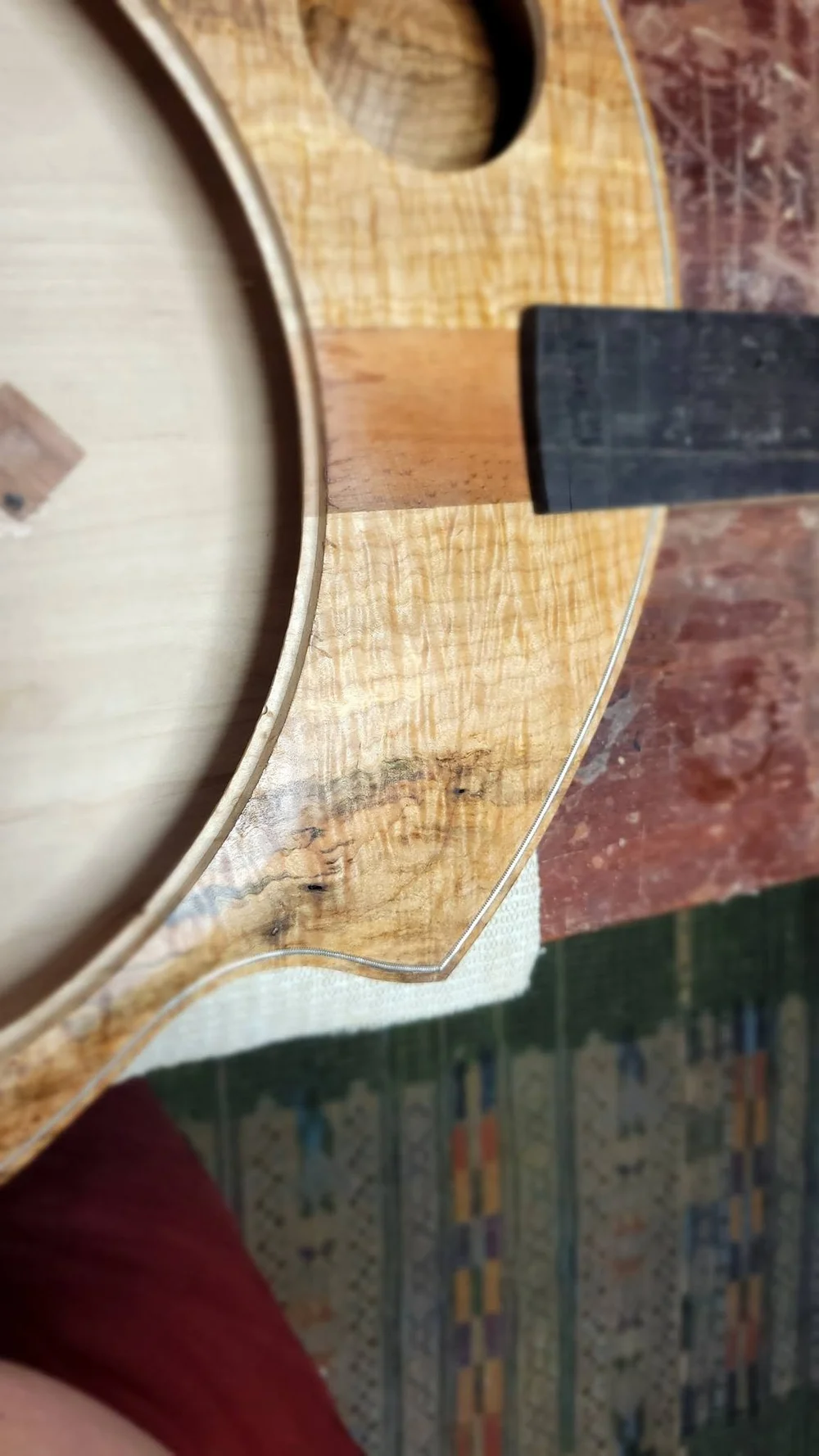
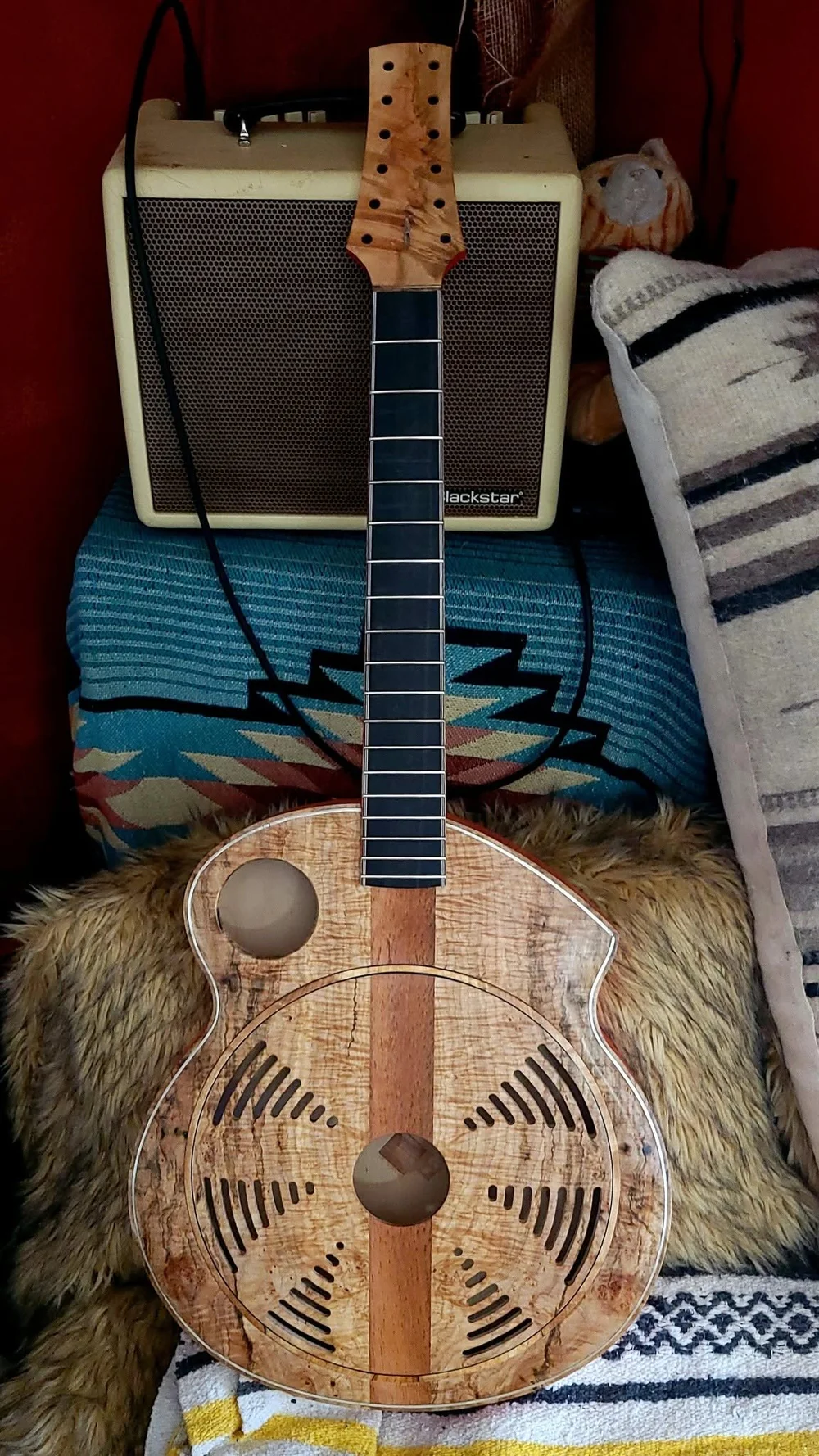
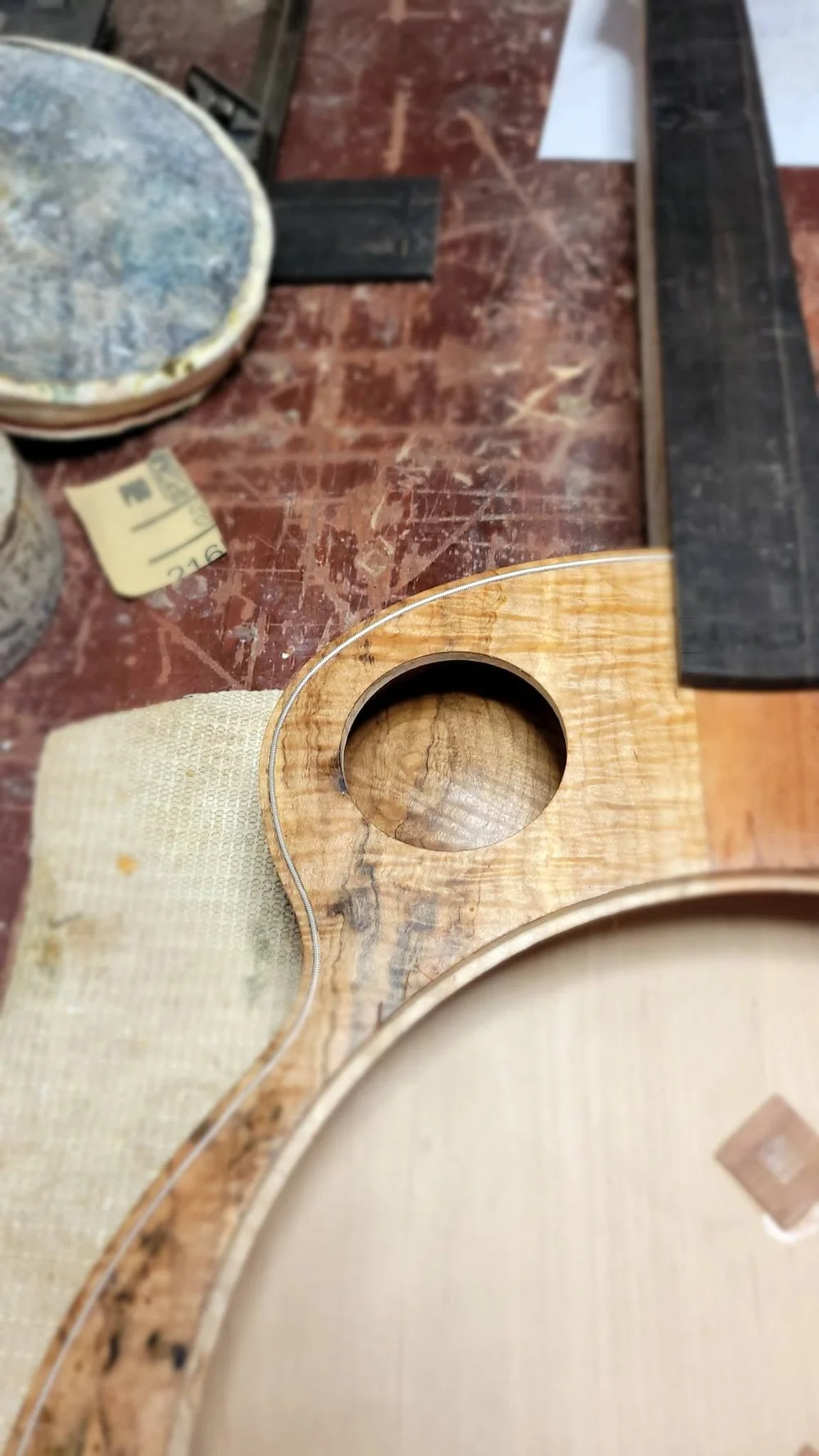
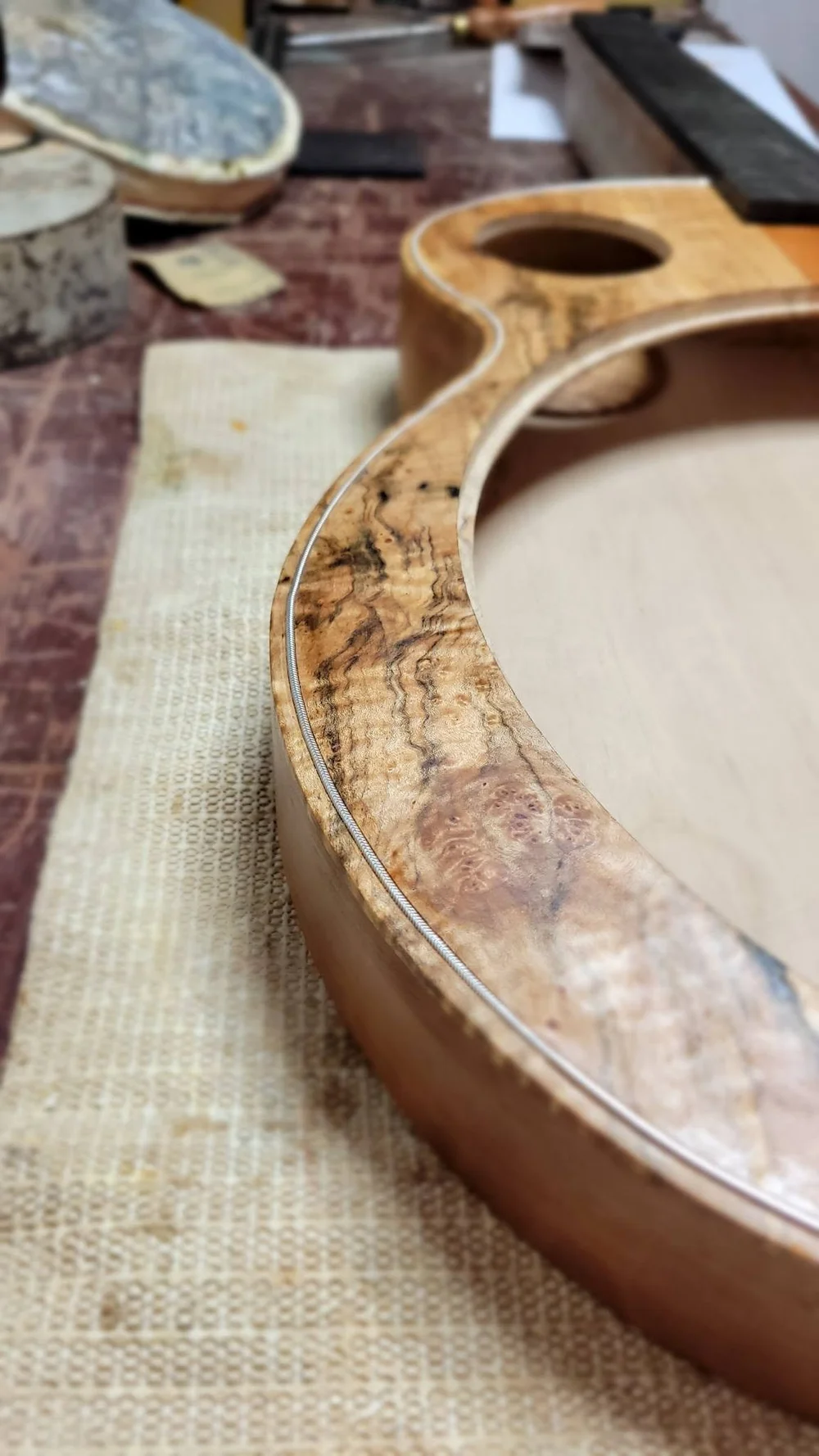
The M3 body curve

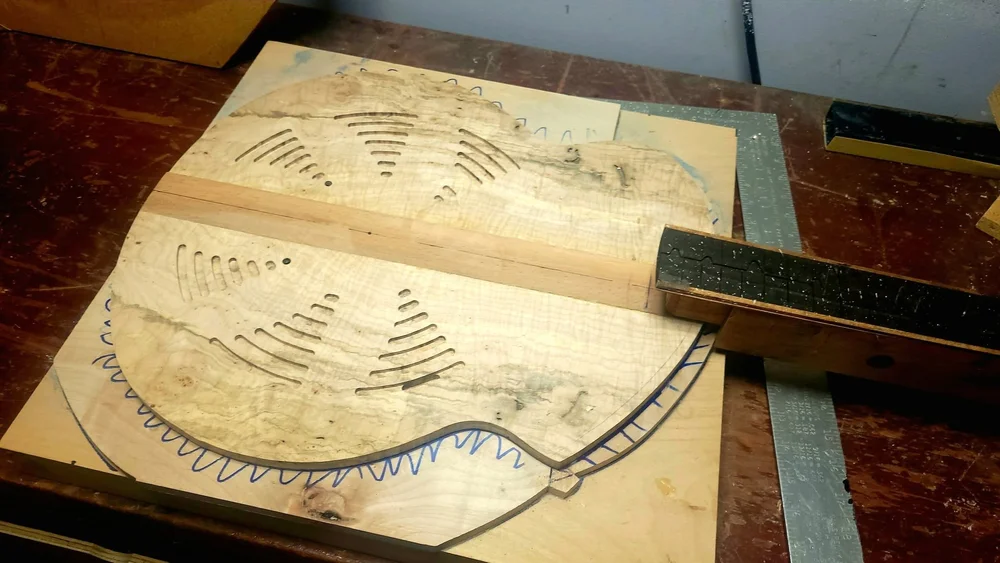
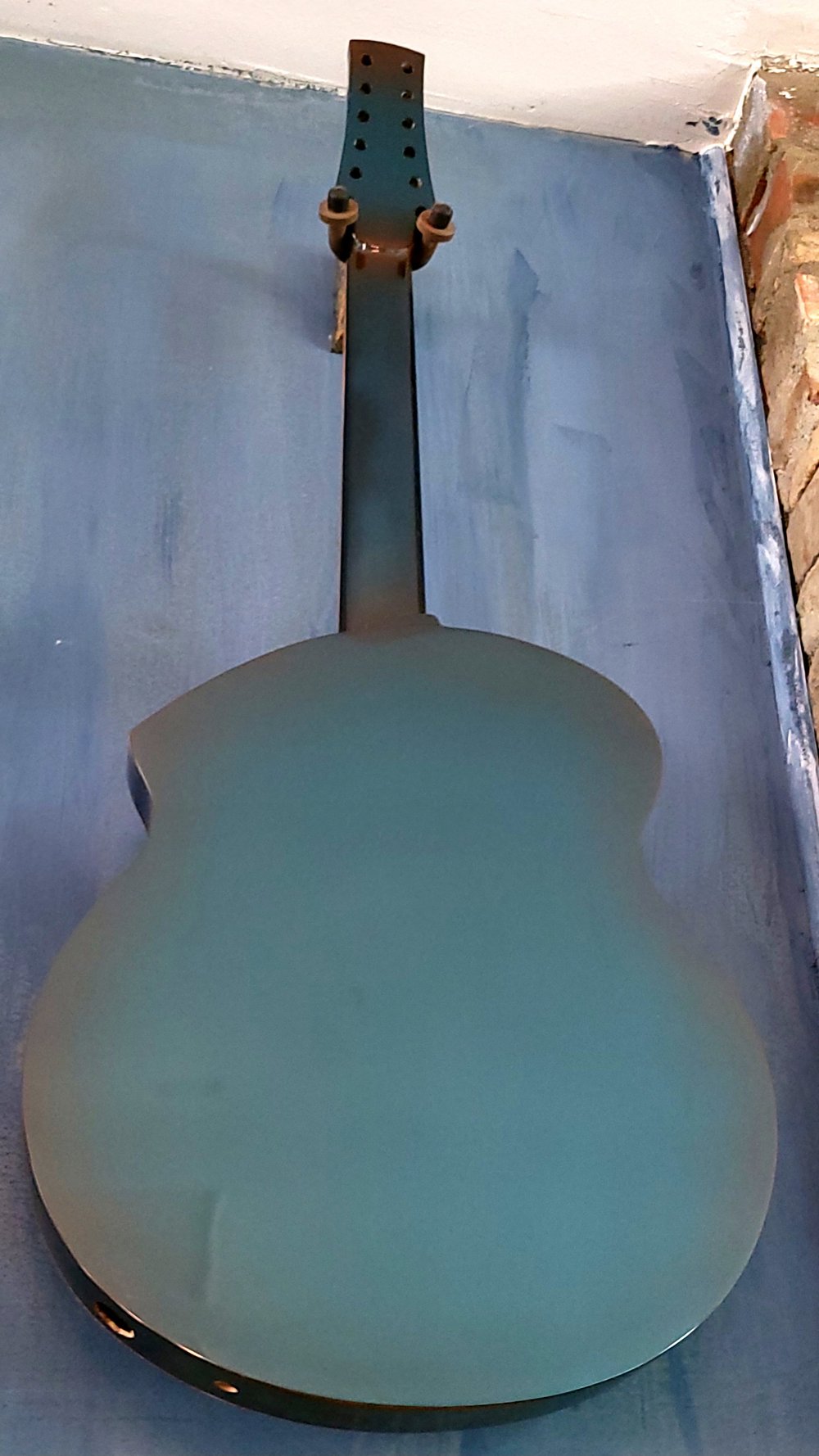
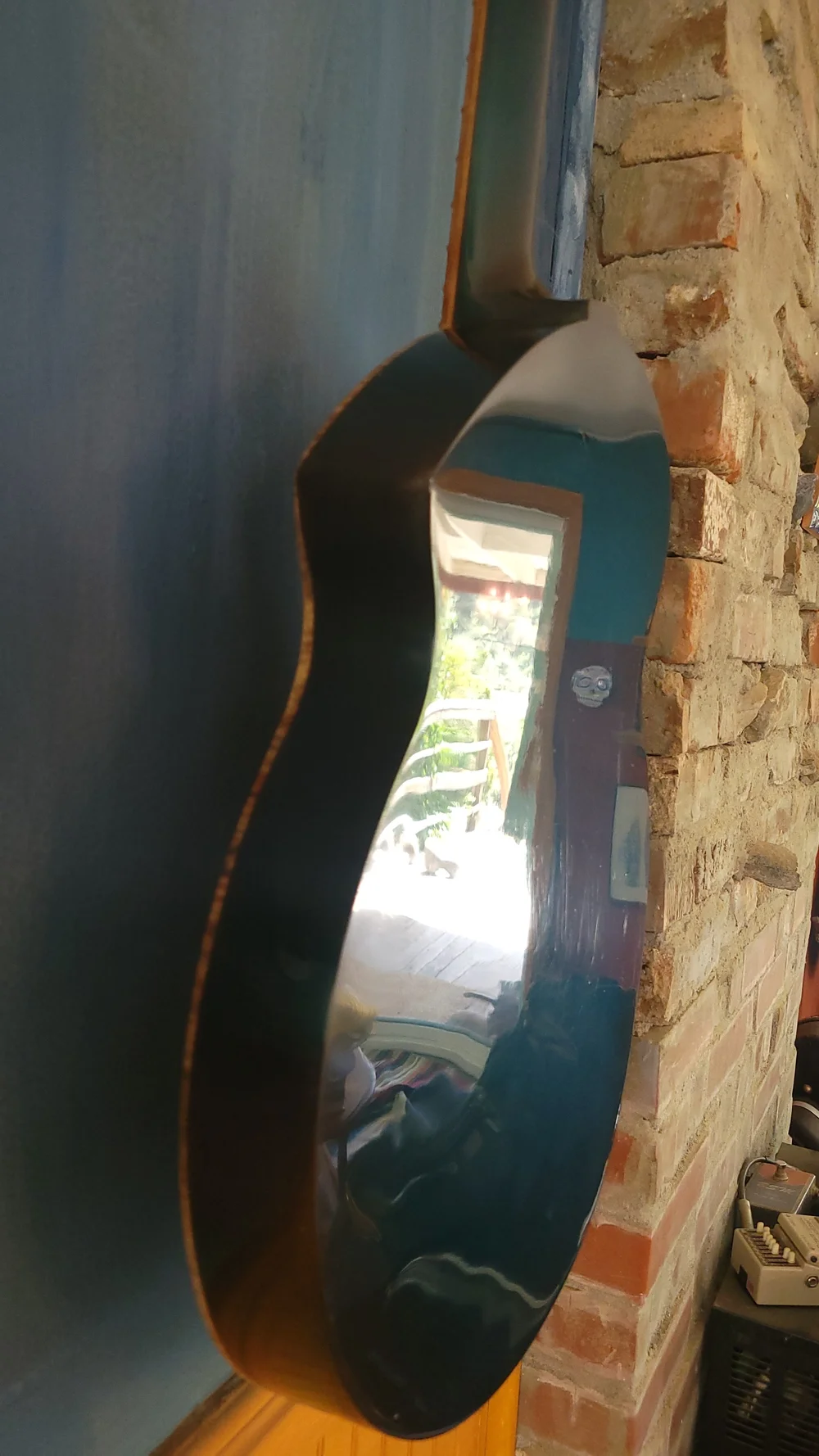
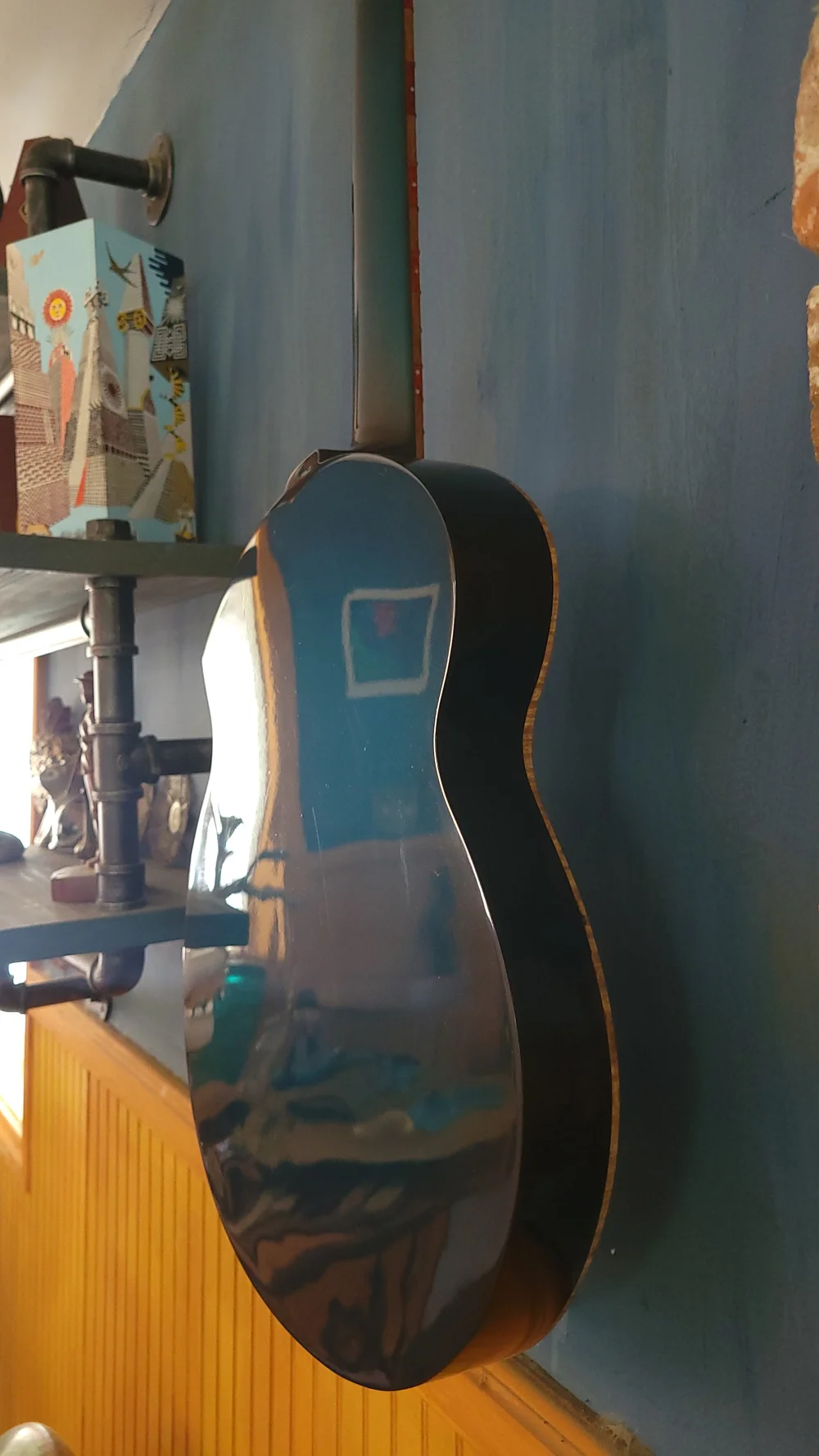
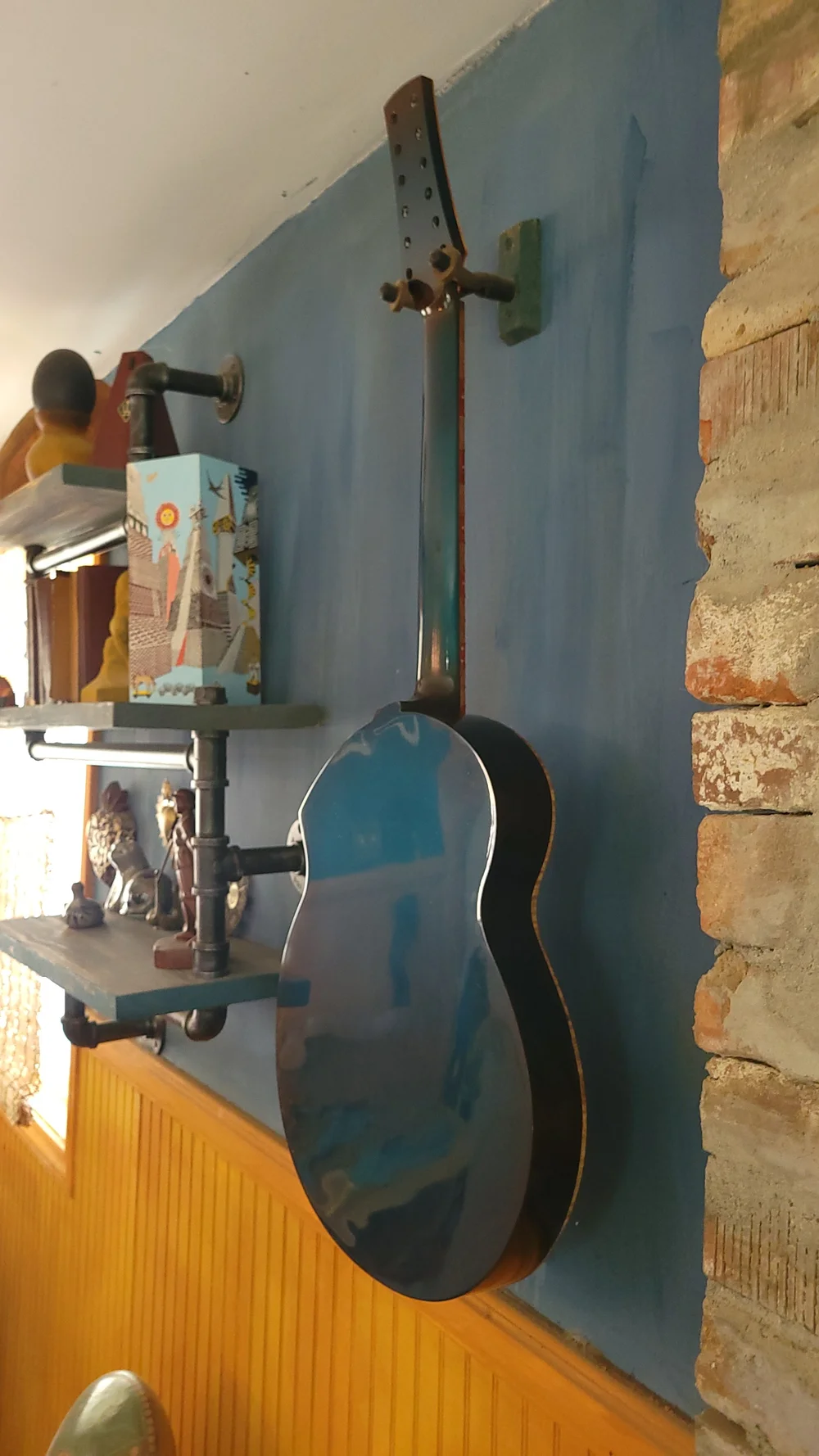
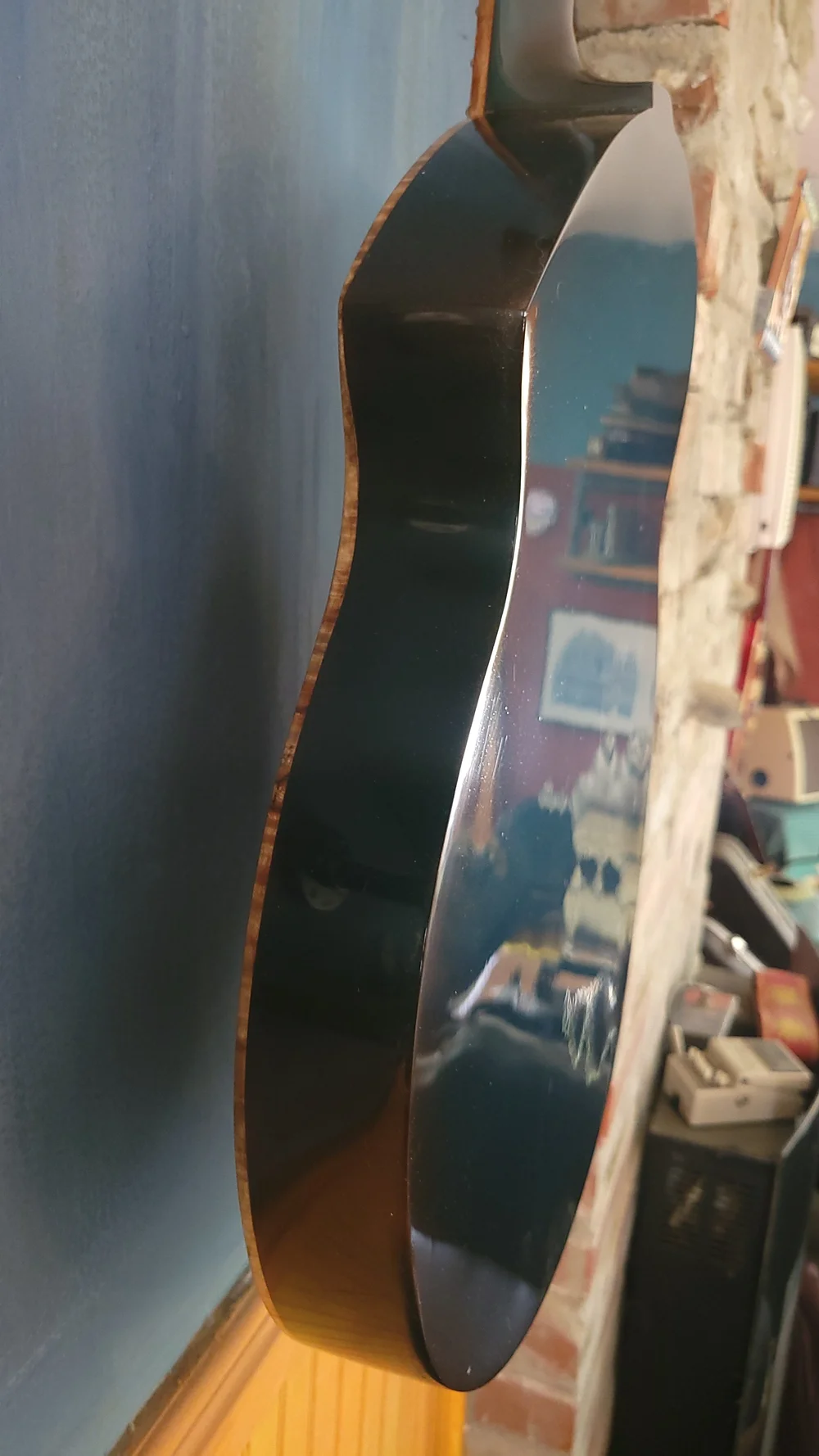
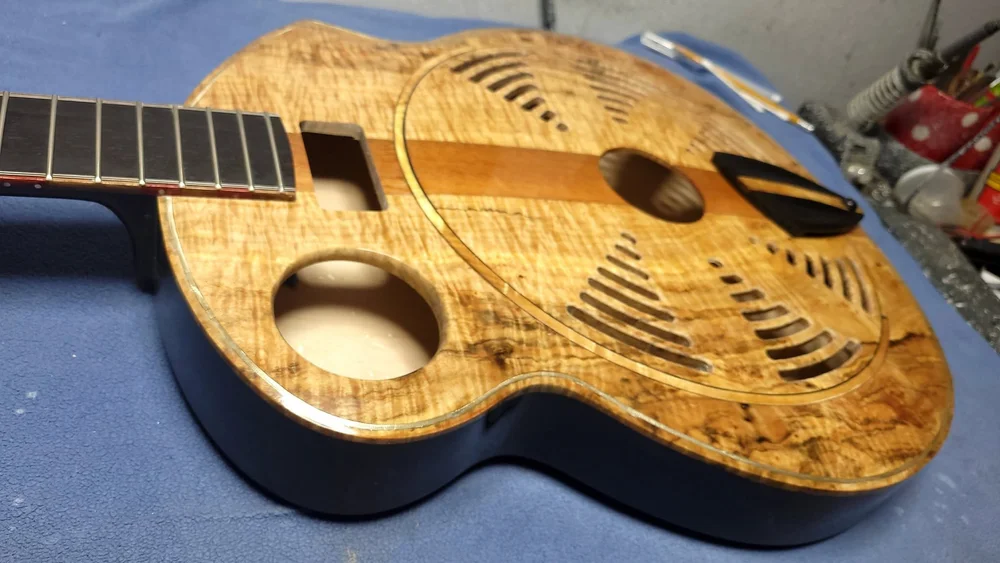
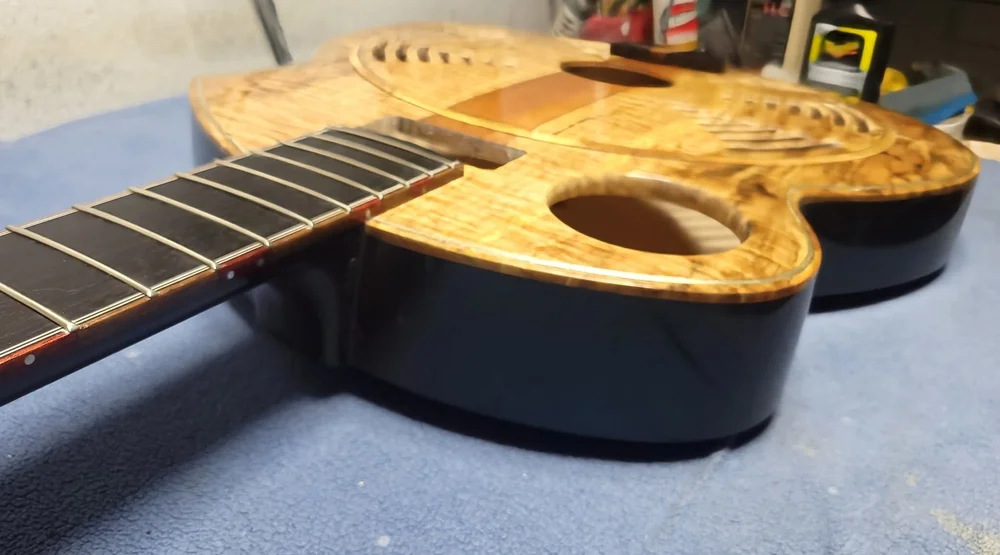
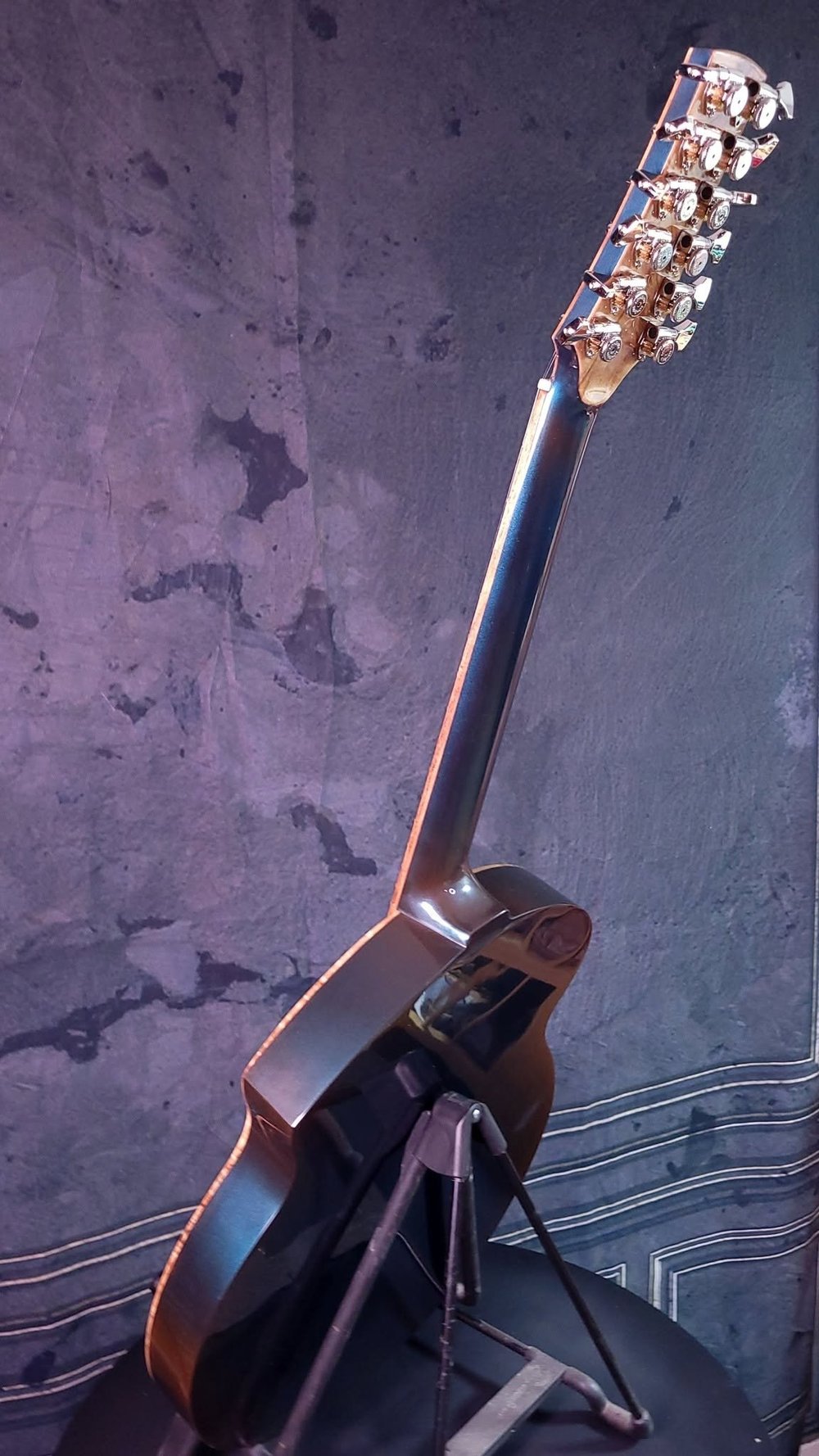
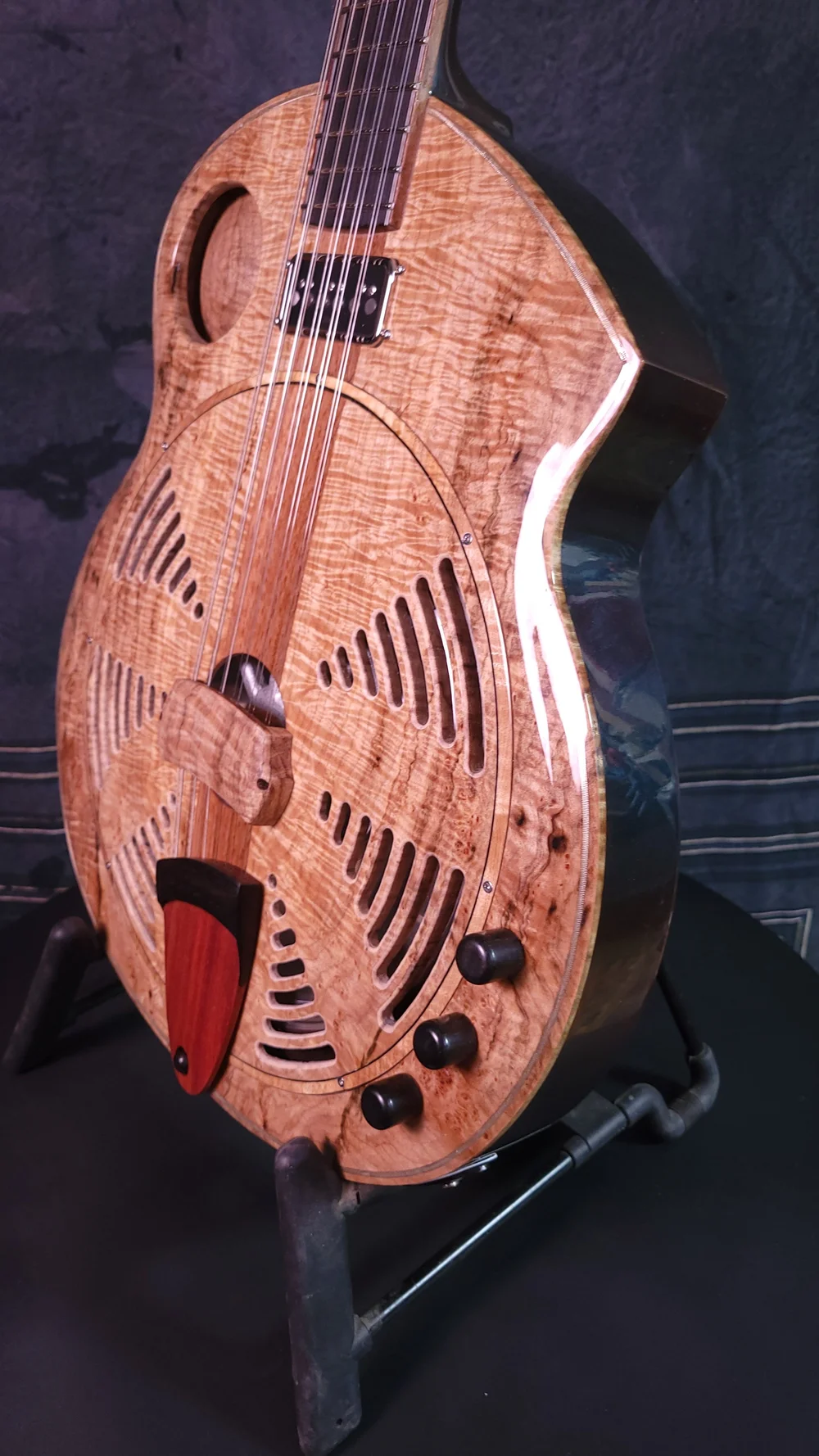
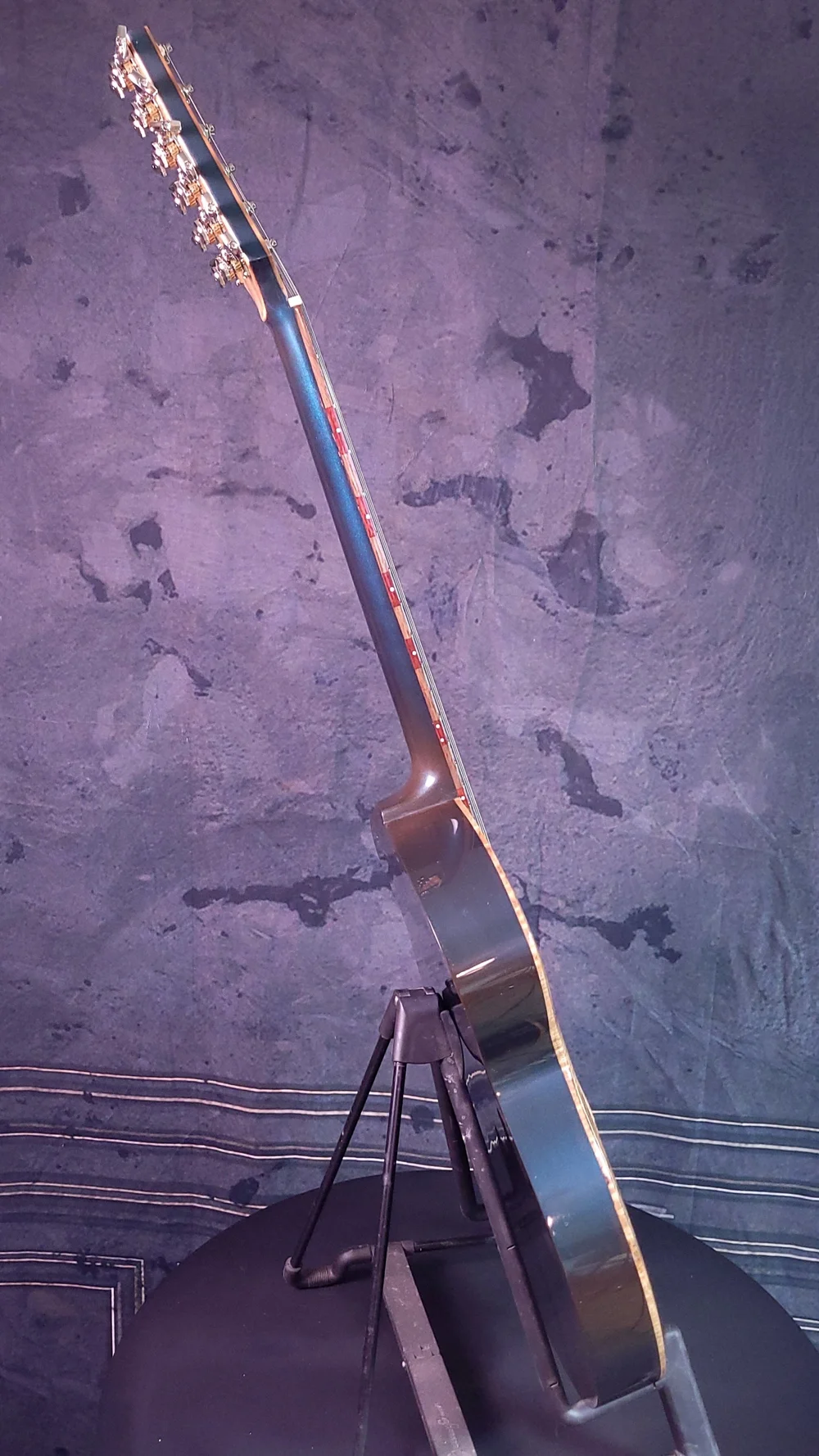
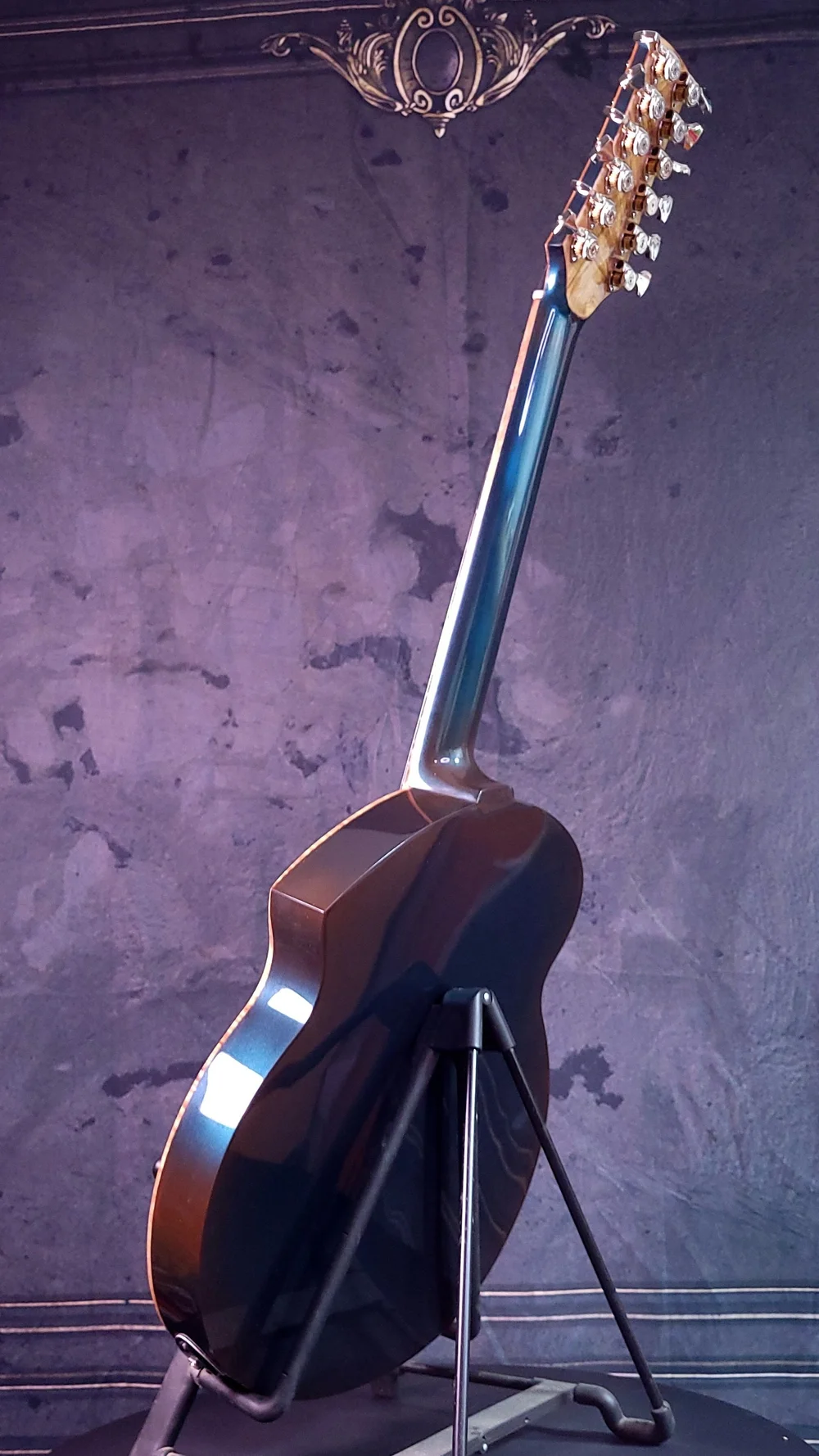
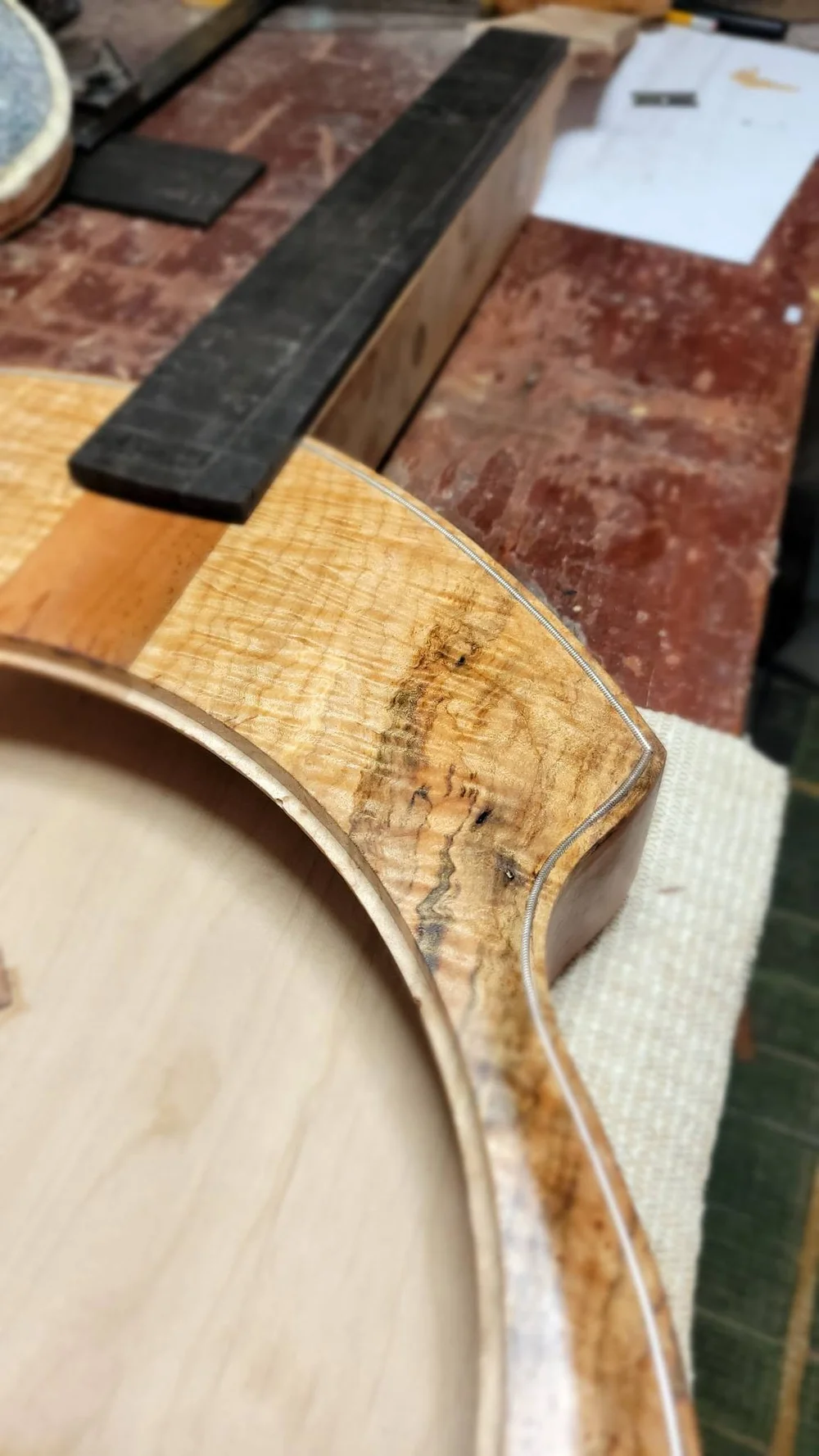
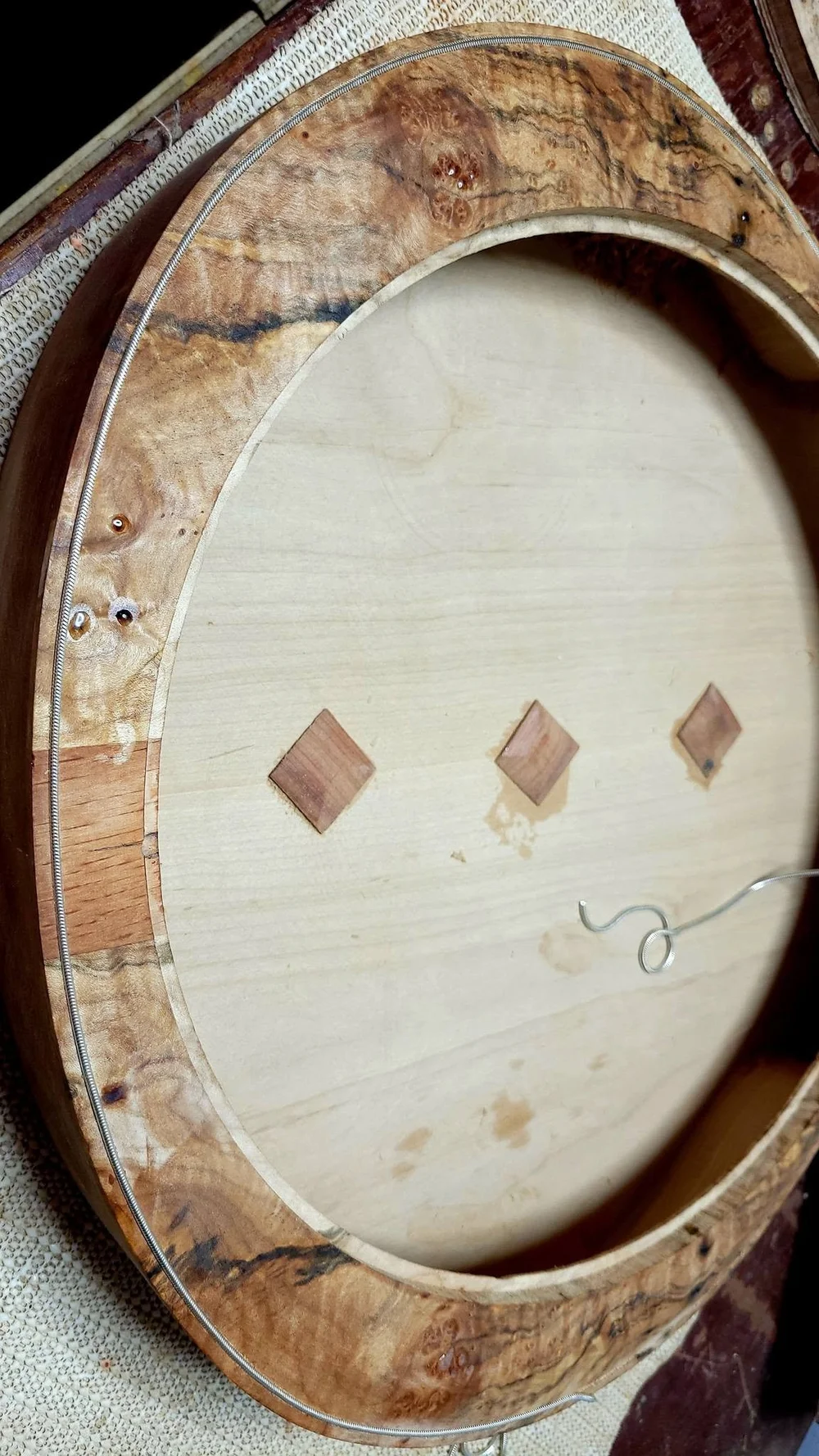
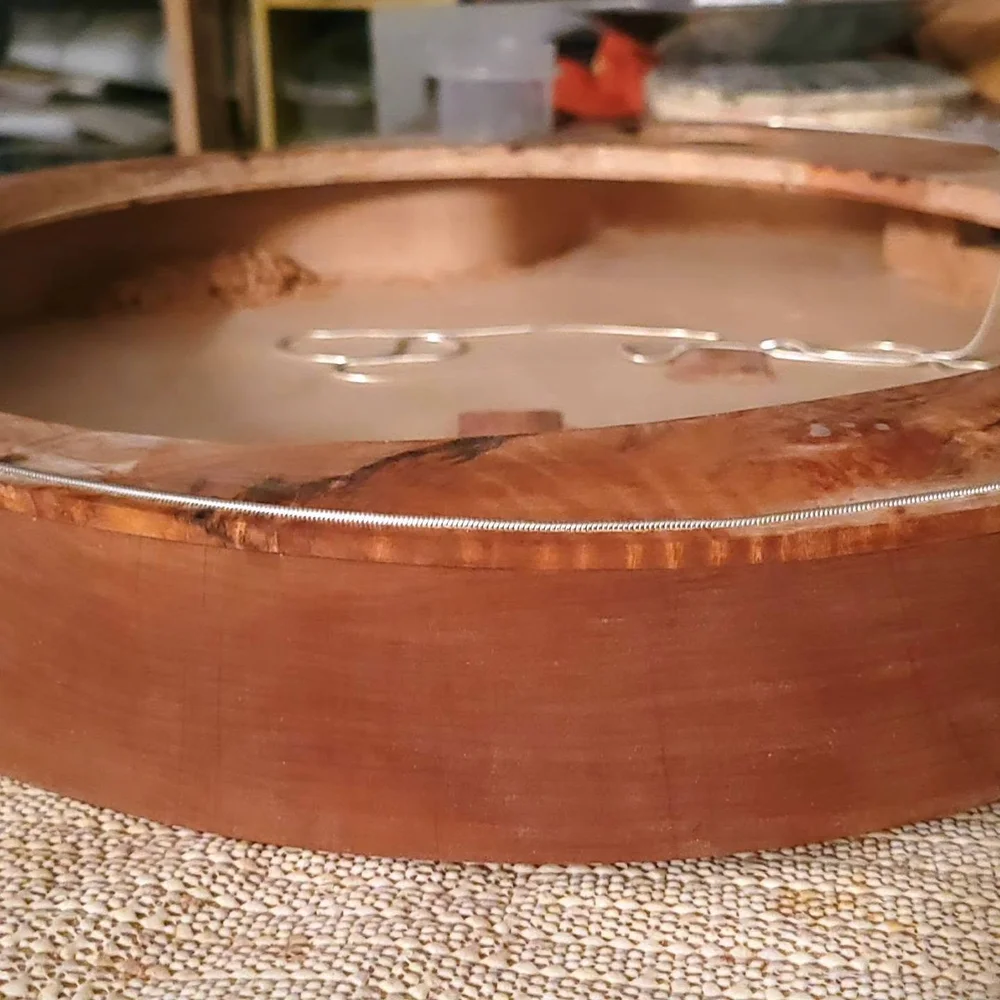
An archtop normally needs a 9–12° neck break at the body joint to set the strings correctly over the arch — putting a bend in the most heavily stressed connection on the instrument. These bodies curve instead. Top and back are routed in opposing curves on a fixture built for the purpose, so the geometry comes from the body and the neck meets it at zero degrees. Archtop ergonomics, no break at the weak point.
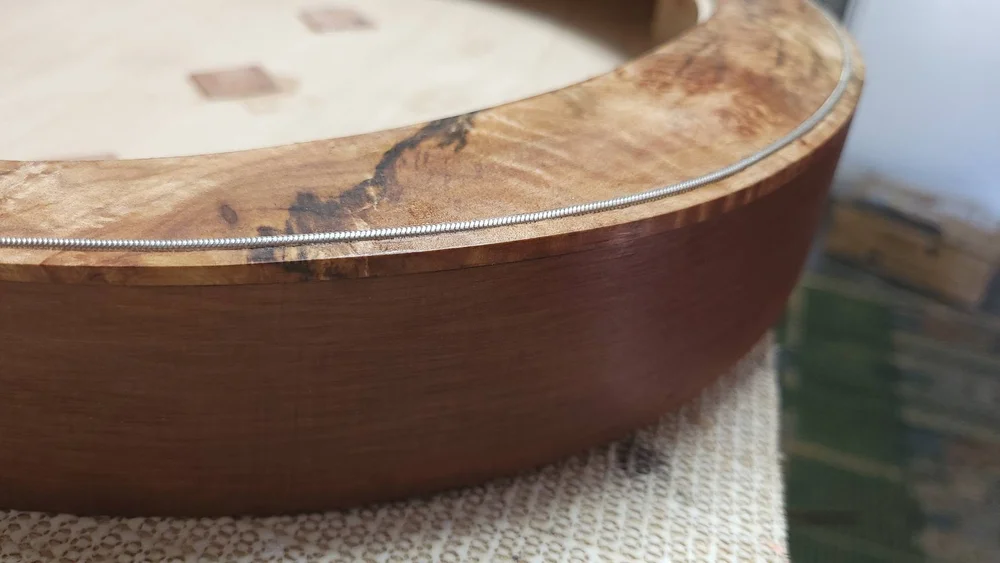
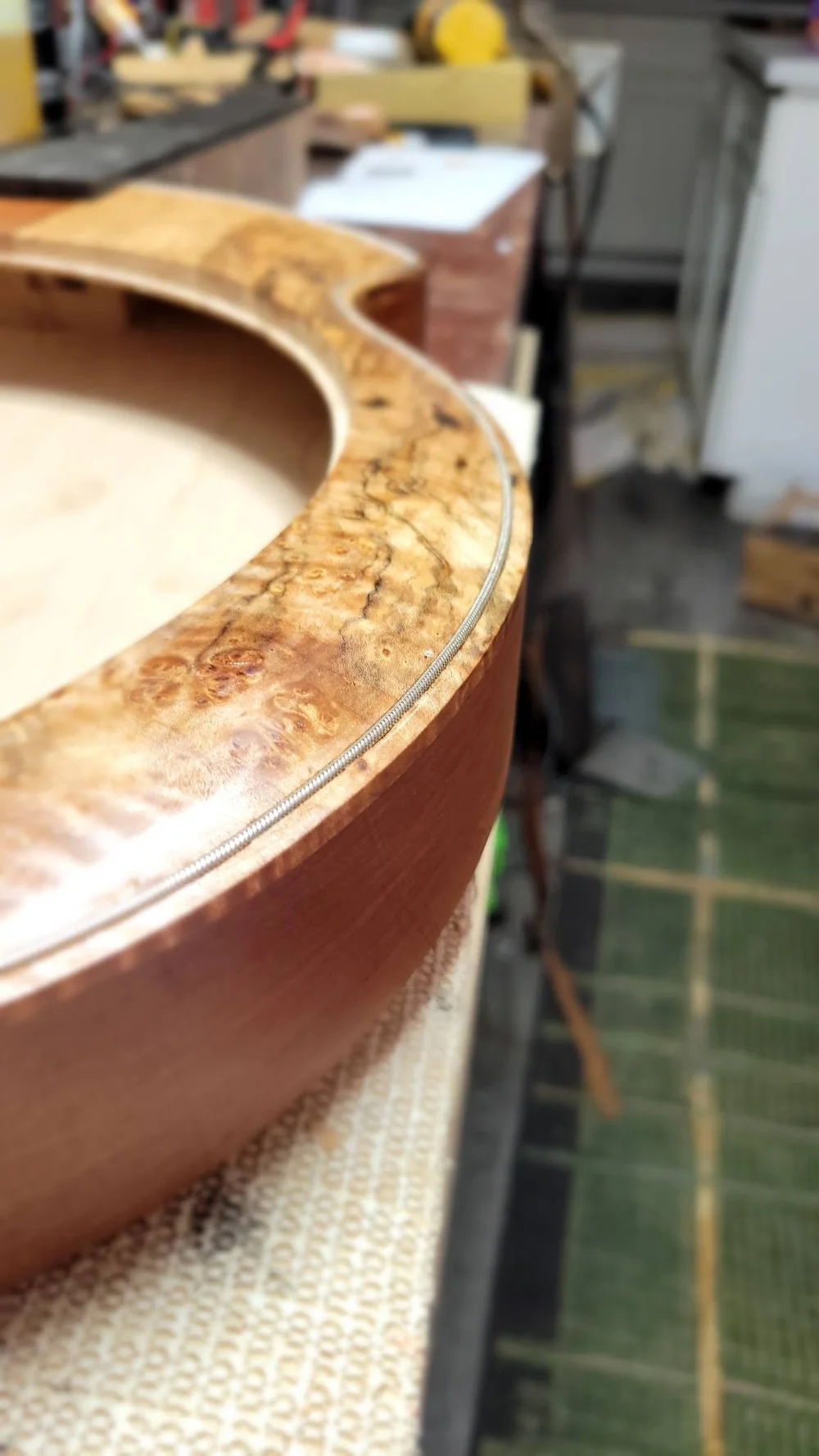
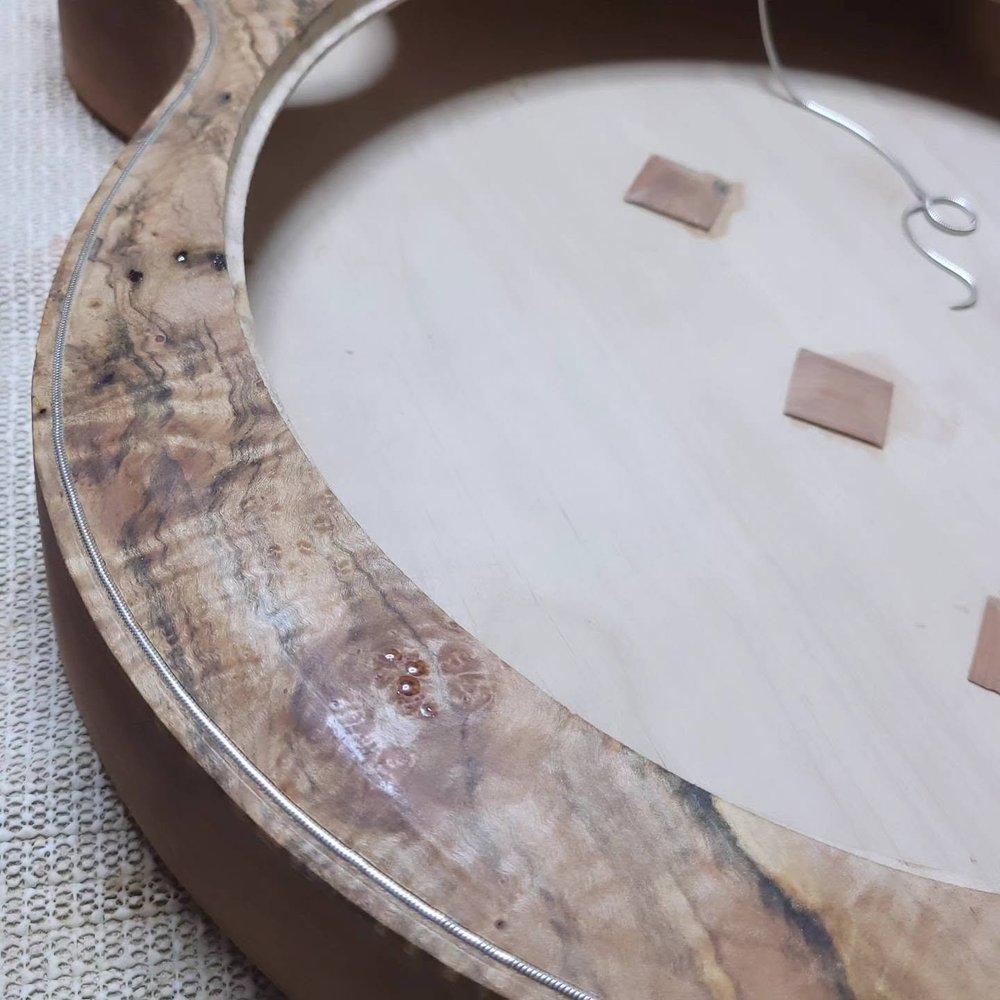
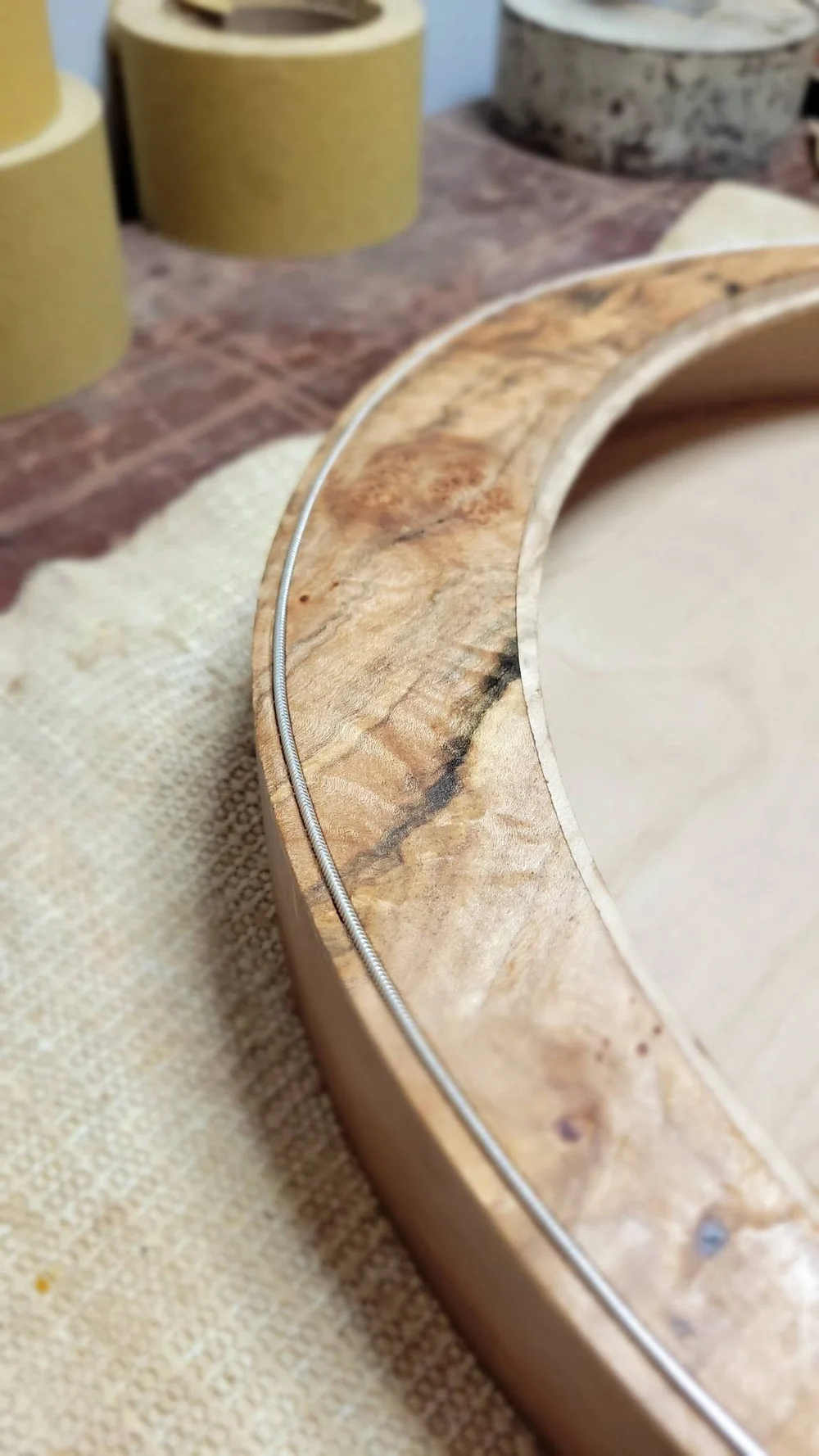
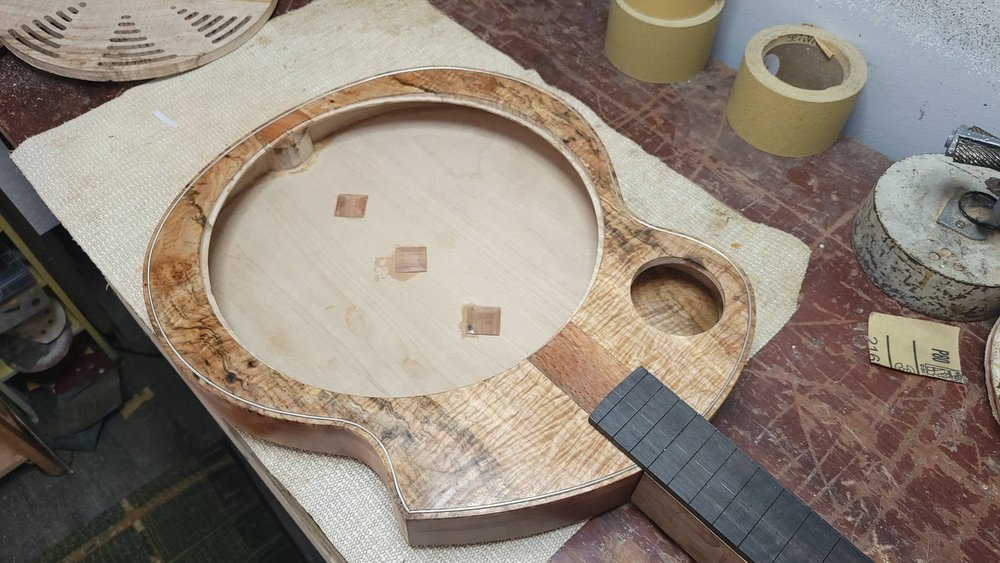
Epoxy filler, before purfling
Routing the back curve — first pass
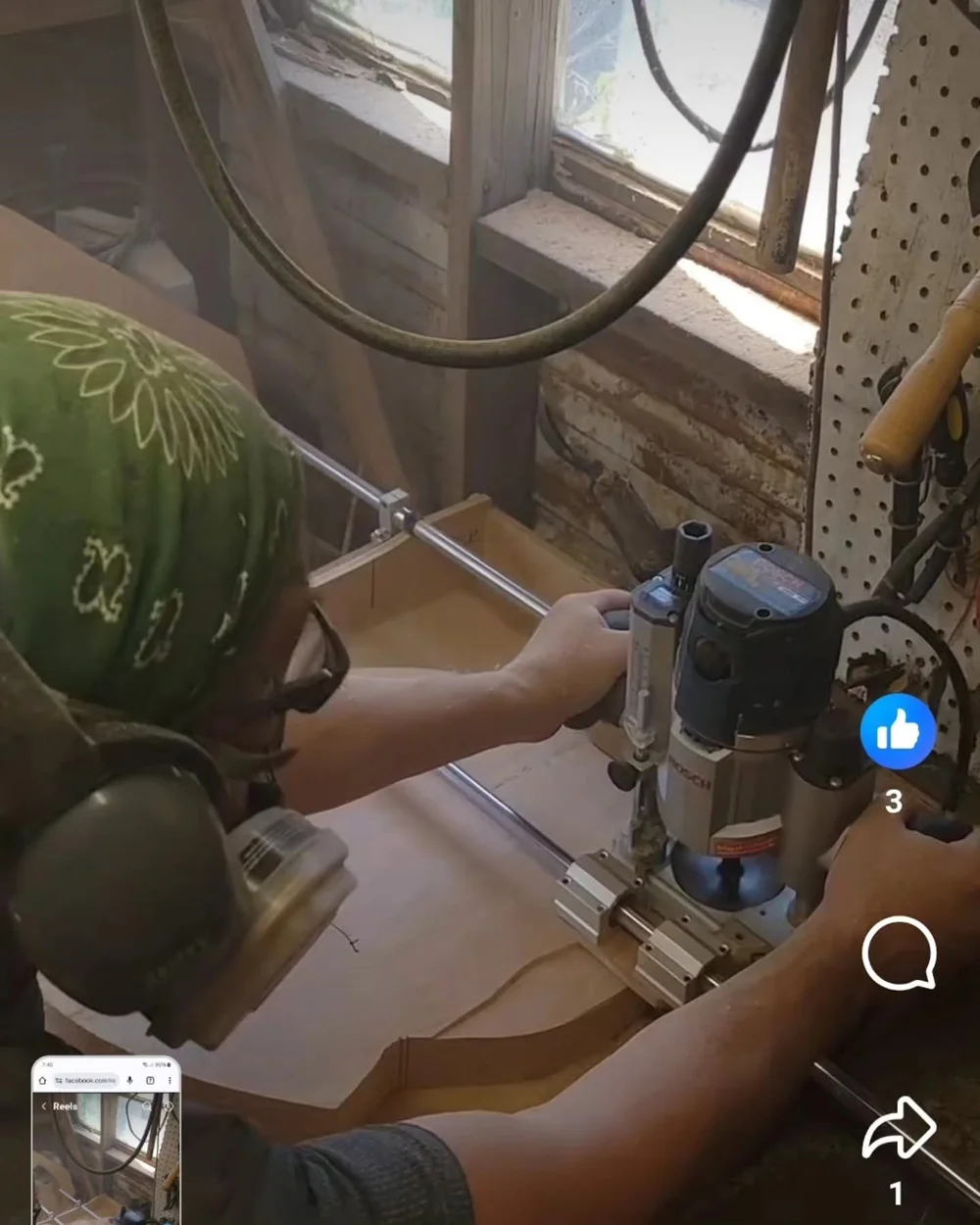
The fixture that cuts the wrap-around curve
The fixture, continued
Final pass on the top — curving against the back
Concave top jig — final passes
Concave top jig — final passes, cont.
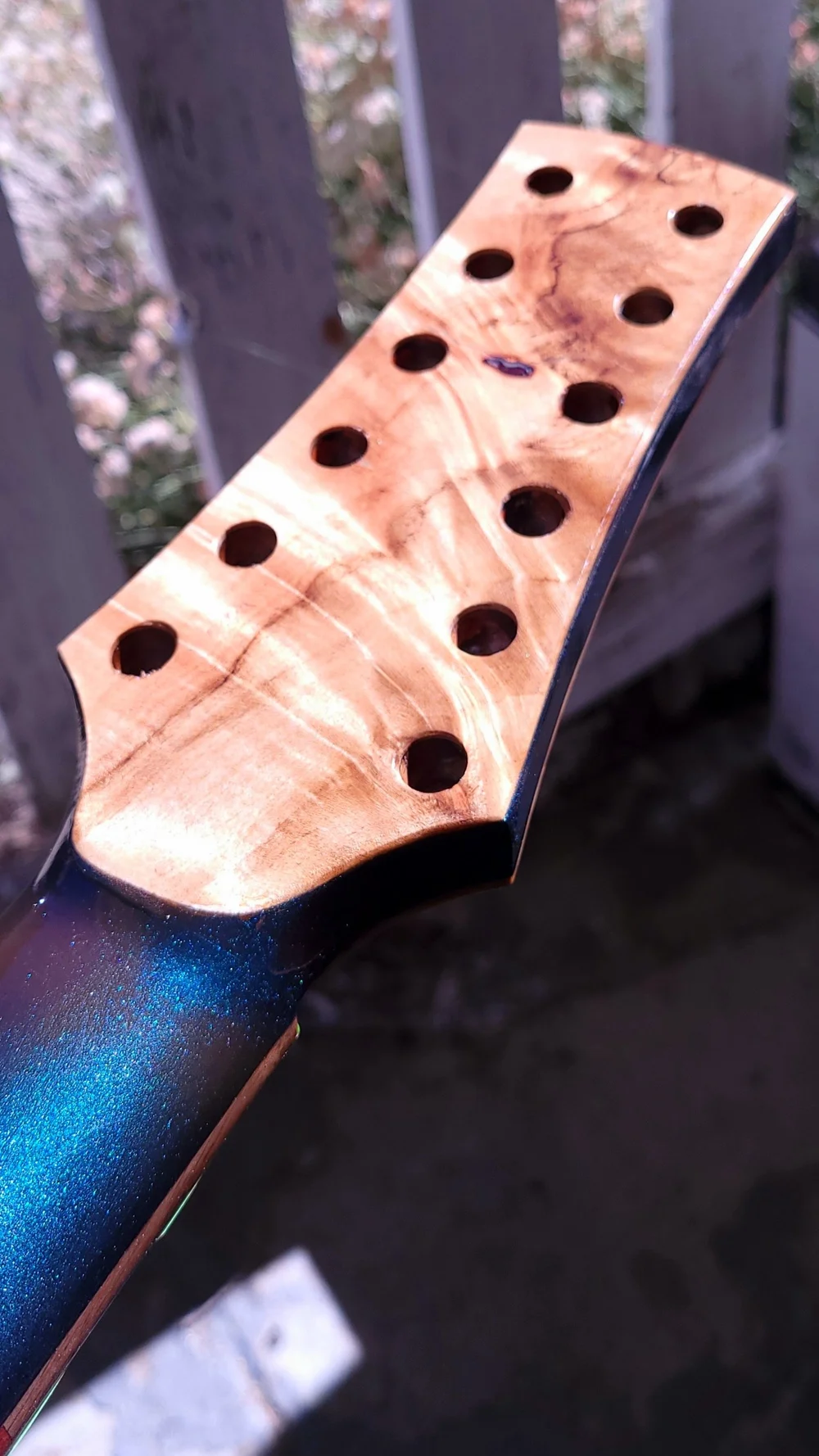
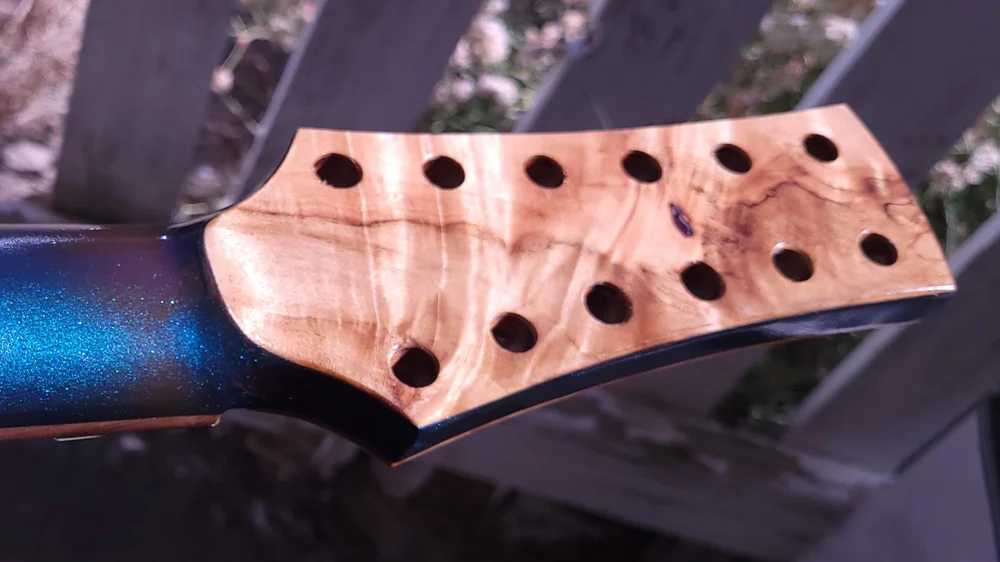
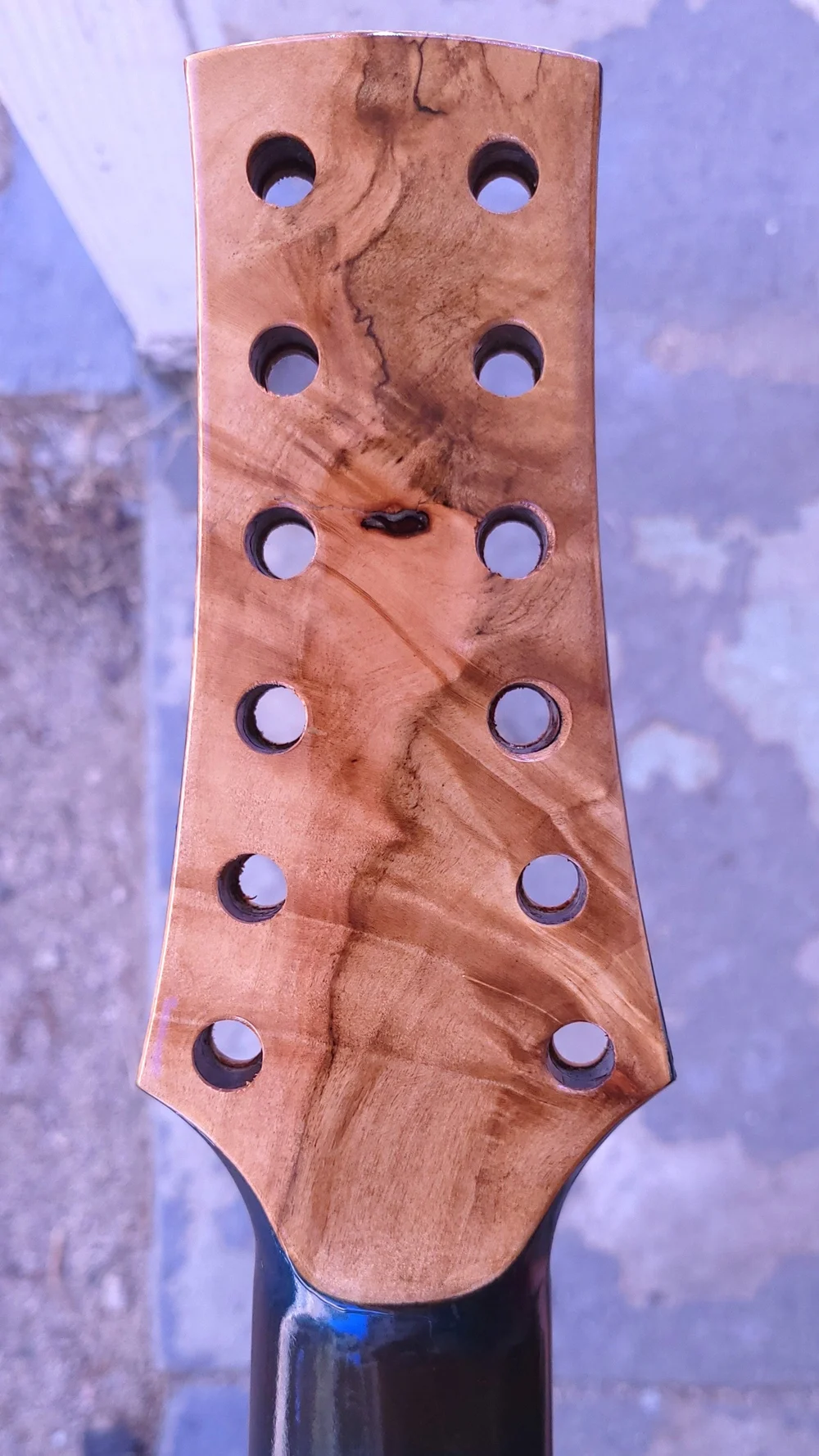
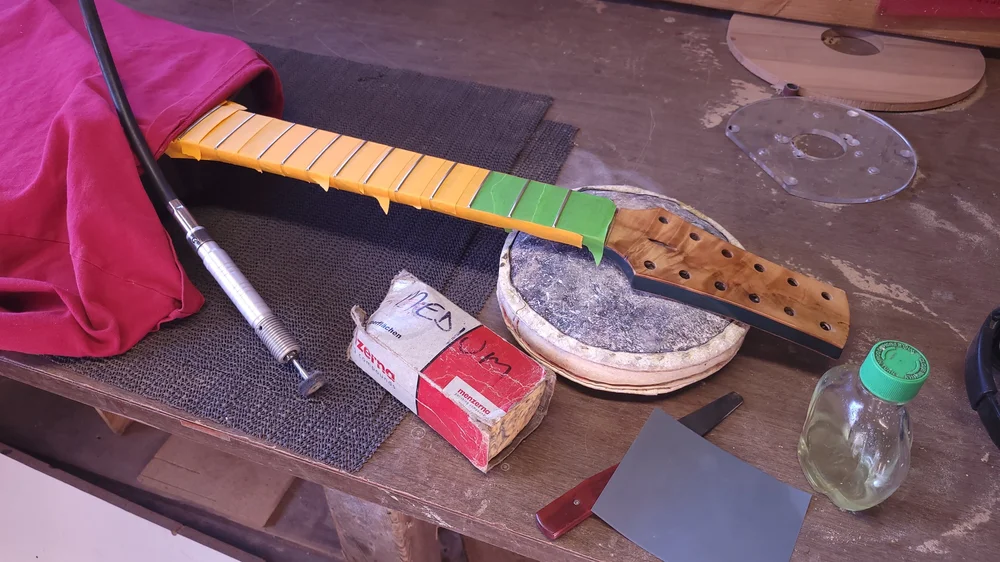
Carving the neck
Carving the neck
Carving the neck
Carving the neck
Carving the neck
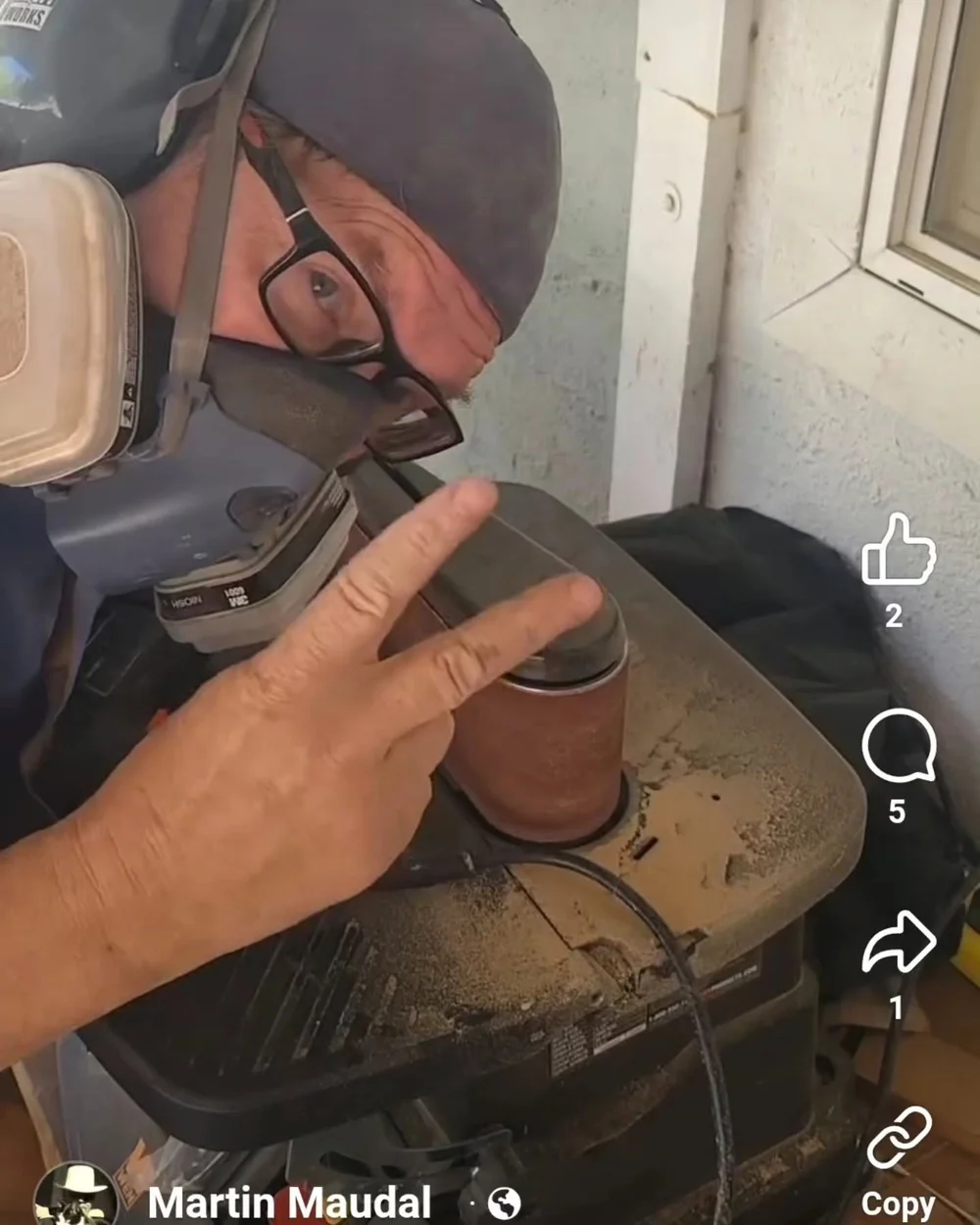
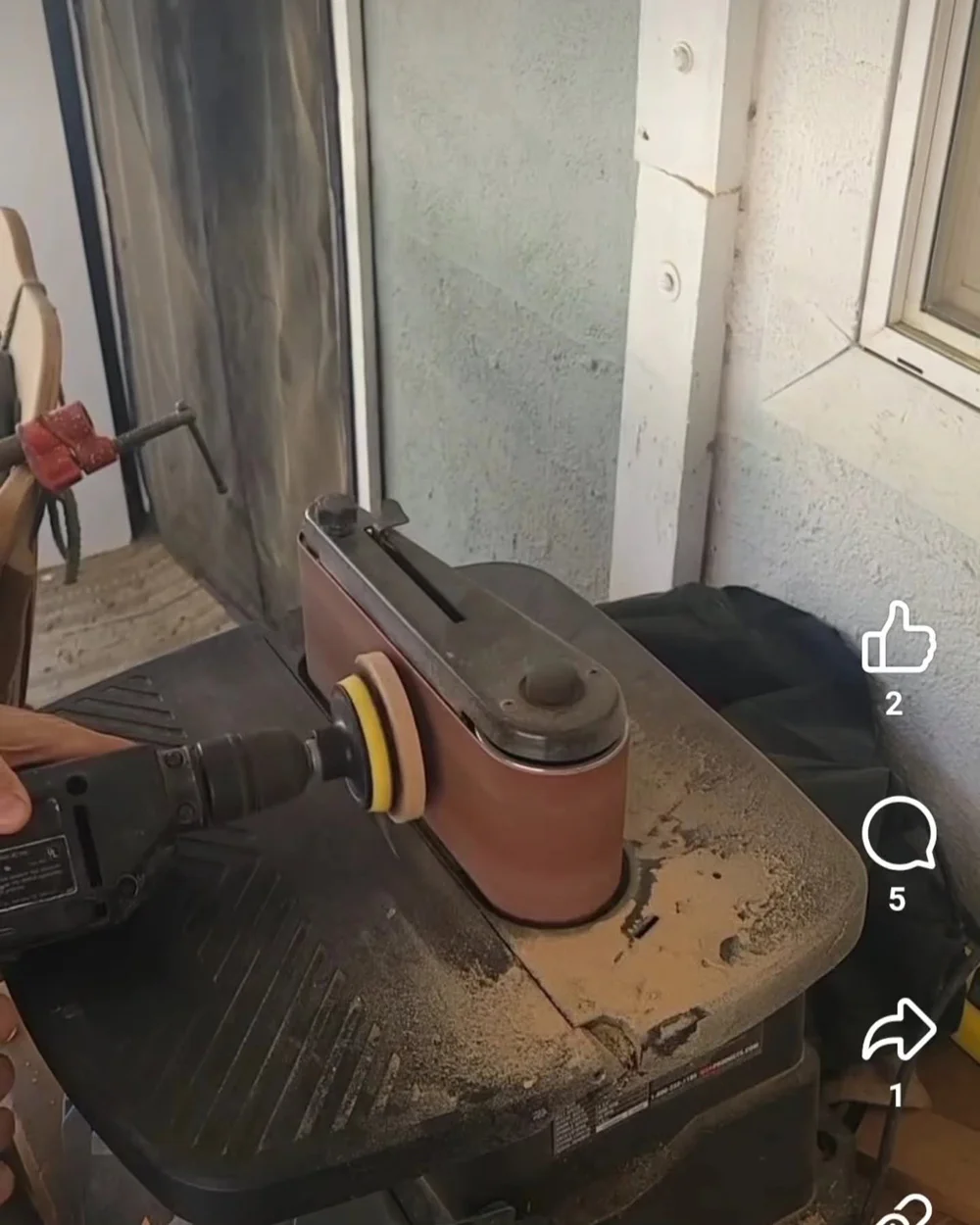
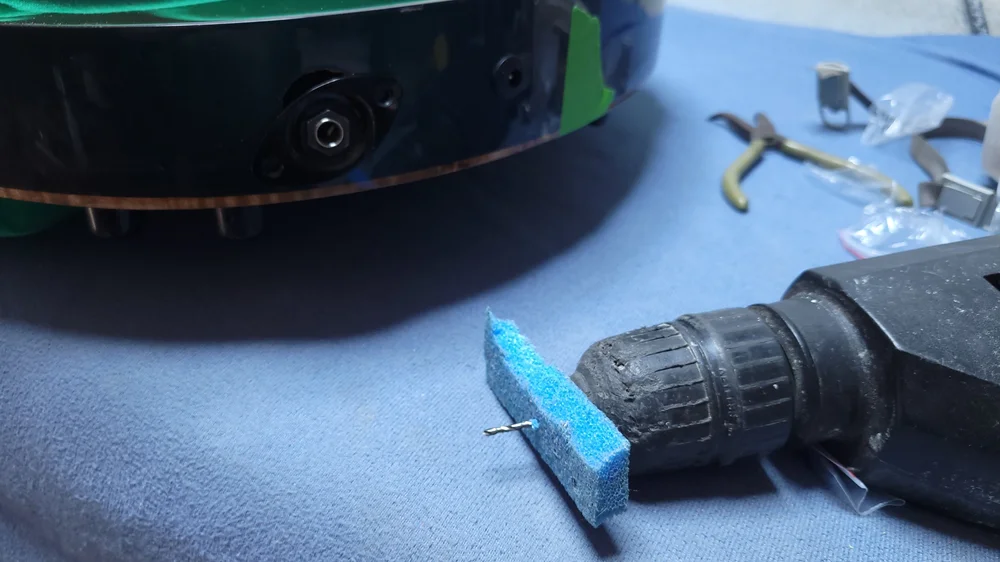
Doming the baffle — belt sander and hand drill
Sanding the baffle on the drill press
Inside curves on the drill press
Inside curves, continued
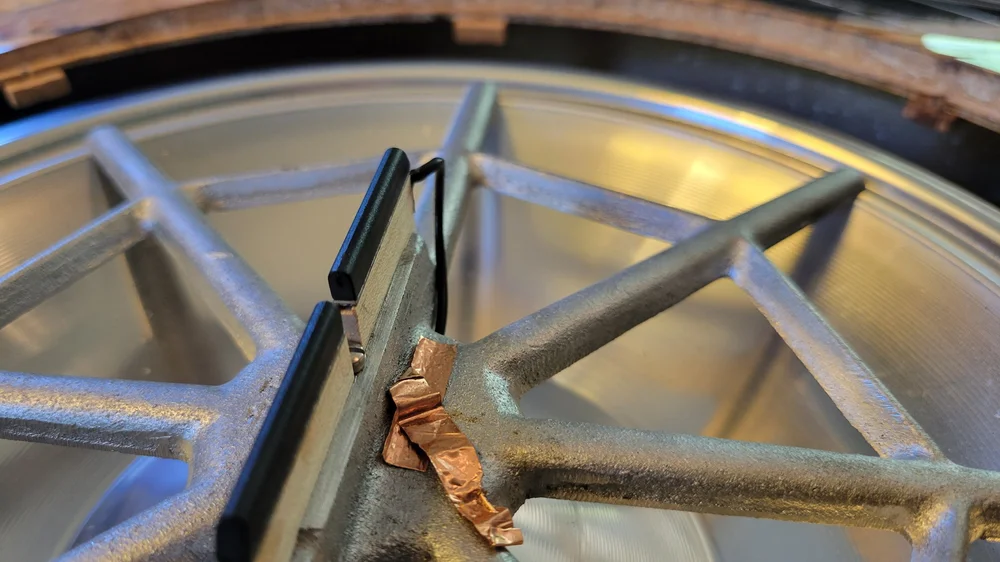
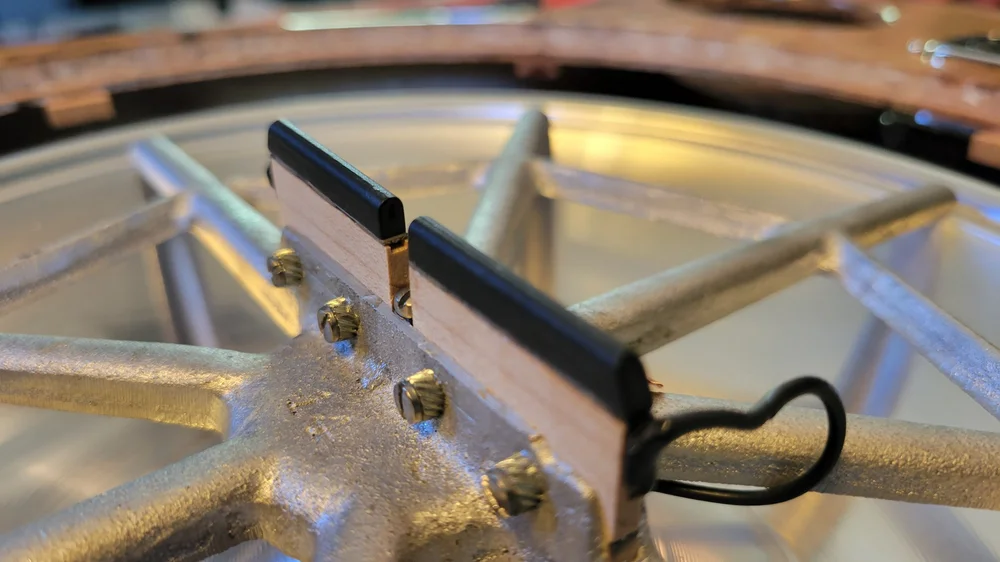
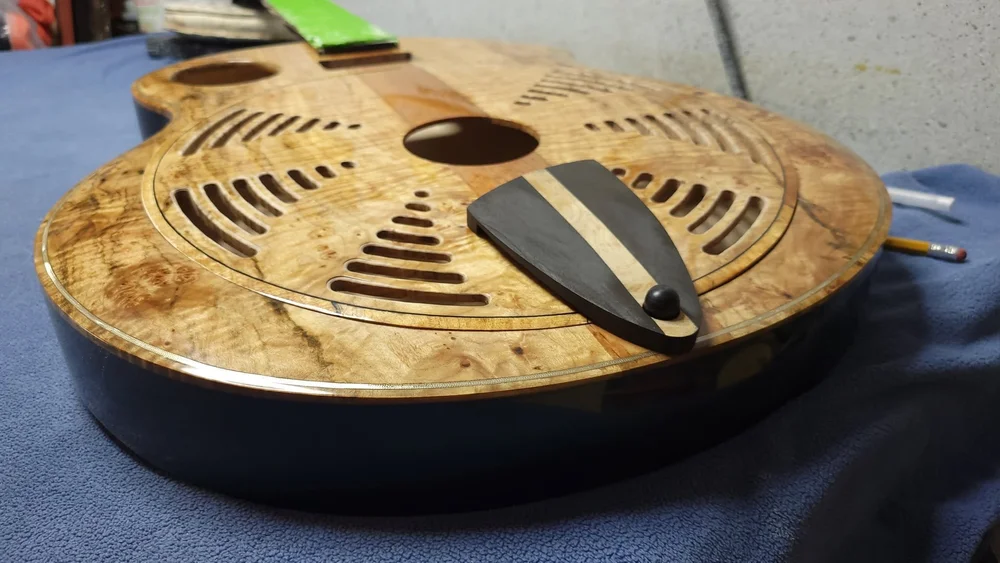
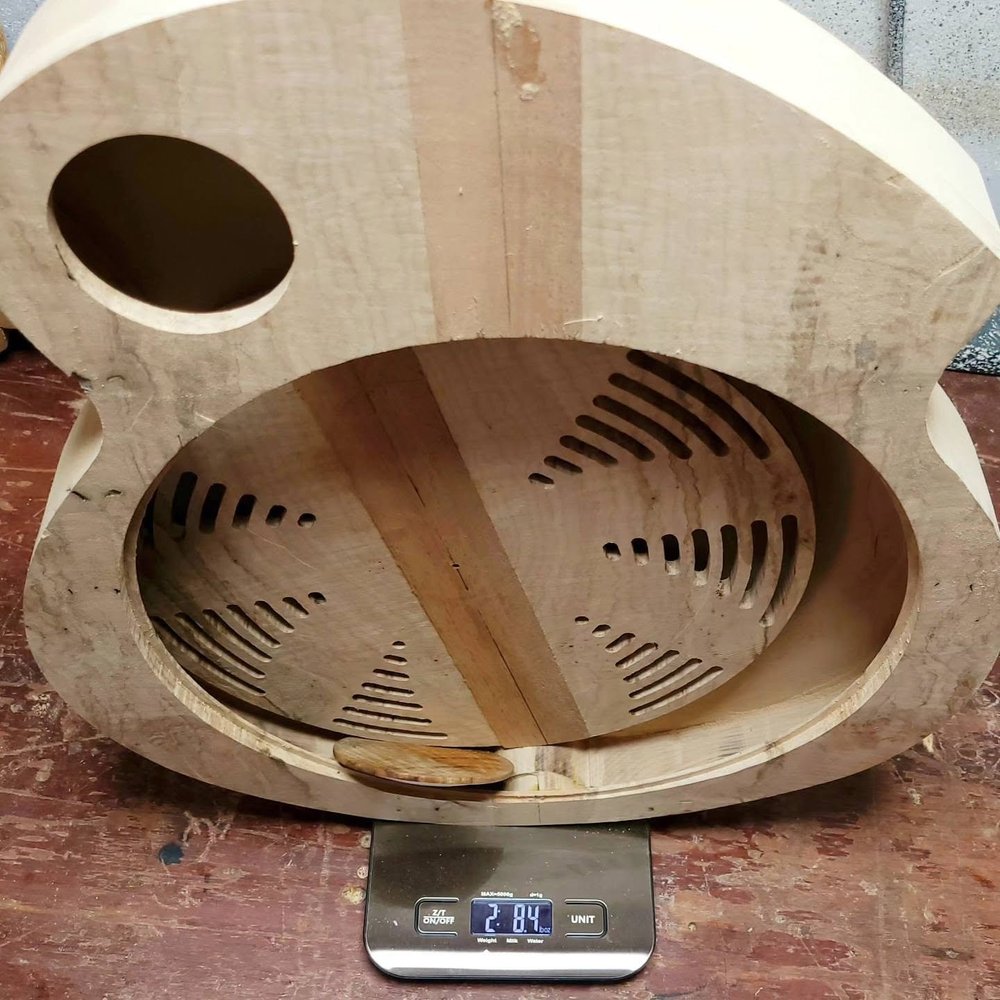
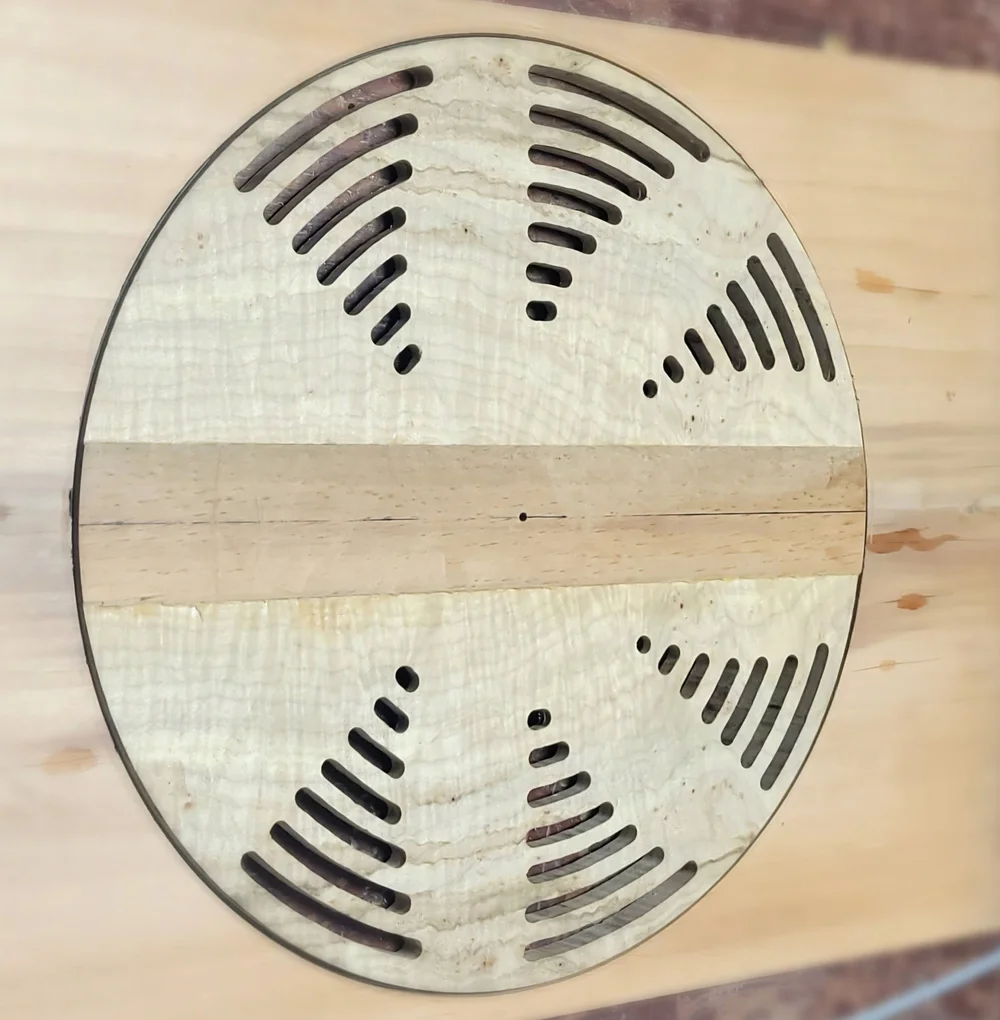
The finished baffle, and what it does
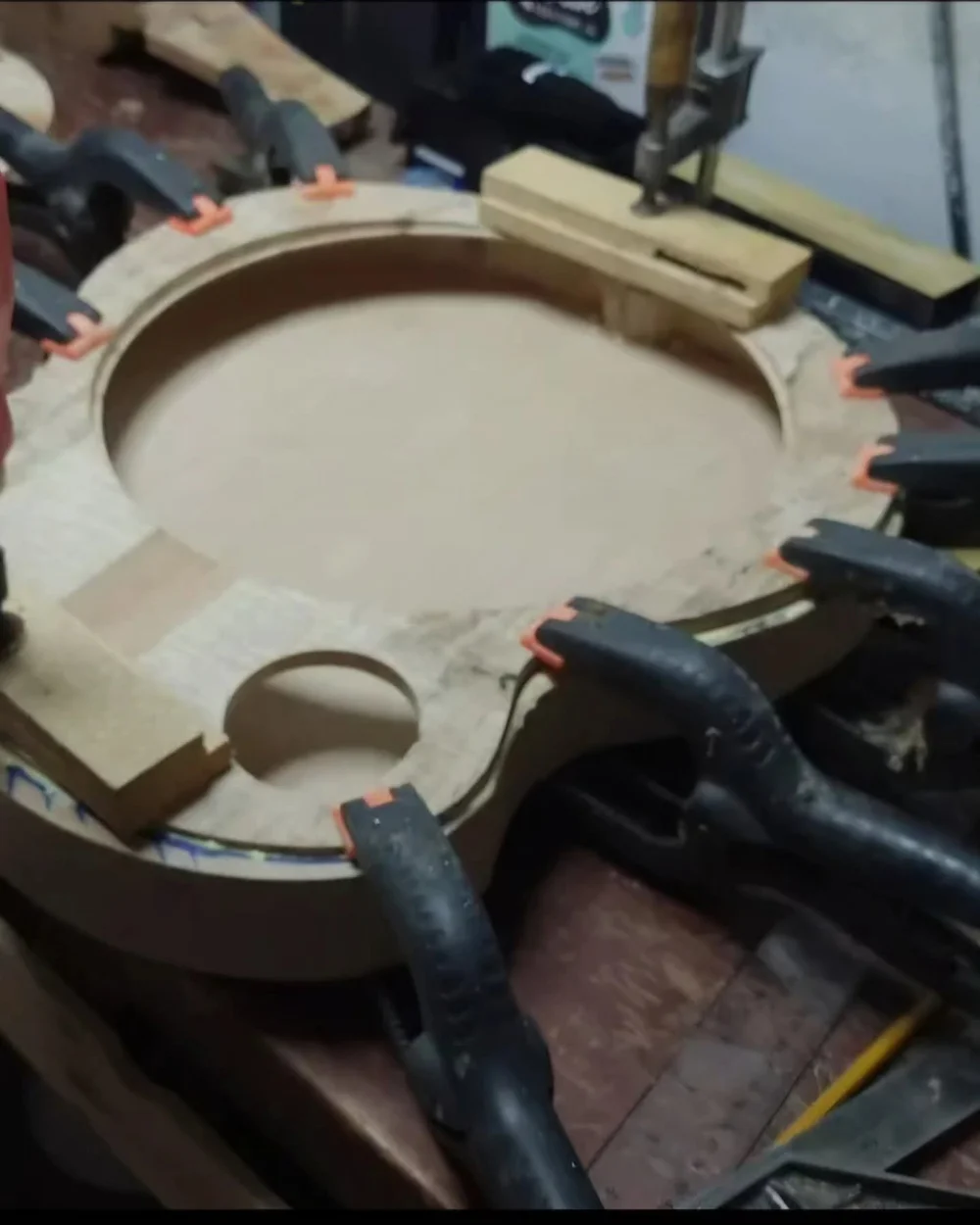
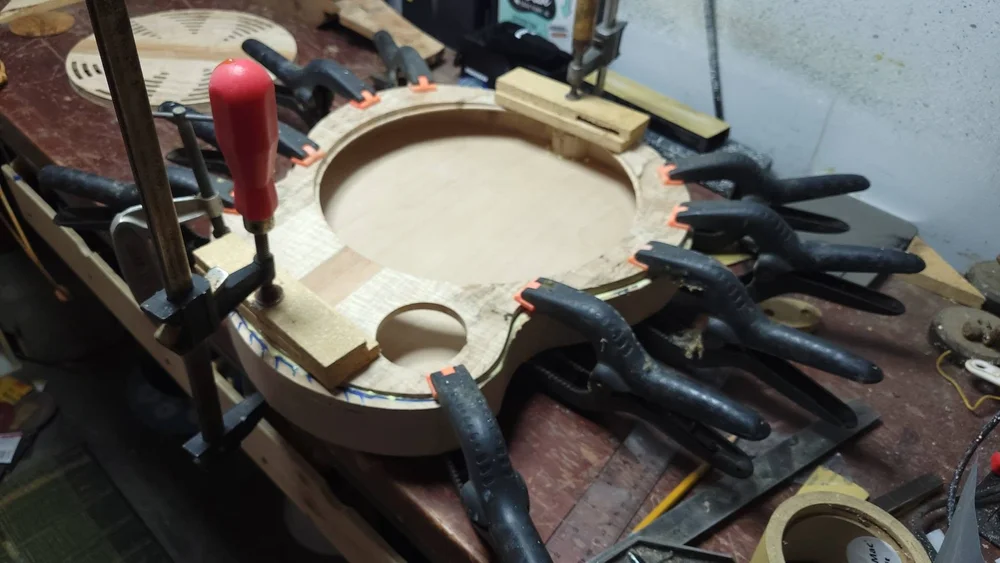
Violin cleats and hot hide glue on the centre seam
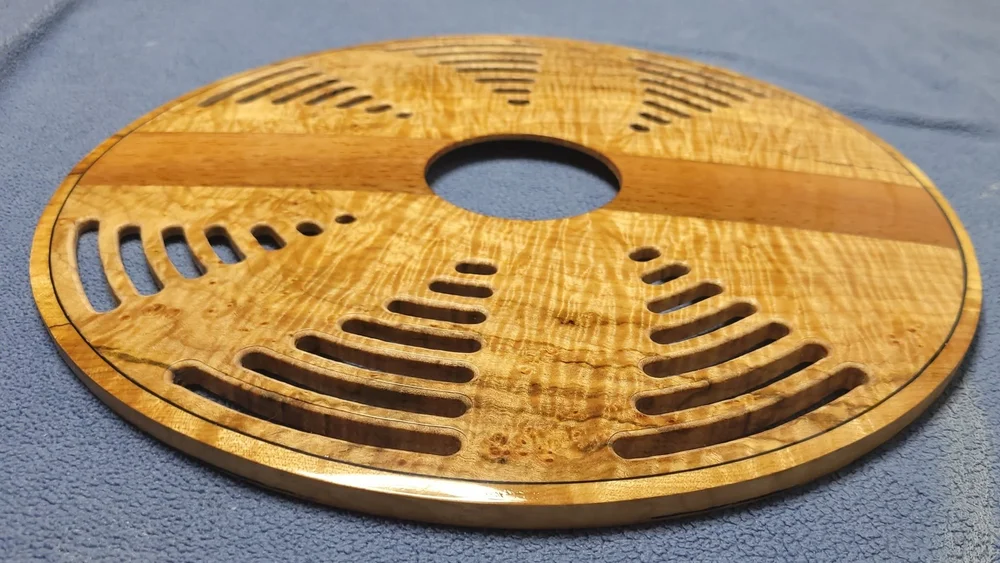
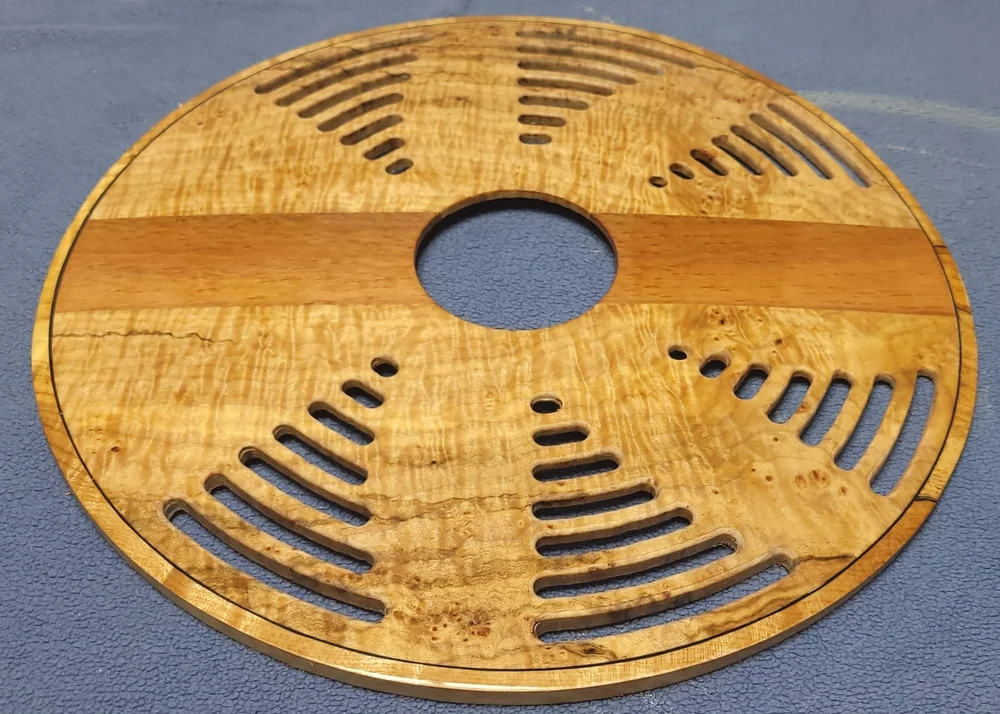
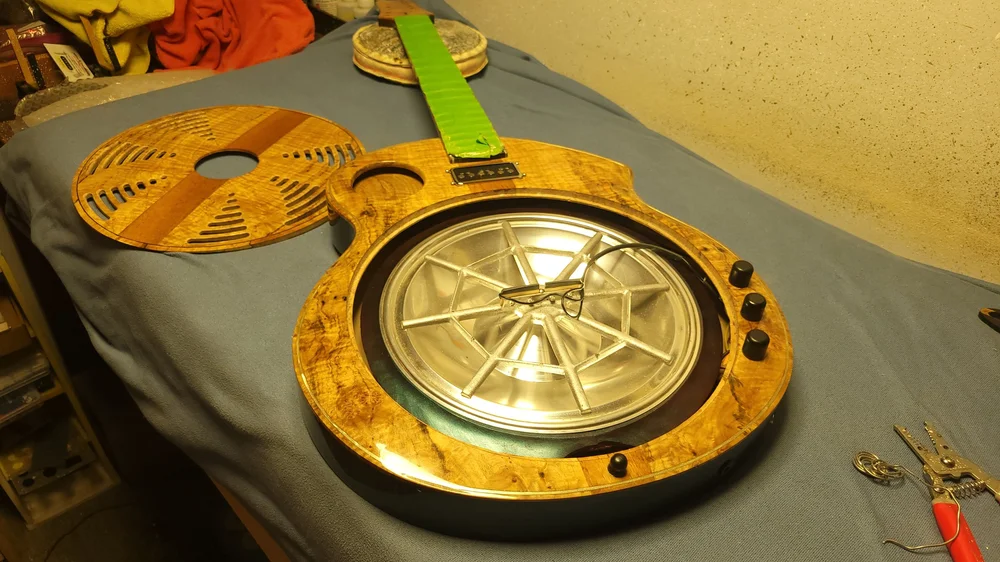
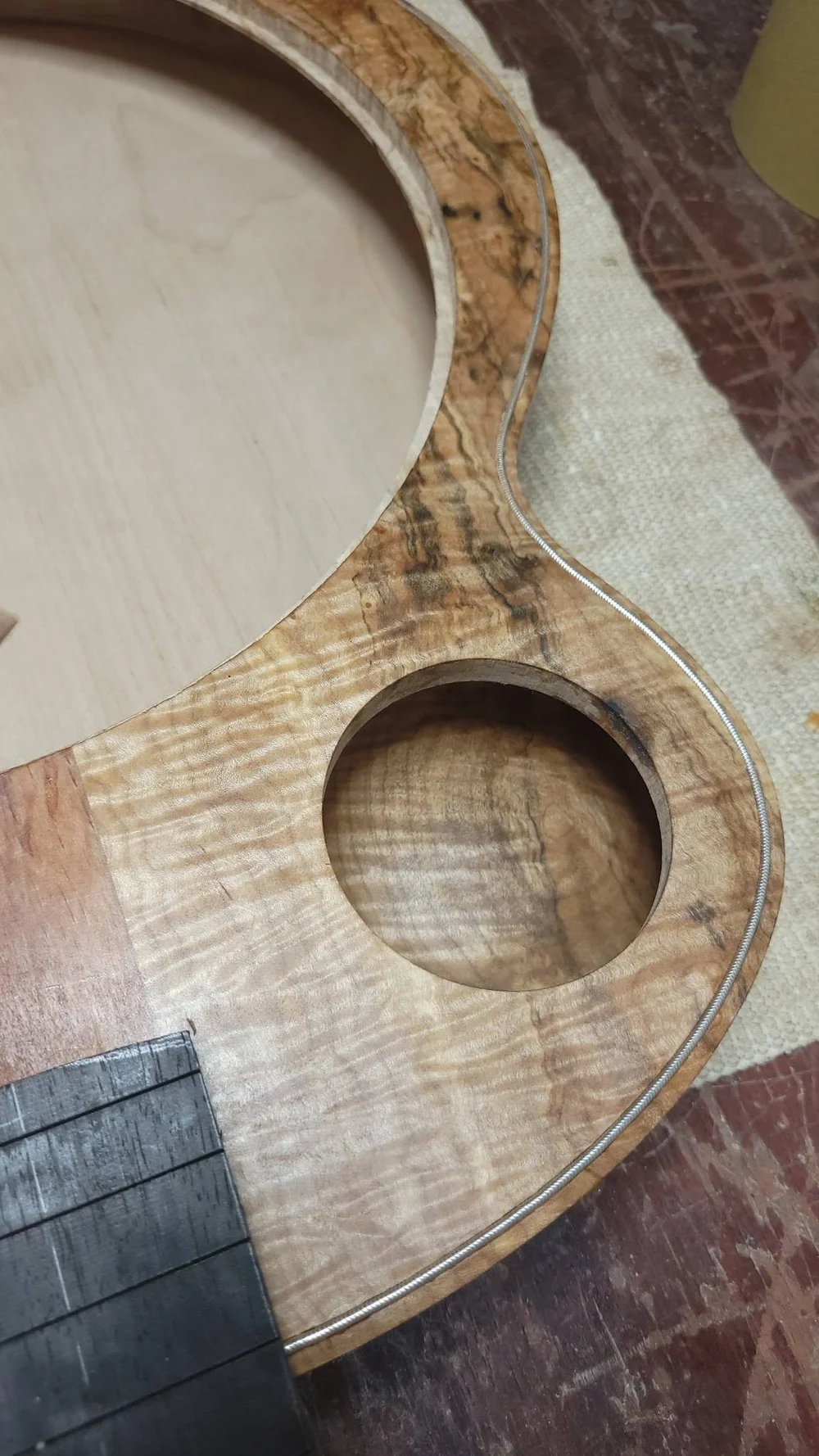
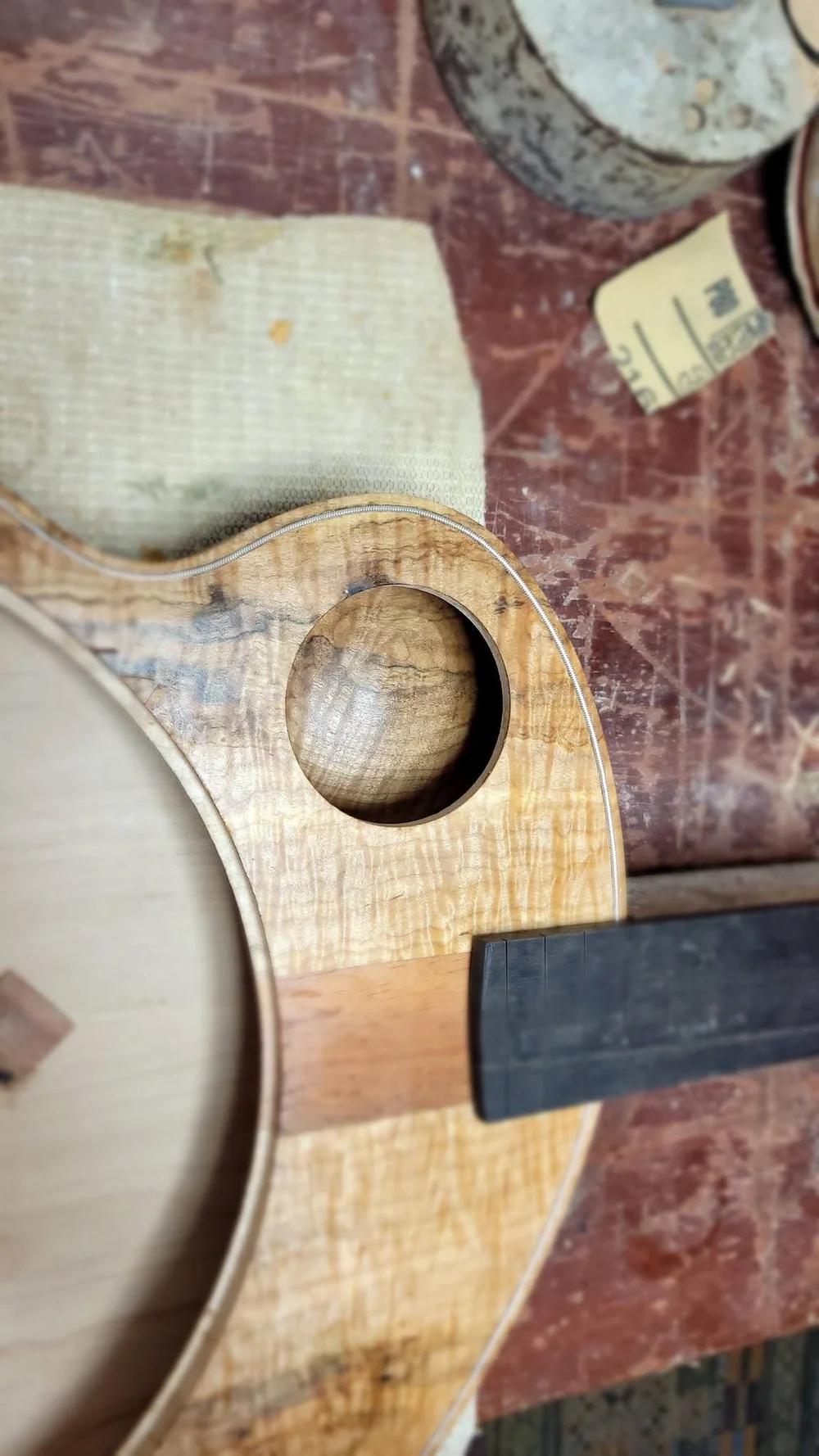
Making the cover plate
Bullfrog 12 Bullfrog 12 Bullfrog 12 Bullfrog 12 Bullfrog 12 Bullfrog 12 Bullfrog 12 Bullfrog 12 Bullfrog 12

Finish
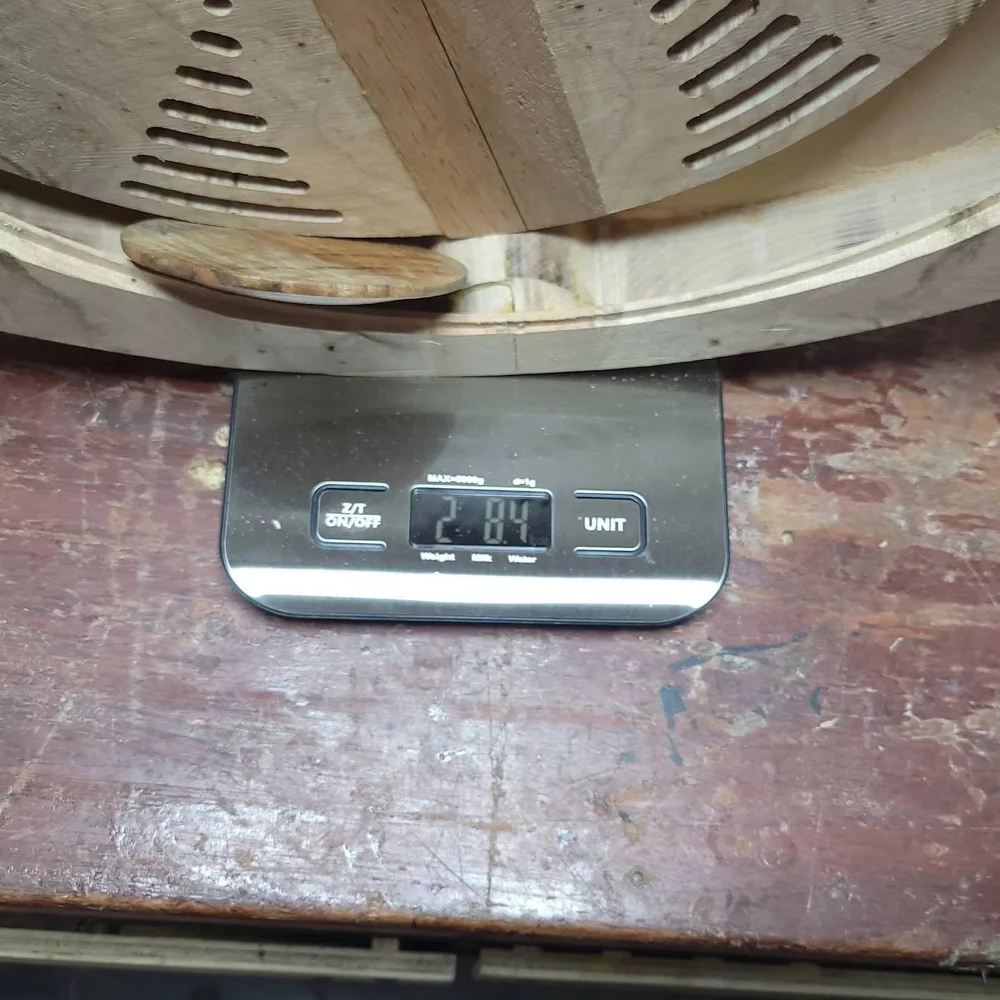
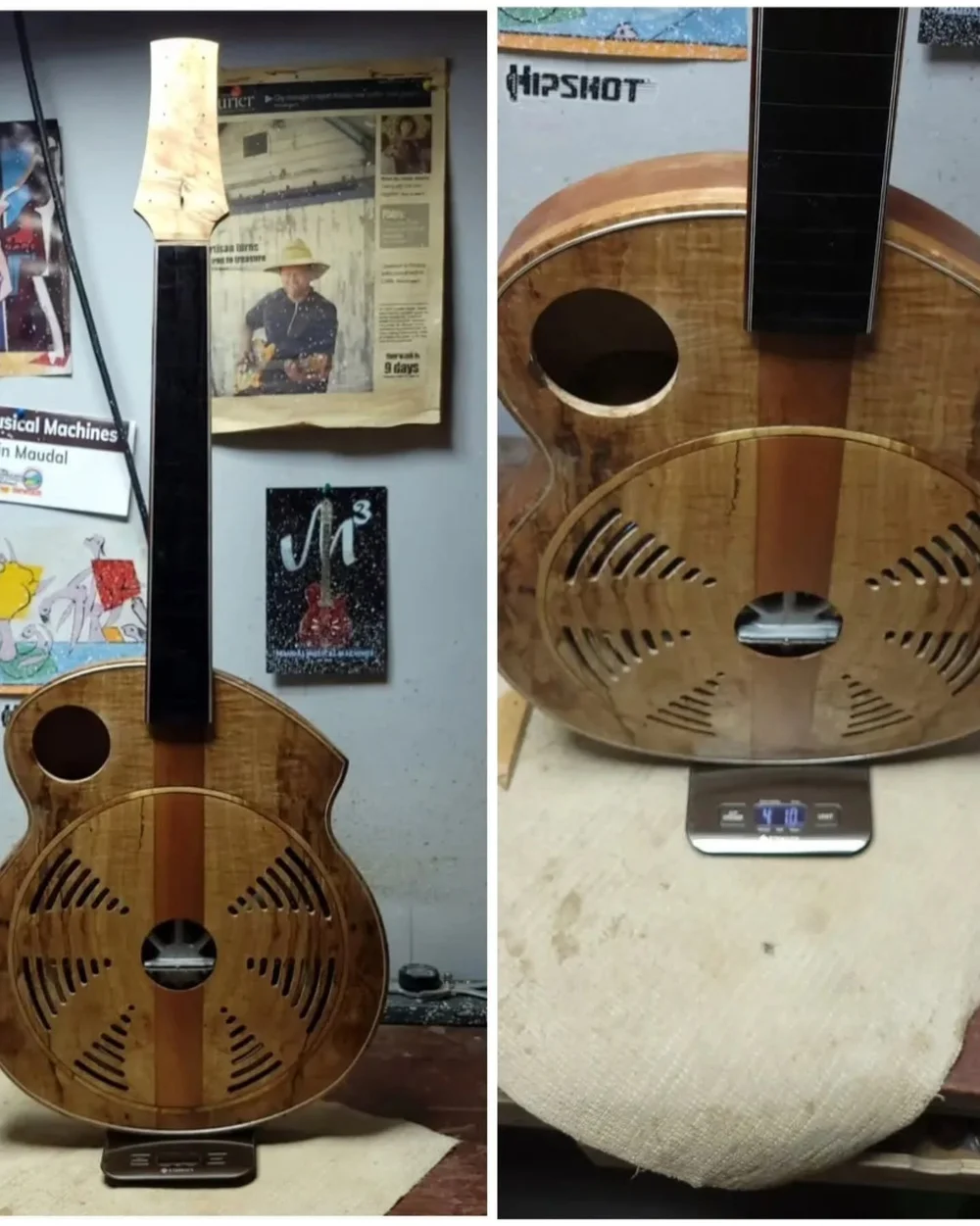
On the scale — 4 lbs 10 oz
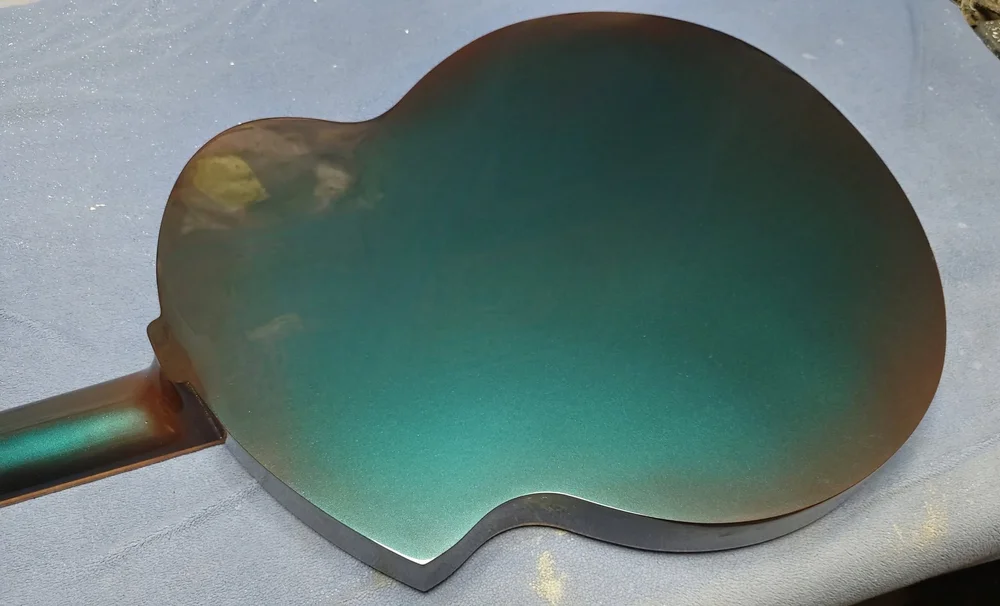
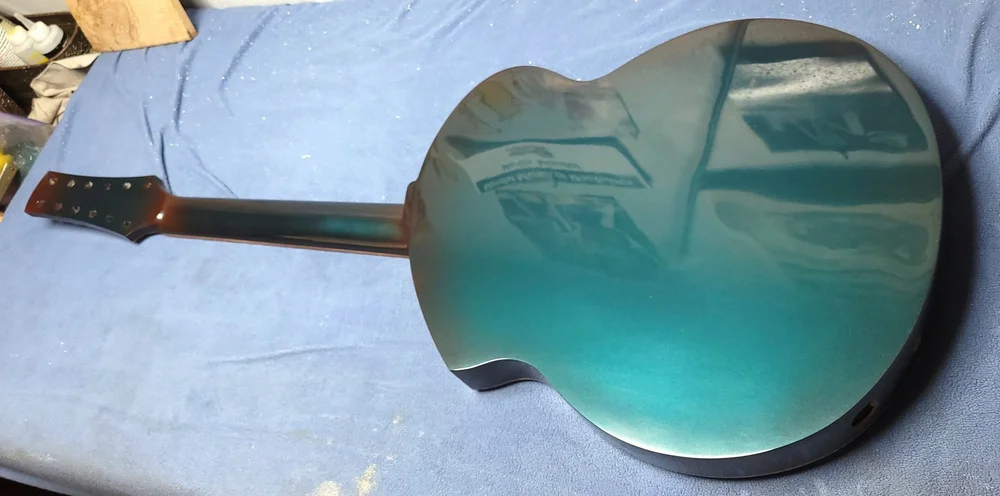
All colour on, water-sanded flat, before the clear coats
Bullfrog 12 Bullfrog 12 Bullfrog 12 Bullfrog 12 Bullfrog 12 Bullfrog 12 Bullfrog 12 Bullfrog 12 Bullfrog 12 Bullfrog 12 Bullfrog 12 Bullfrog 12 Bullfrog 12 Bullfrog 12 Bullfrog 12 Bullfrog 12 Bullfrog 12 Bullfrog 12 Bullfrog 12 Bullfrog 12 Bullfrog 12 Bullfrog 12 Bullfrog 12 Bullfrog 12 Bullfrog 12 Bullfrog 12 Bullfrog 12 Bullfrog 12 Bullfrog 12 Bullfrog 12 Bullfrog 12 Bullfrog 12

Tragedy!

Carving the tailpiece
Cutting the string channels — on a fretboard radiusing jig, repurposed
Drilling it
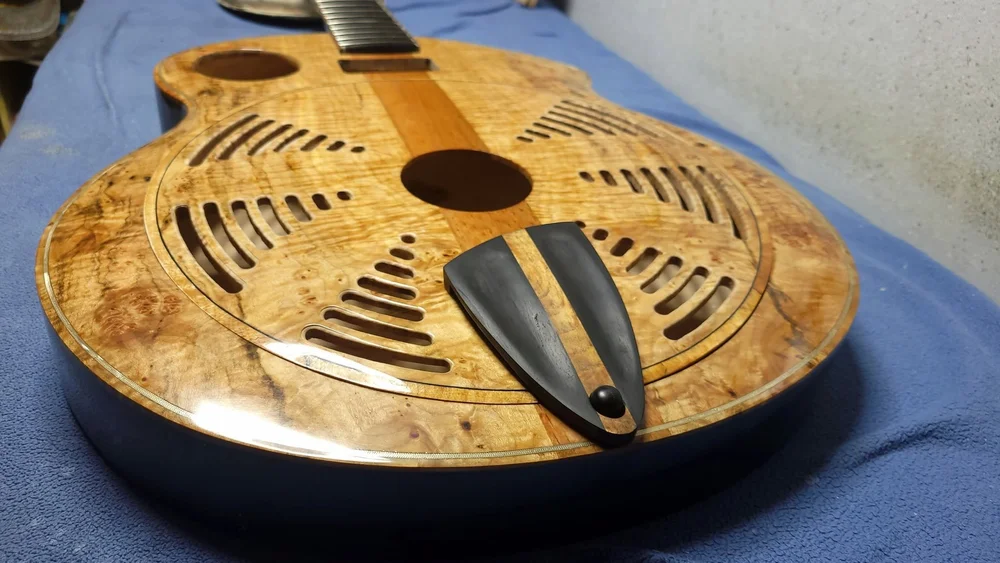
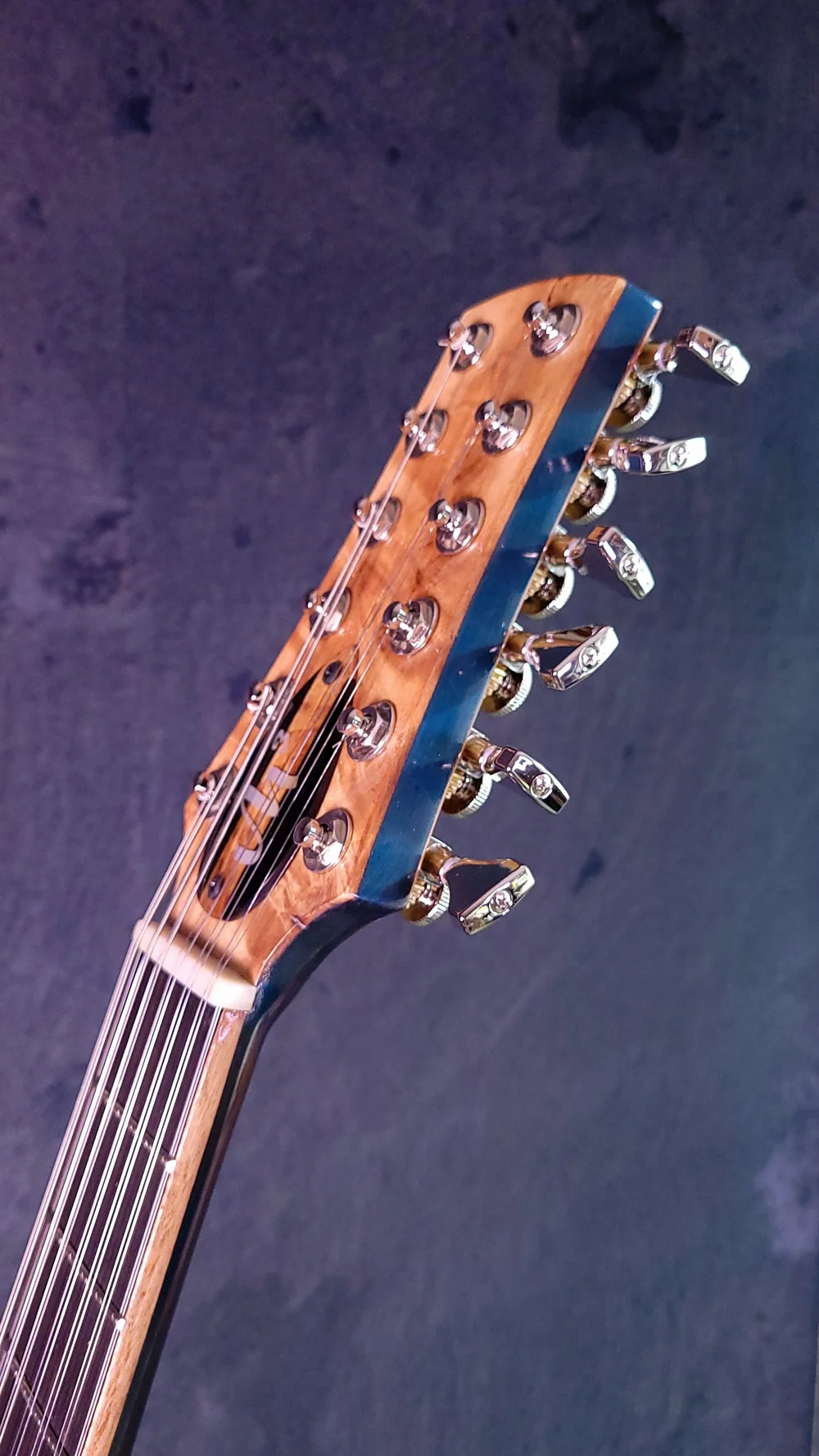
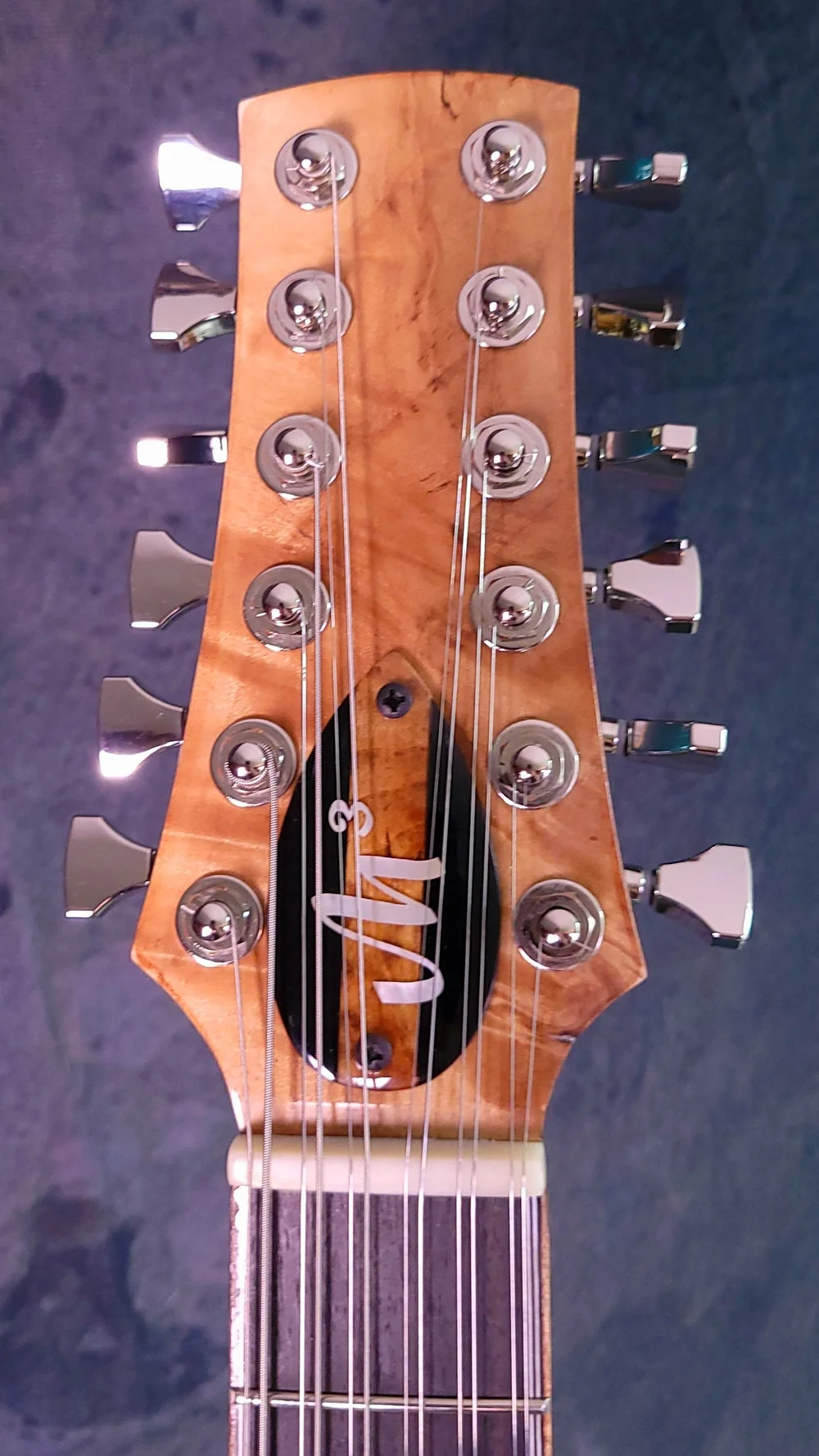
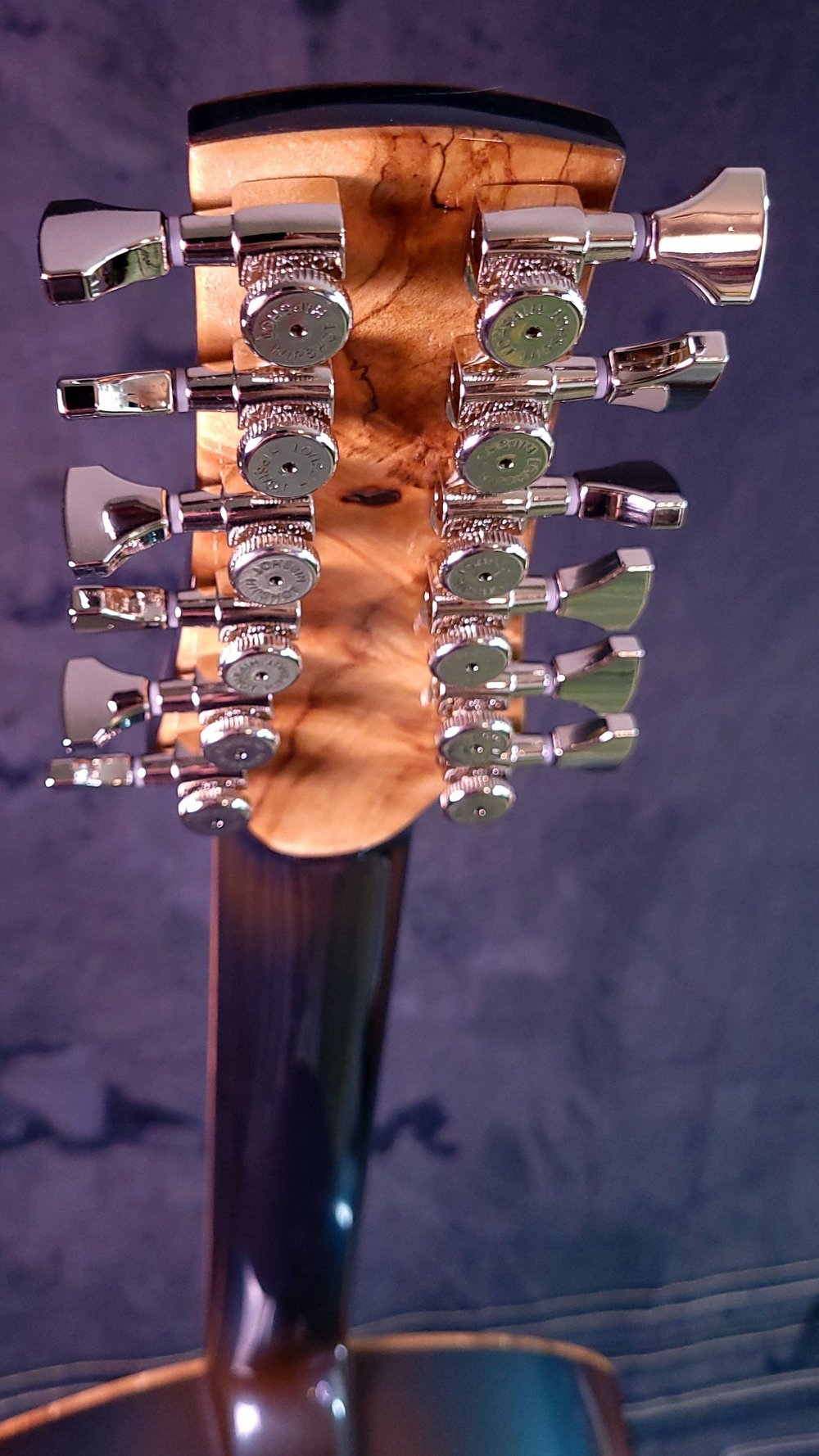
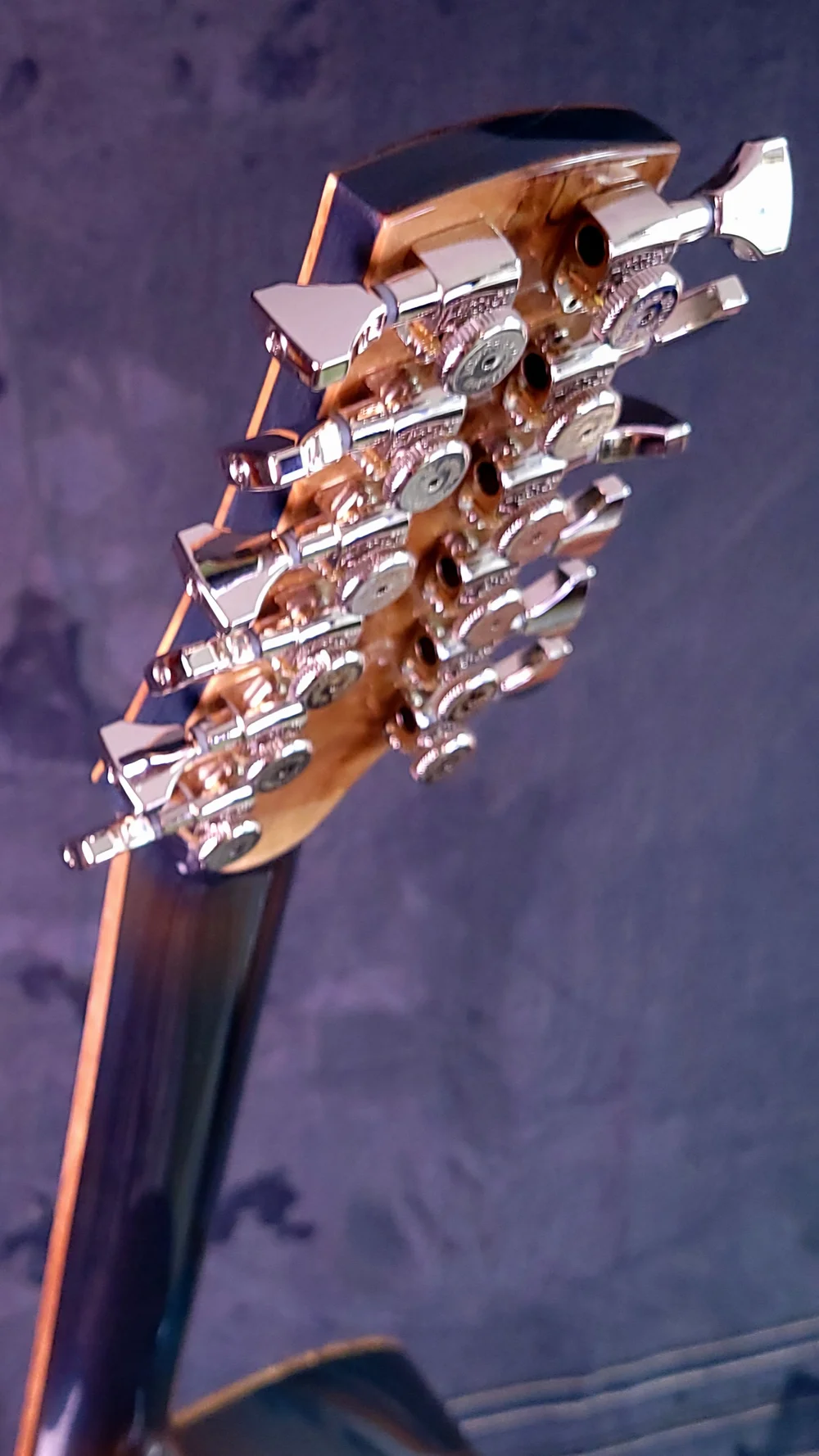
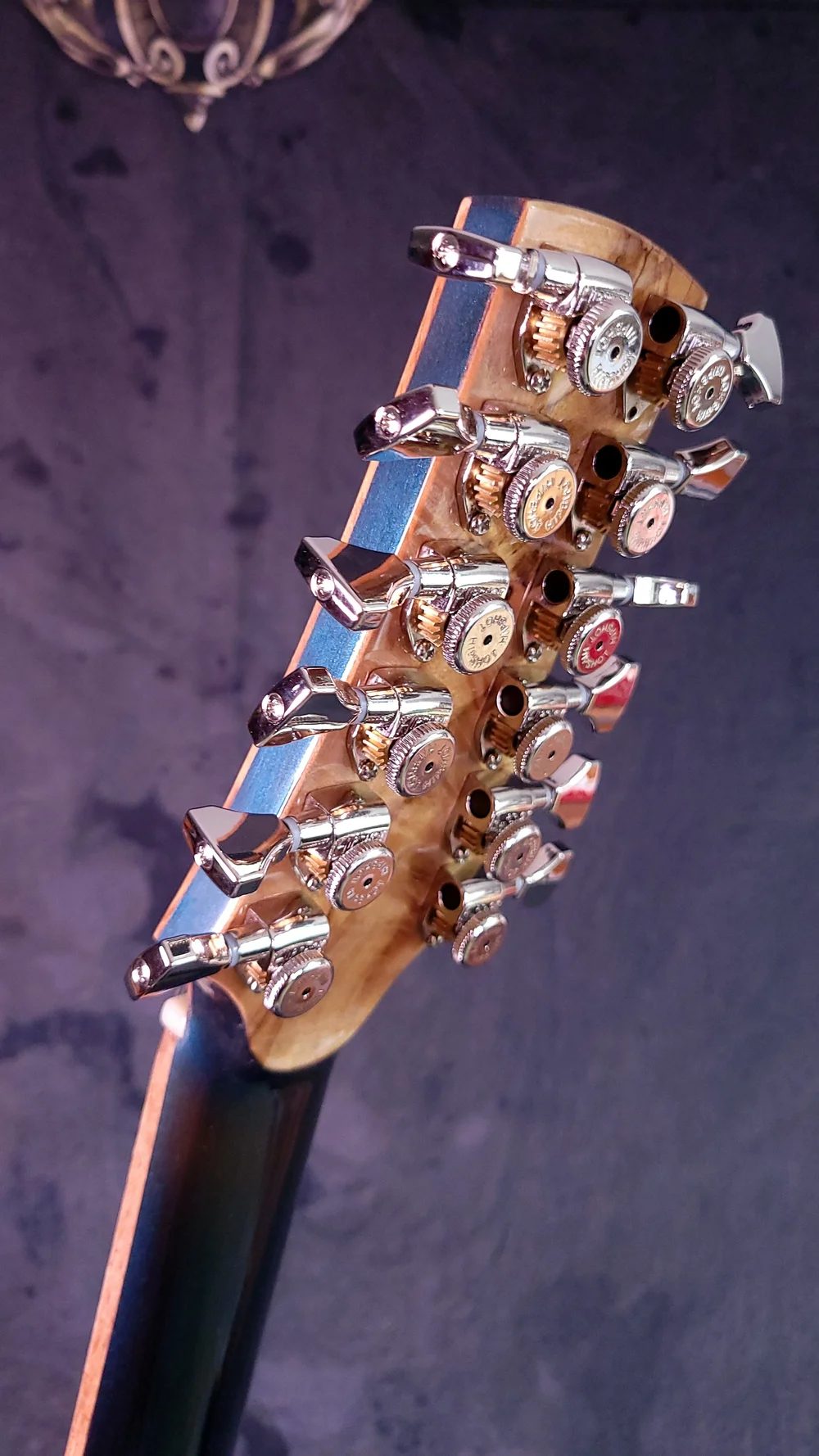
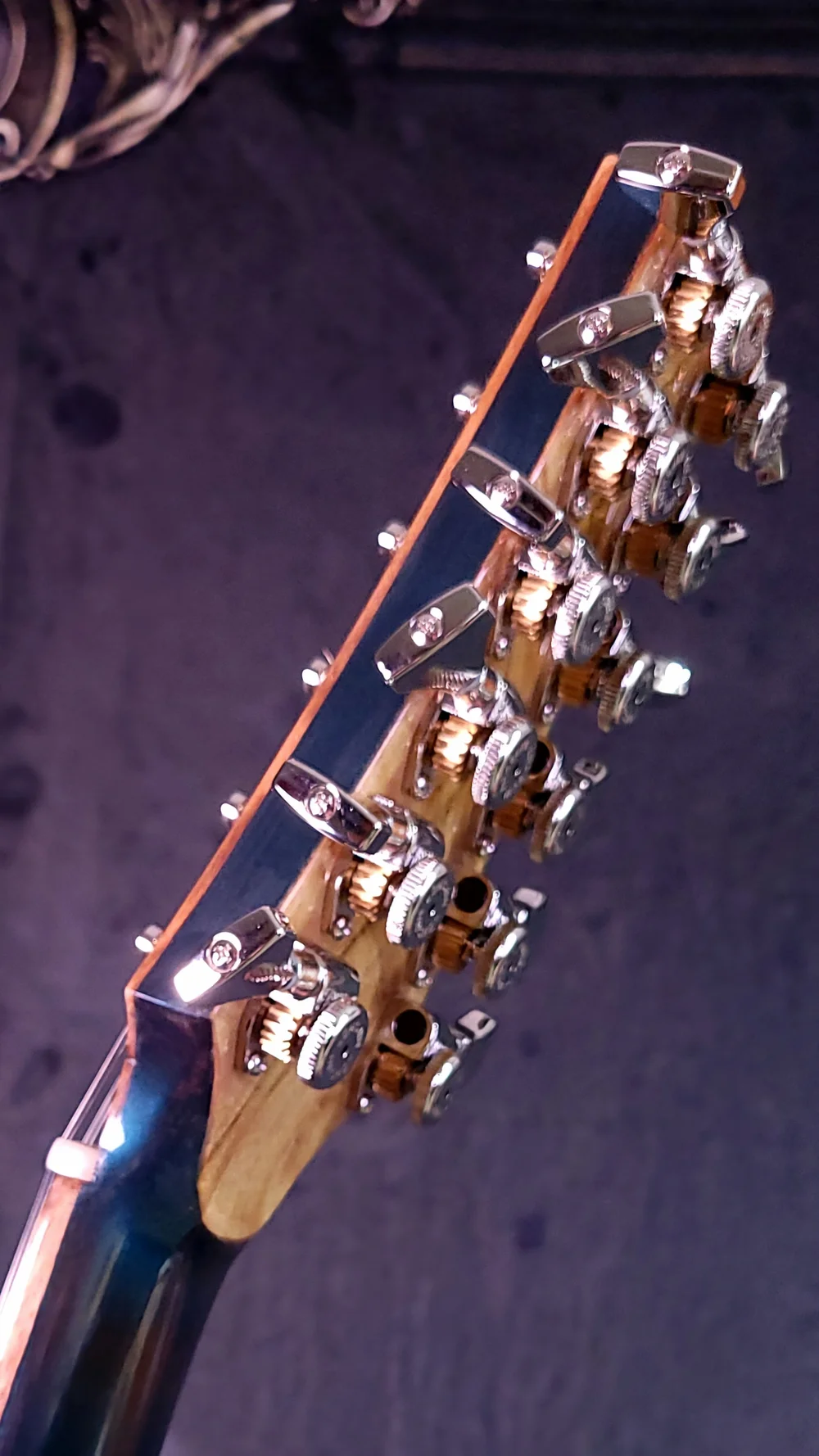
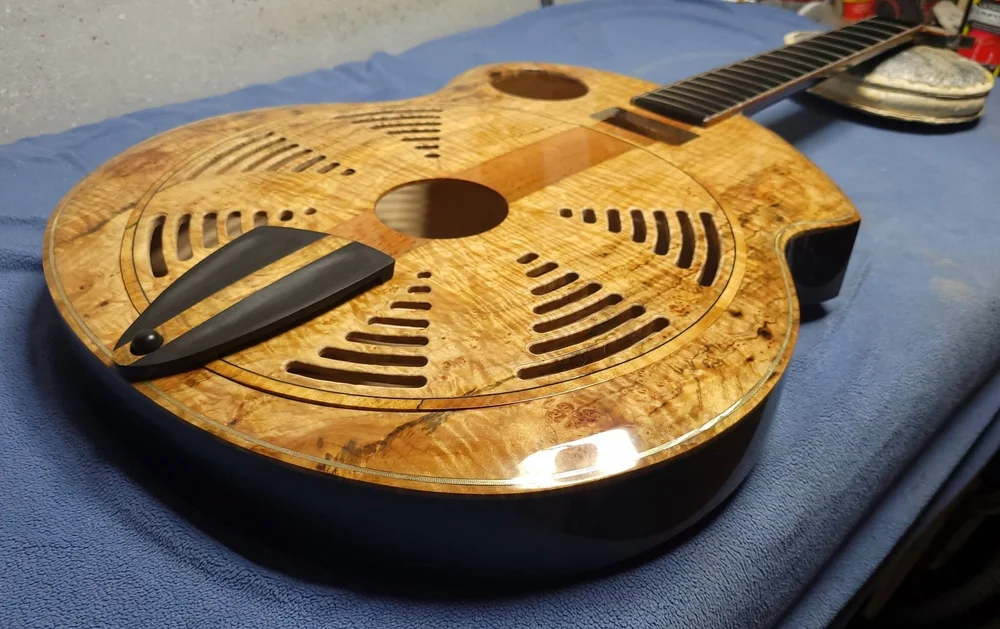
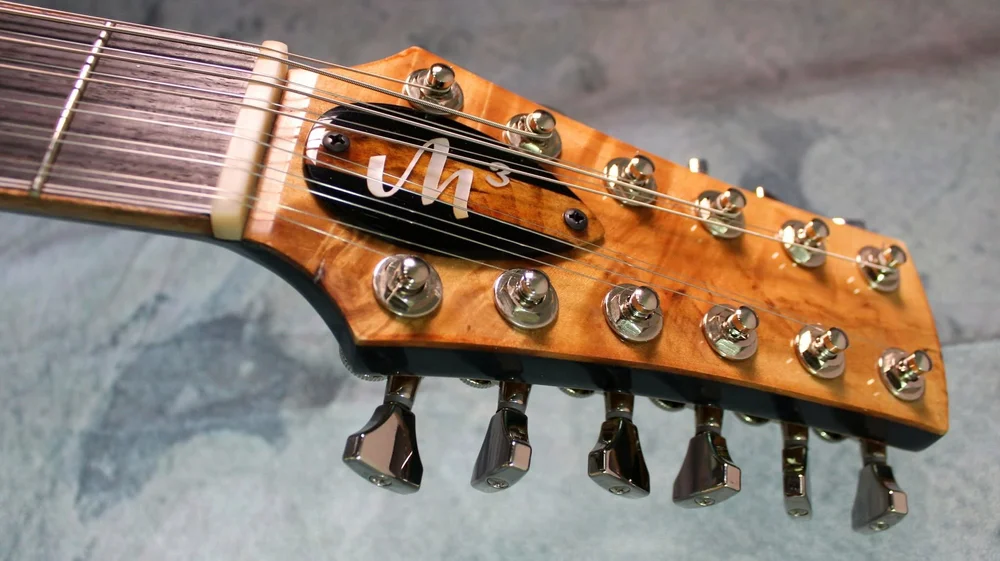
The hood ornament — truss rod cover cut to match, with the tuners just on
Fitted, and the finish underneath it
Stringing up — minutes before

At the moment of first stringing, the tailpiece let go.
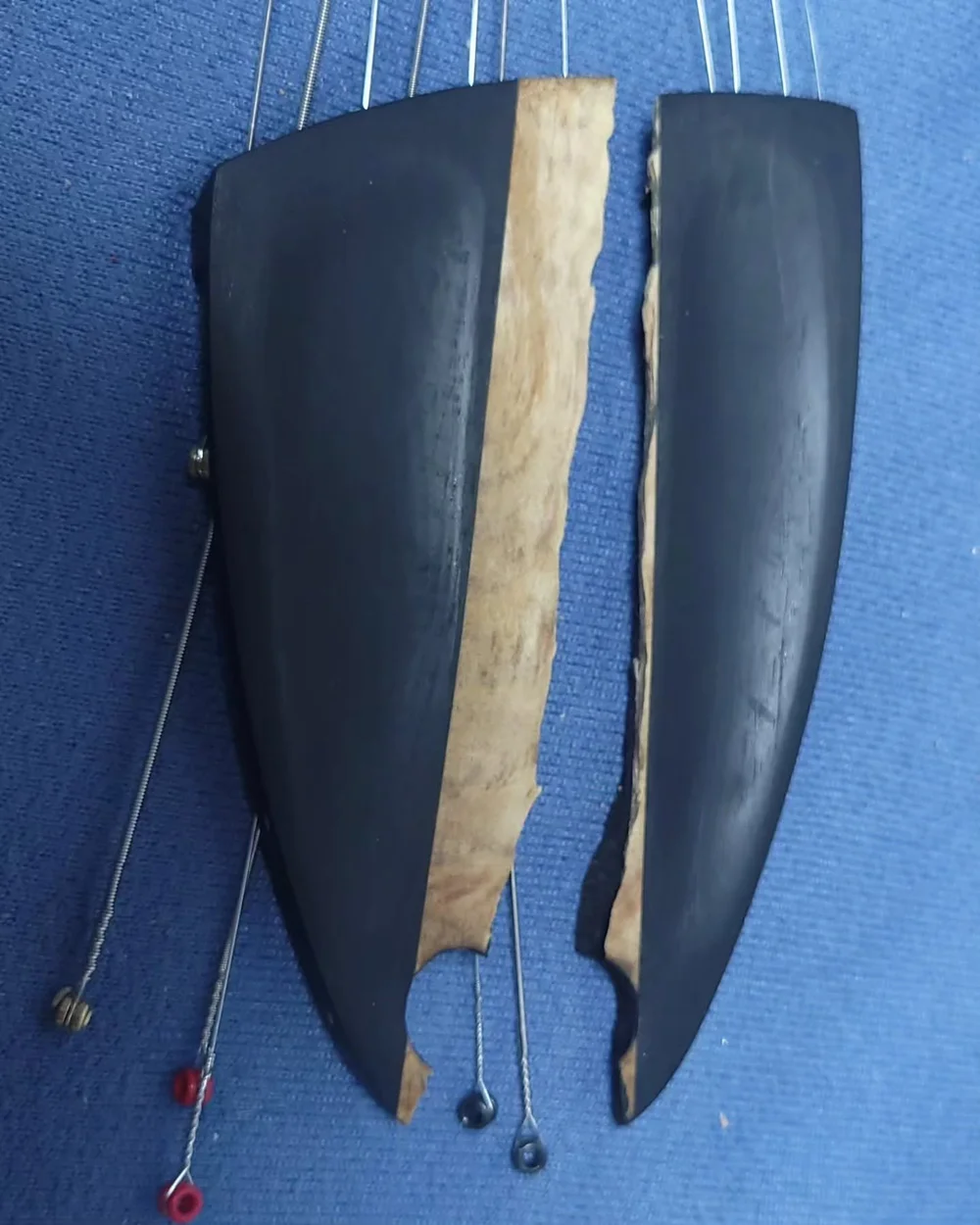
The tailpiece, after
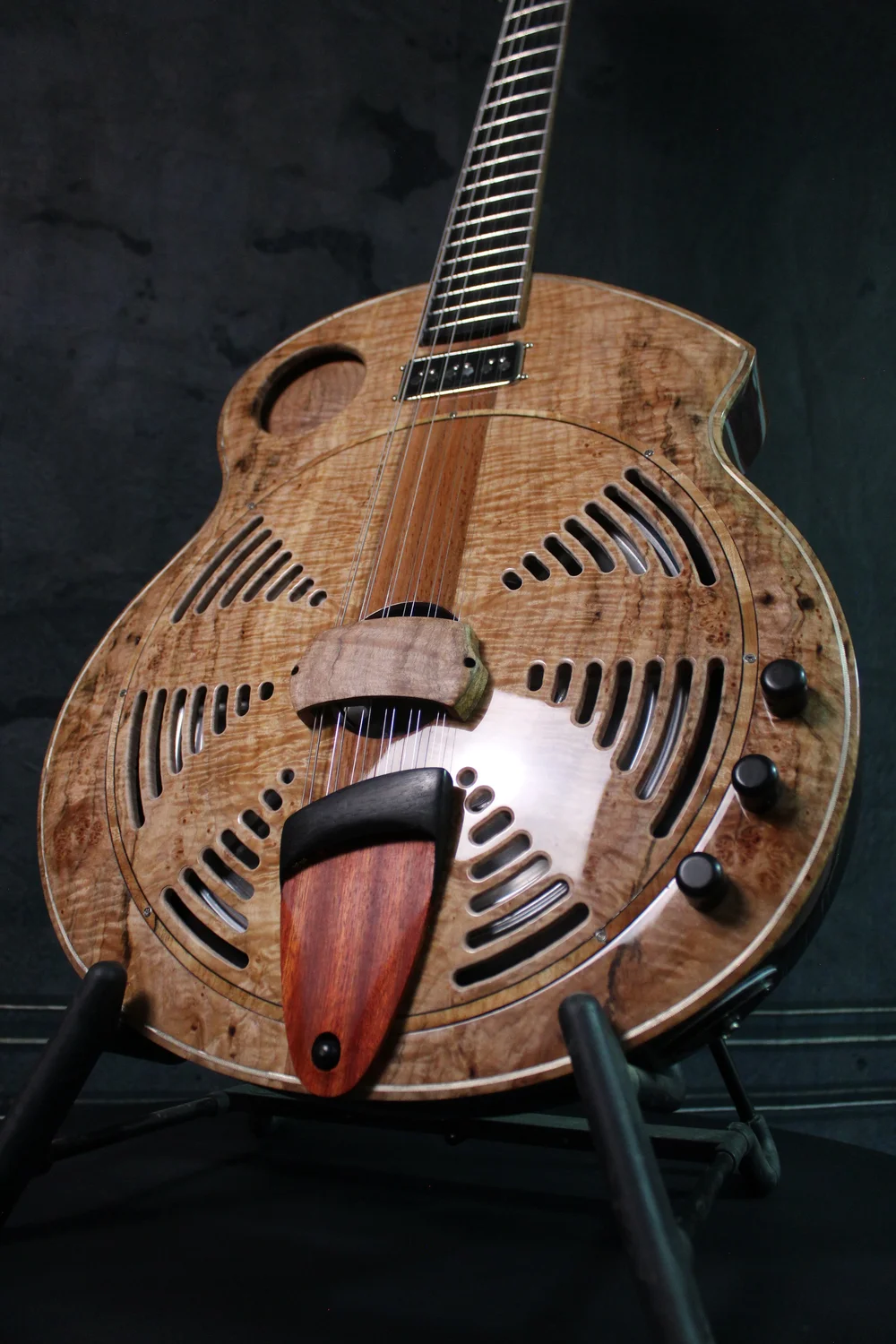
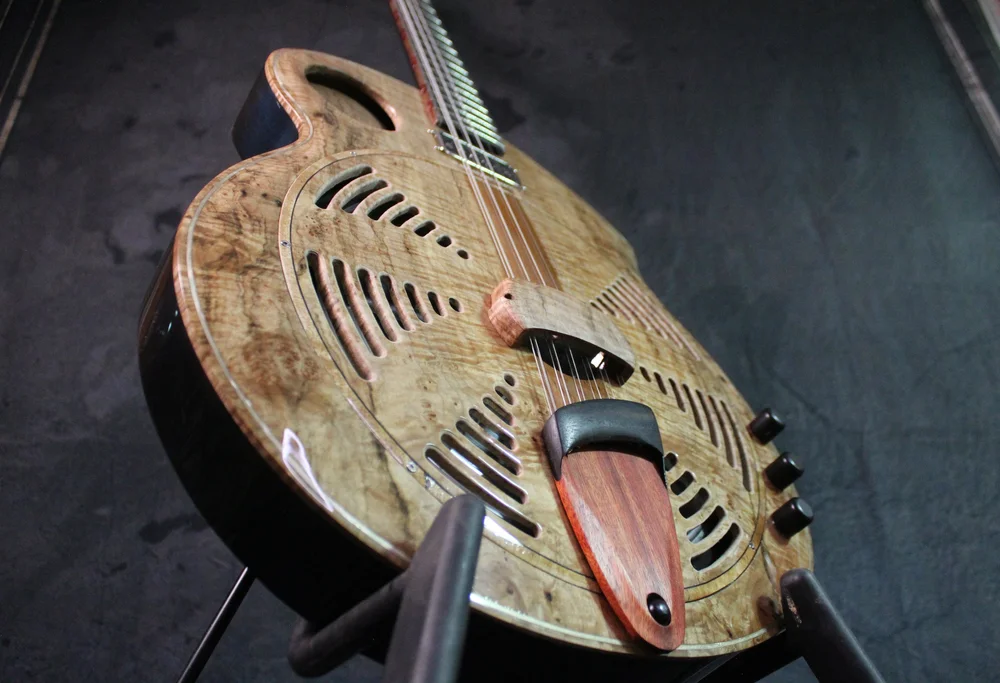
The second tailpiece — bloodwood and ebony, a different design

The replacement was a new piece entirely — bloodwood and ebony, a different design. The truss rod cover had been cut to match the first one, so that had to be made again too. Both went on under deadline for the show.

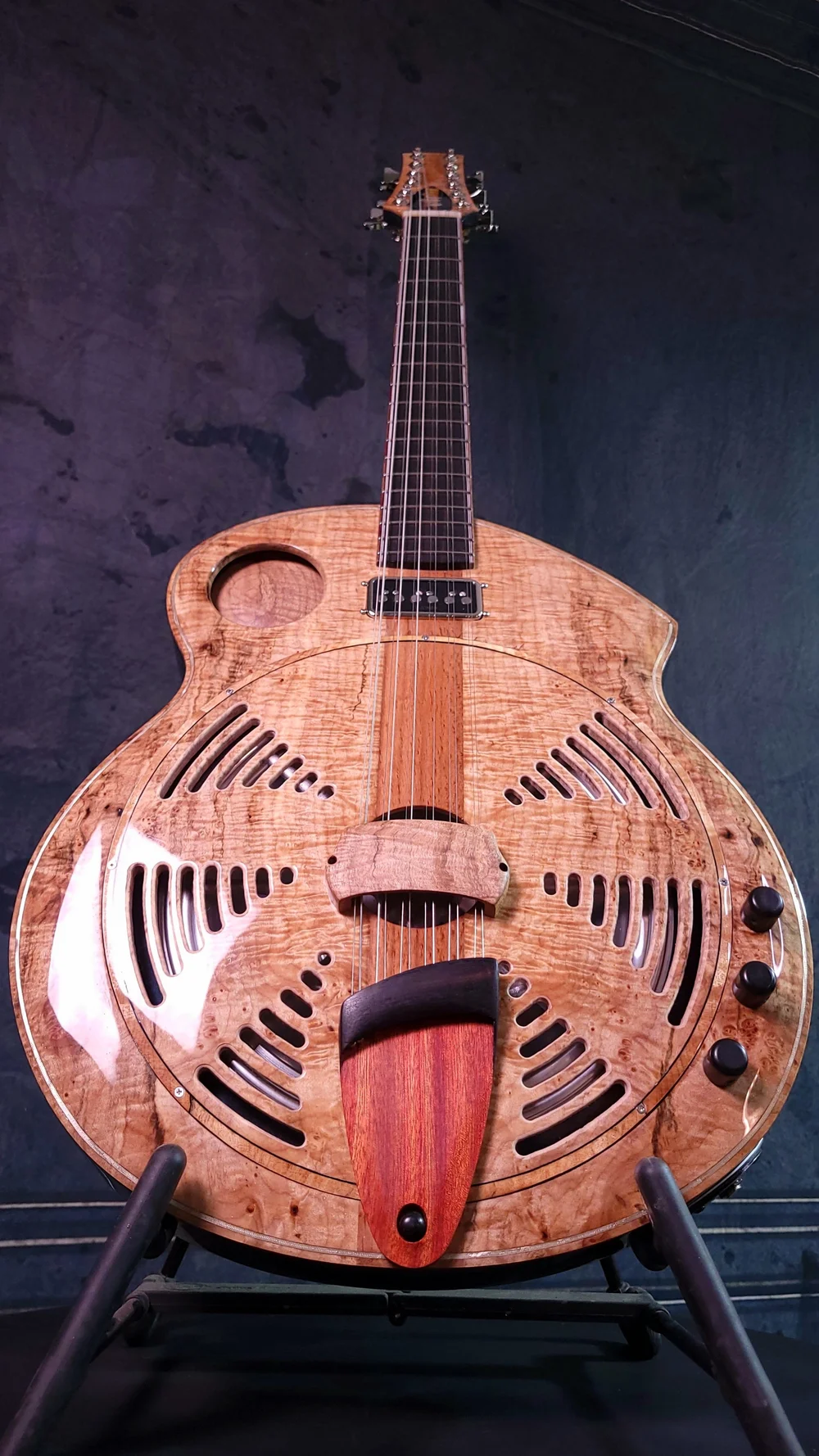
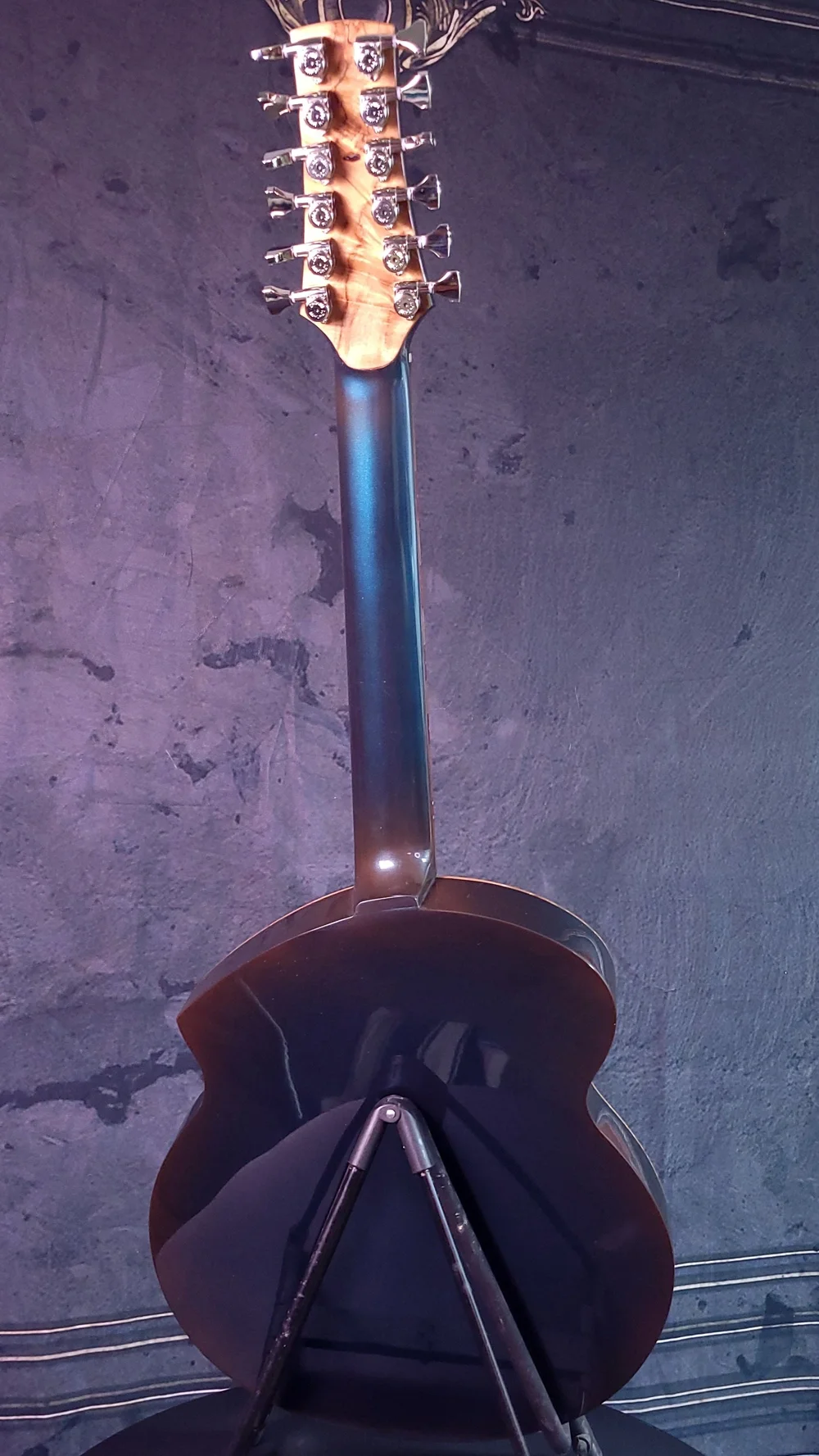
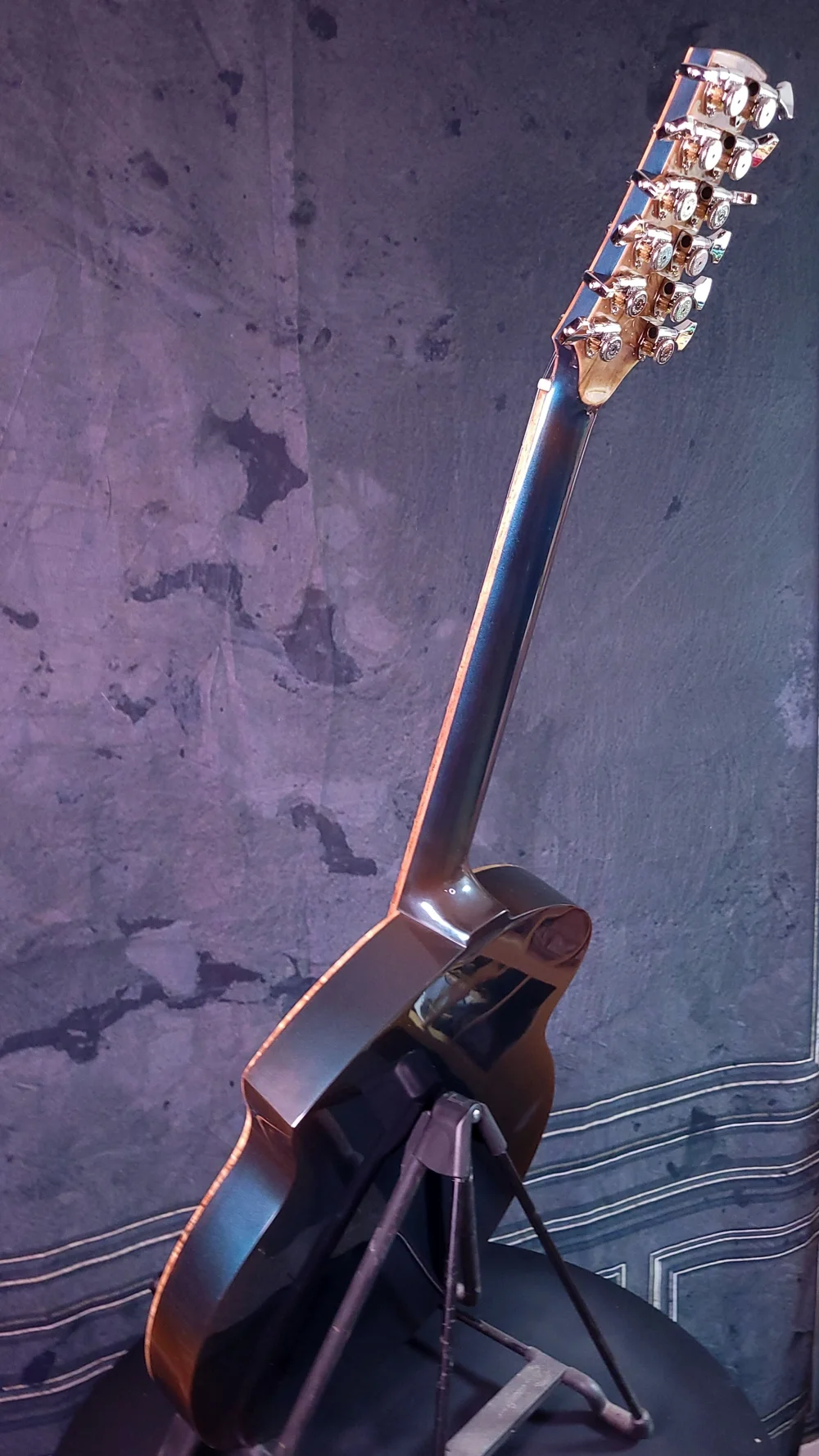
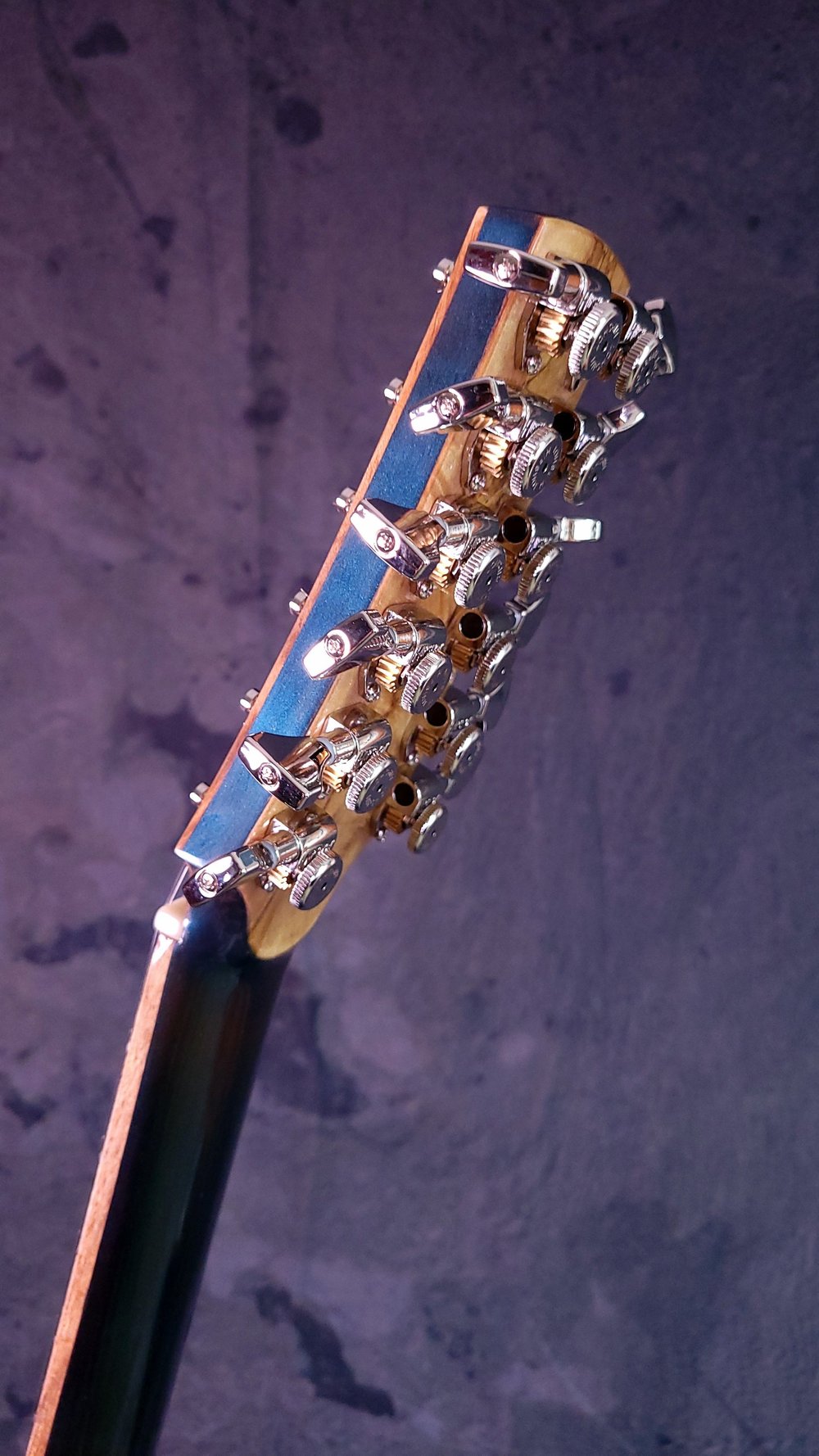
The Instrument

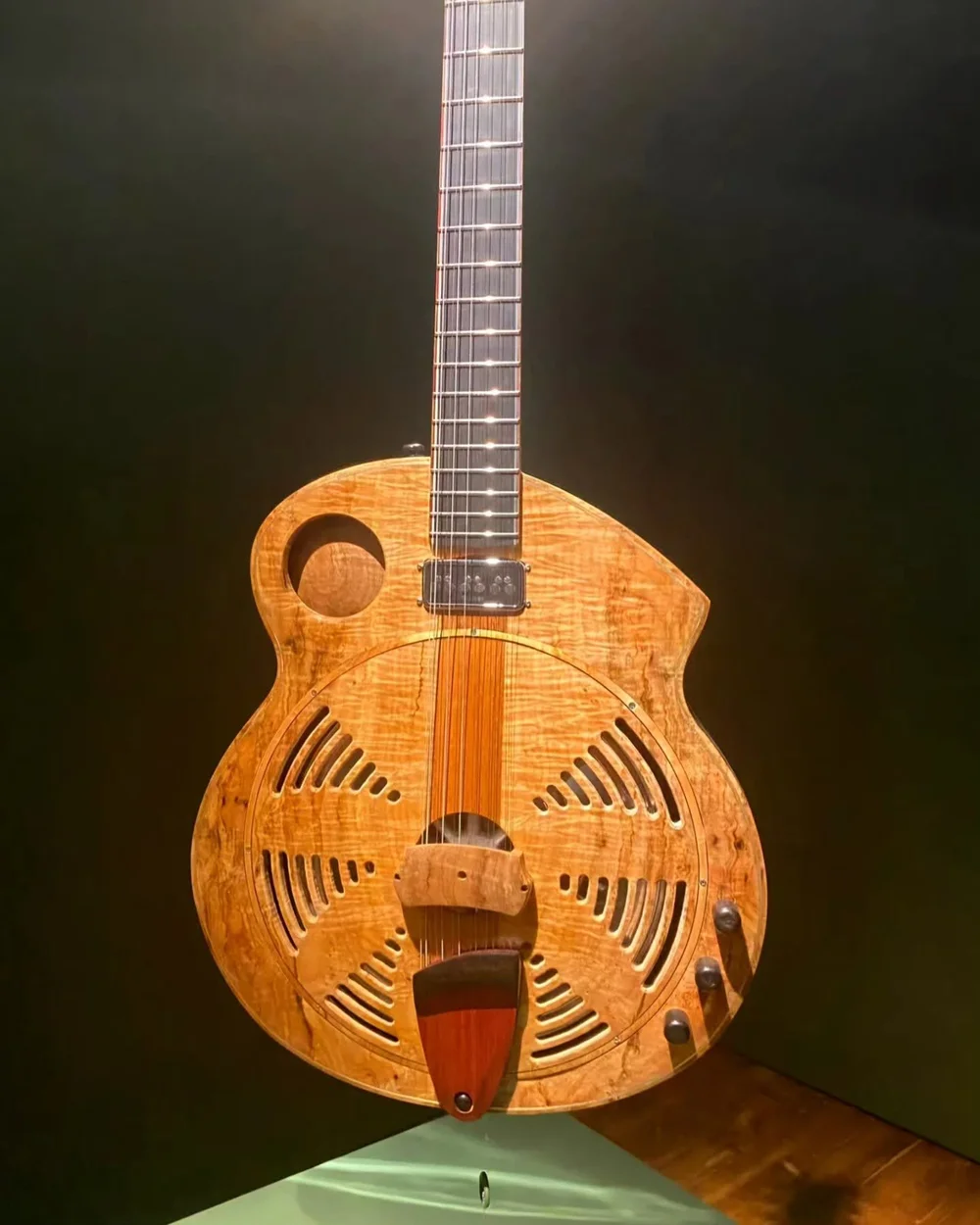
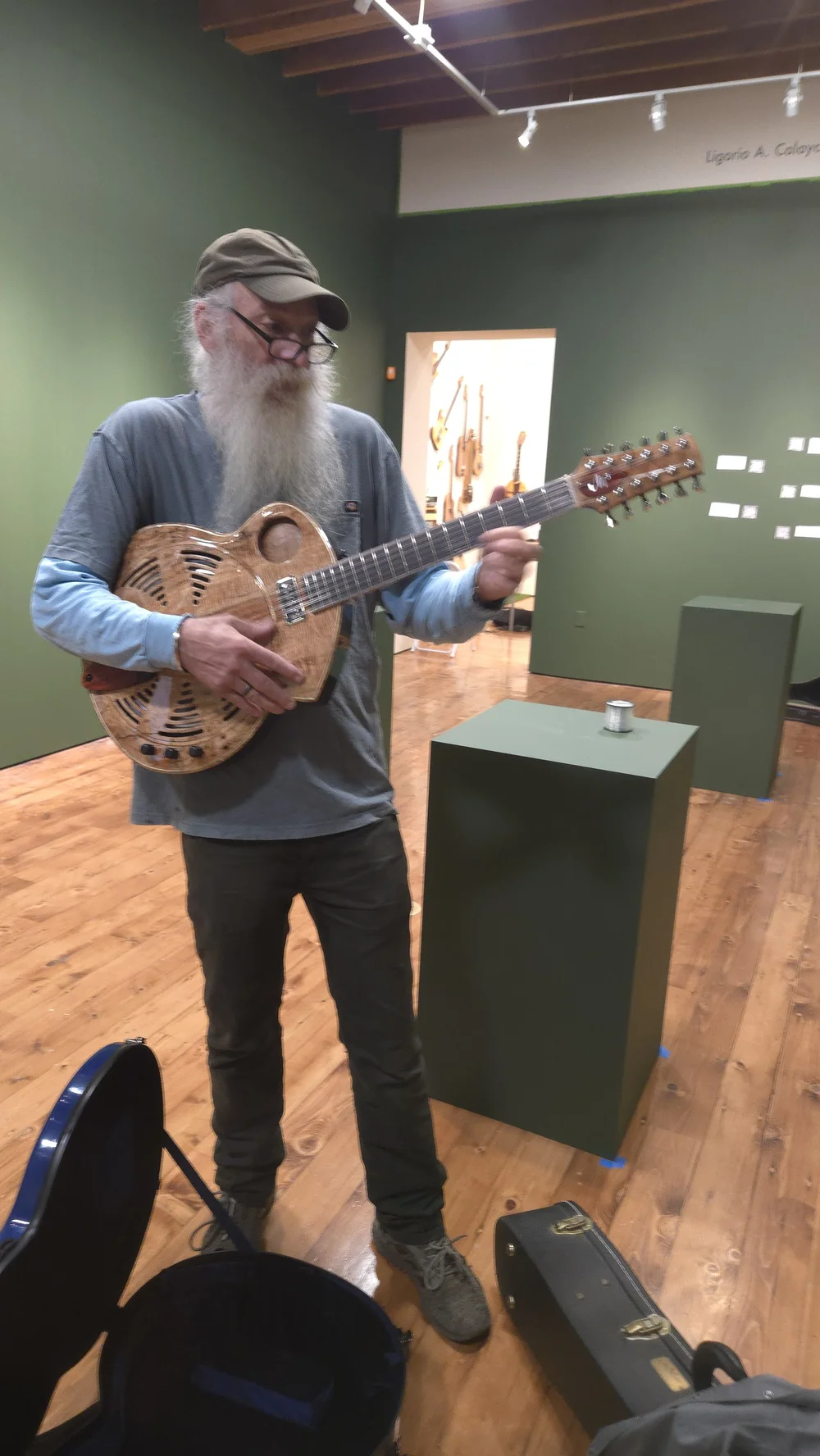
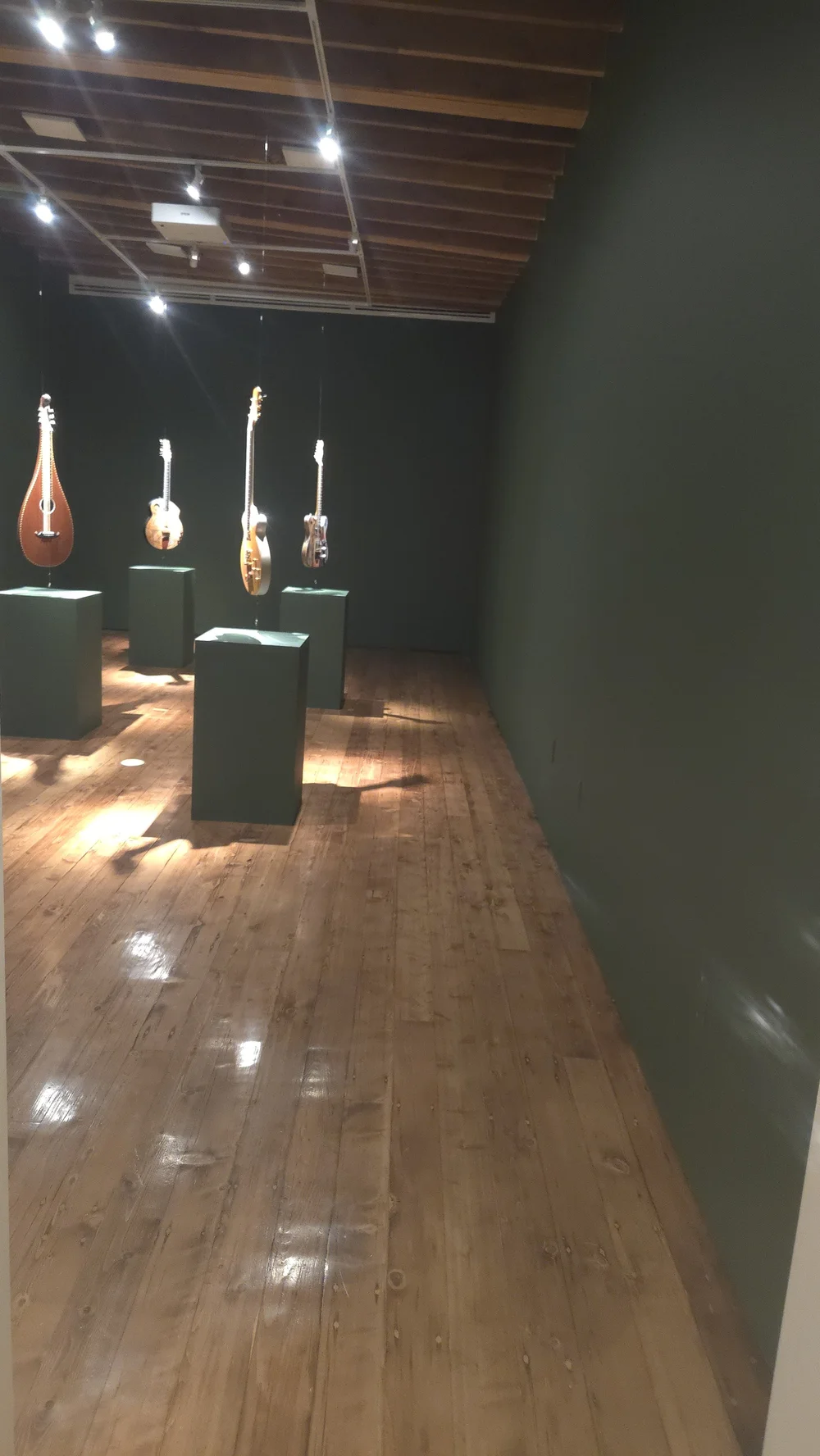
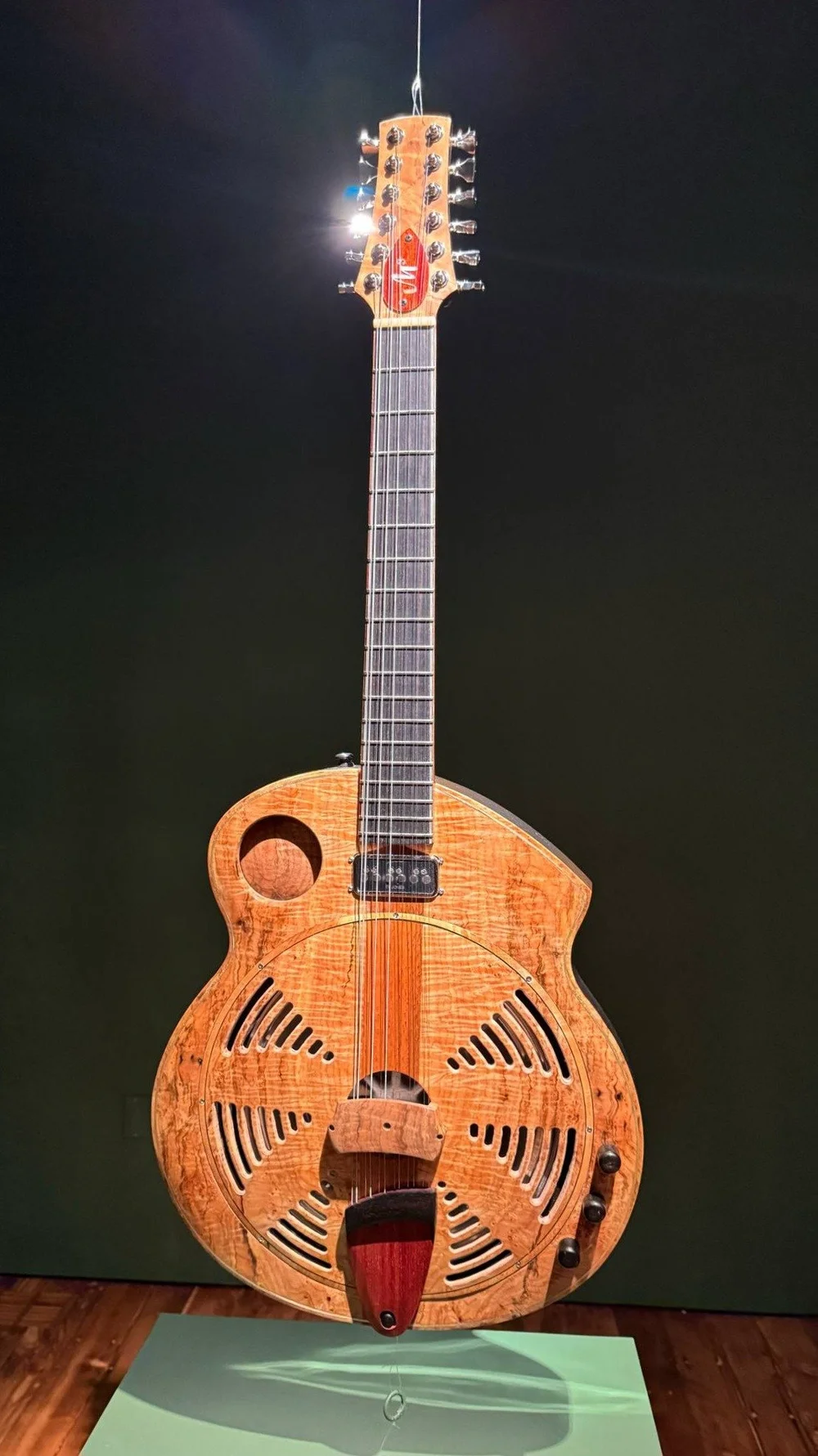
Apr 2025 · Claremont Lewis Museum of Art

Magnetic grounding

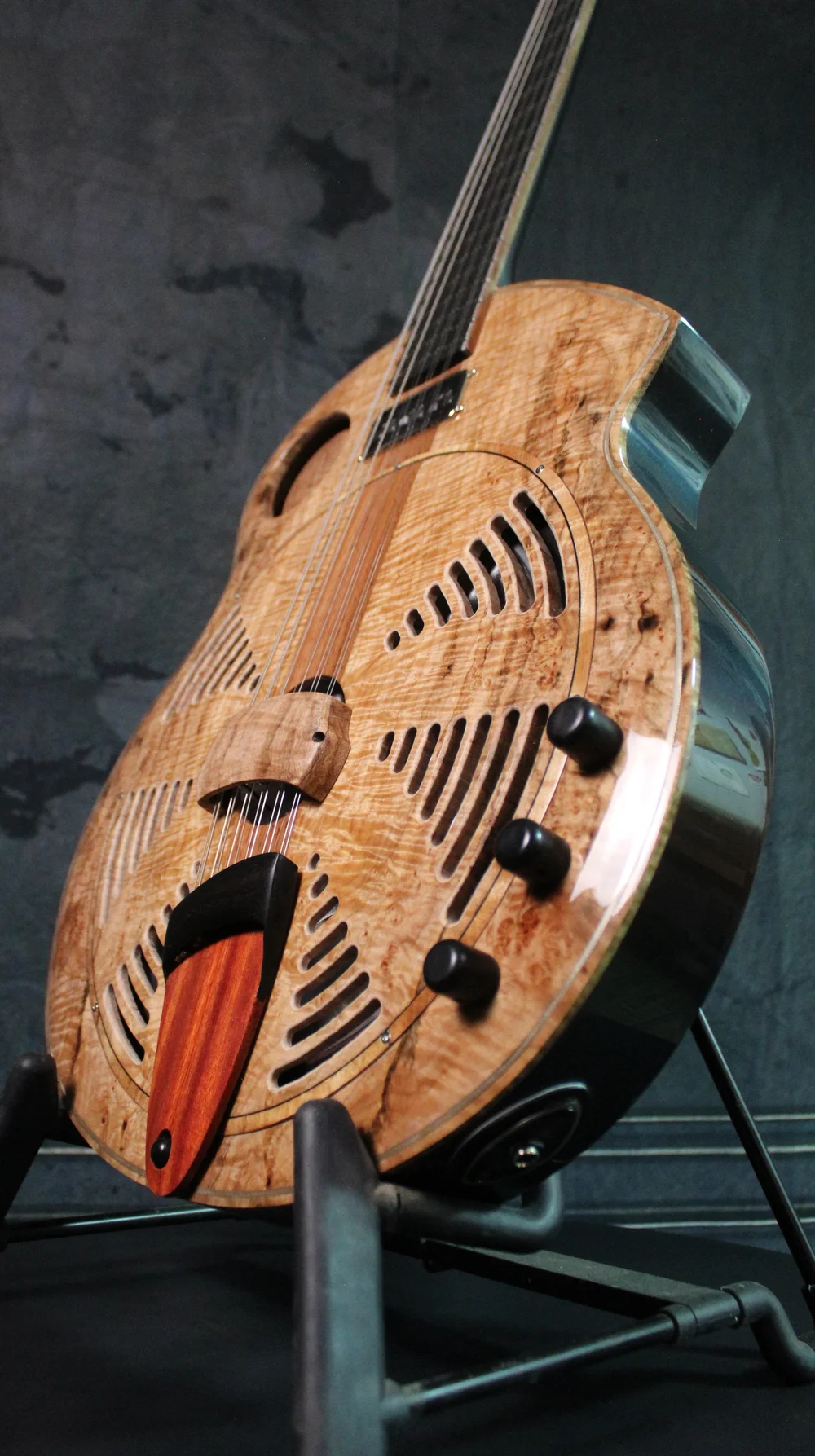
A wooden tailpiece usually forces a choice: ground the strings properly, or keep the tailpiece removable. This one drops over a post, and the ground wire emerges through the top just ahead of it, ending in a magnet. A second magnet is inset into the underside of the tailpiece. Lift it off and the circuit breaks; set it back down and it grounds itself.
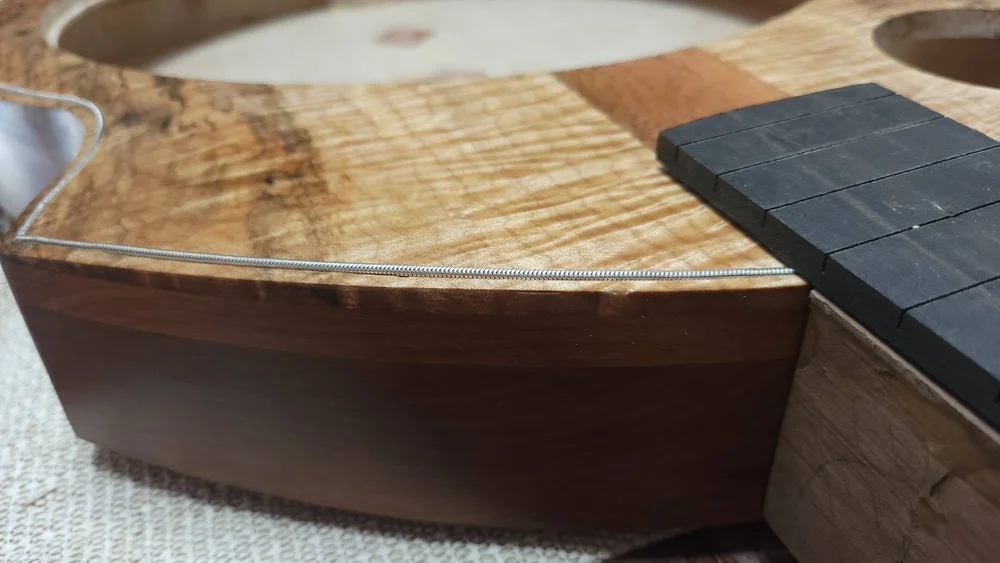
Grounding through the tailpiece — shown on a multimeter
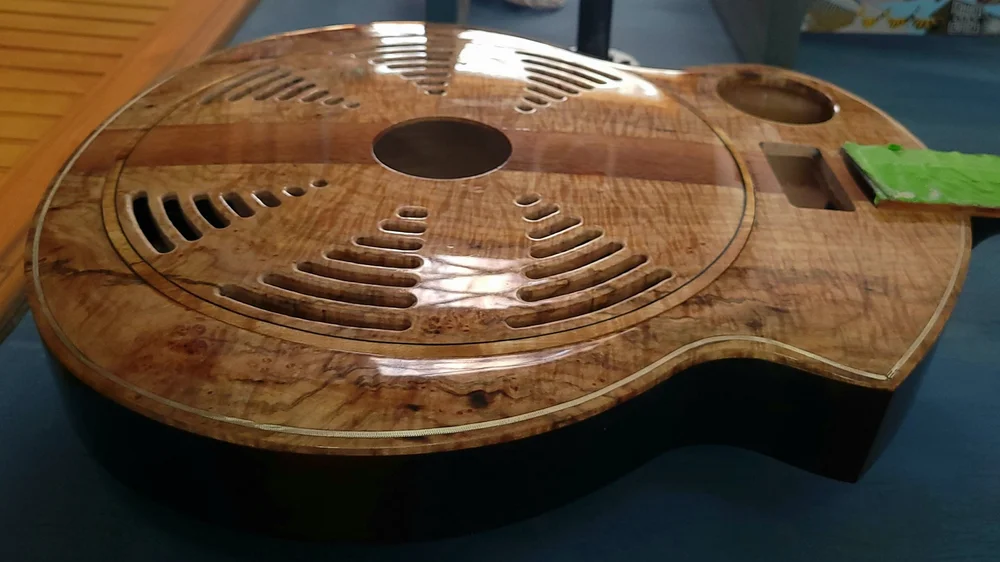
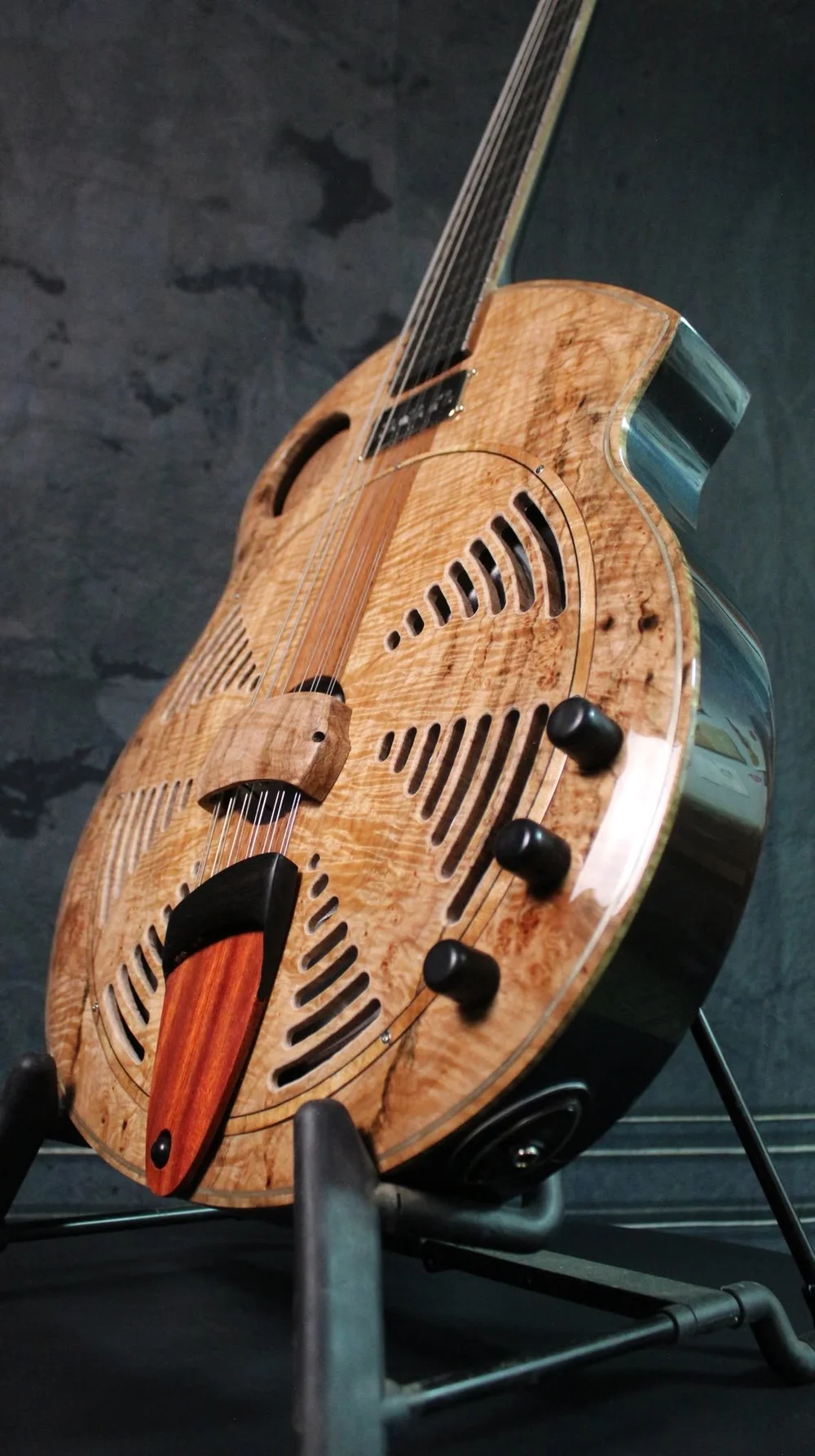
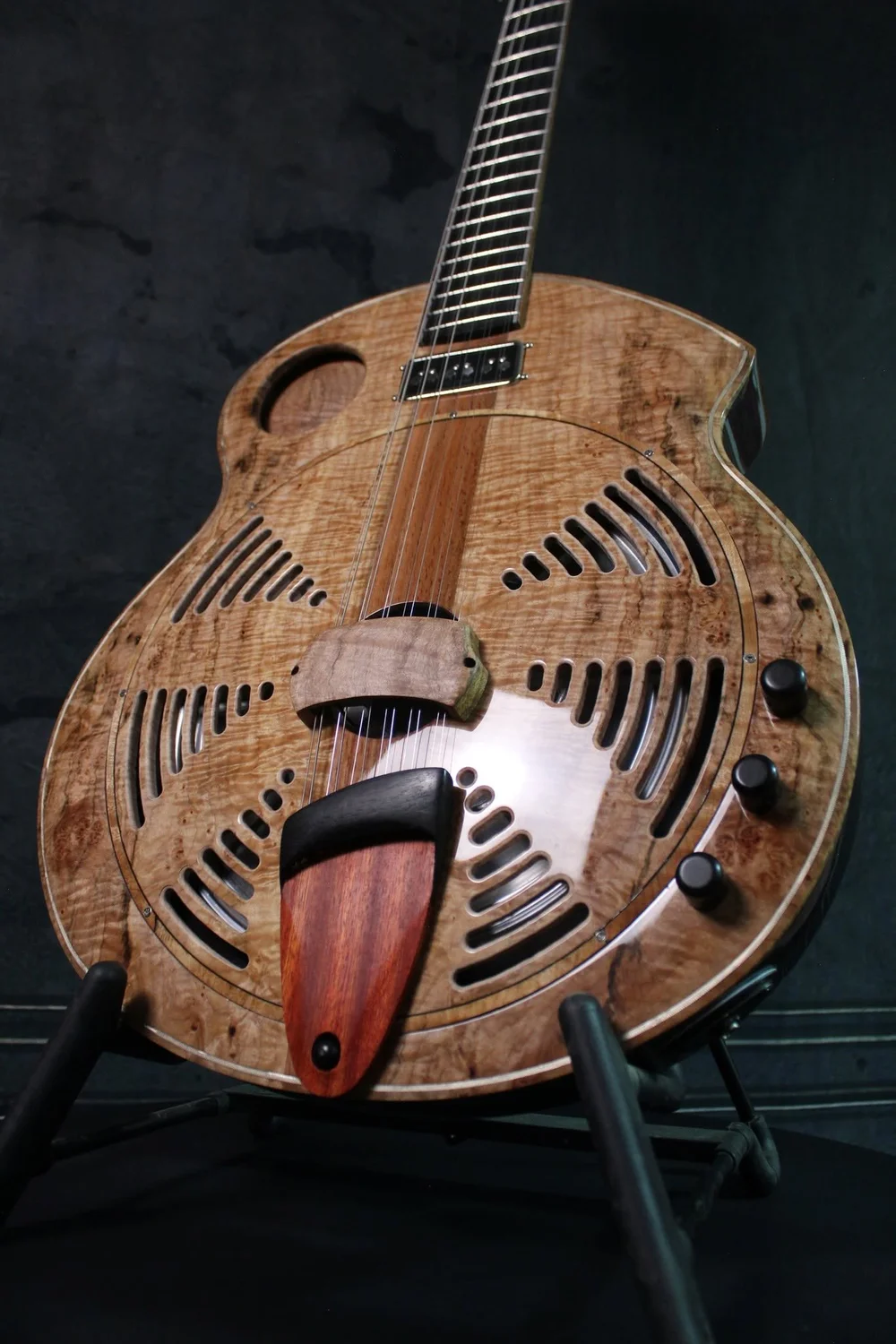
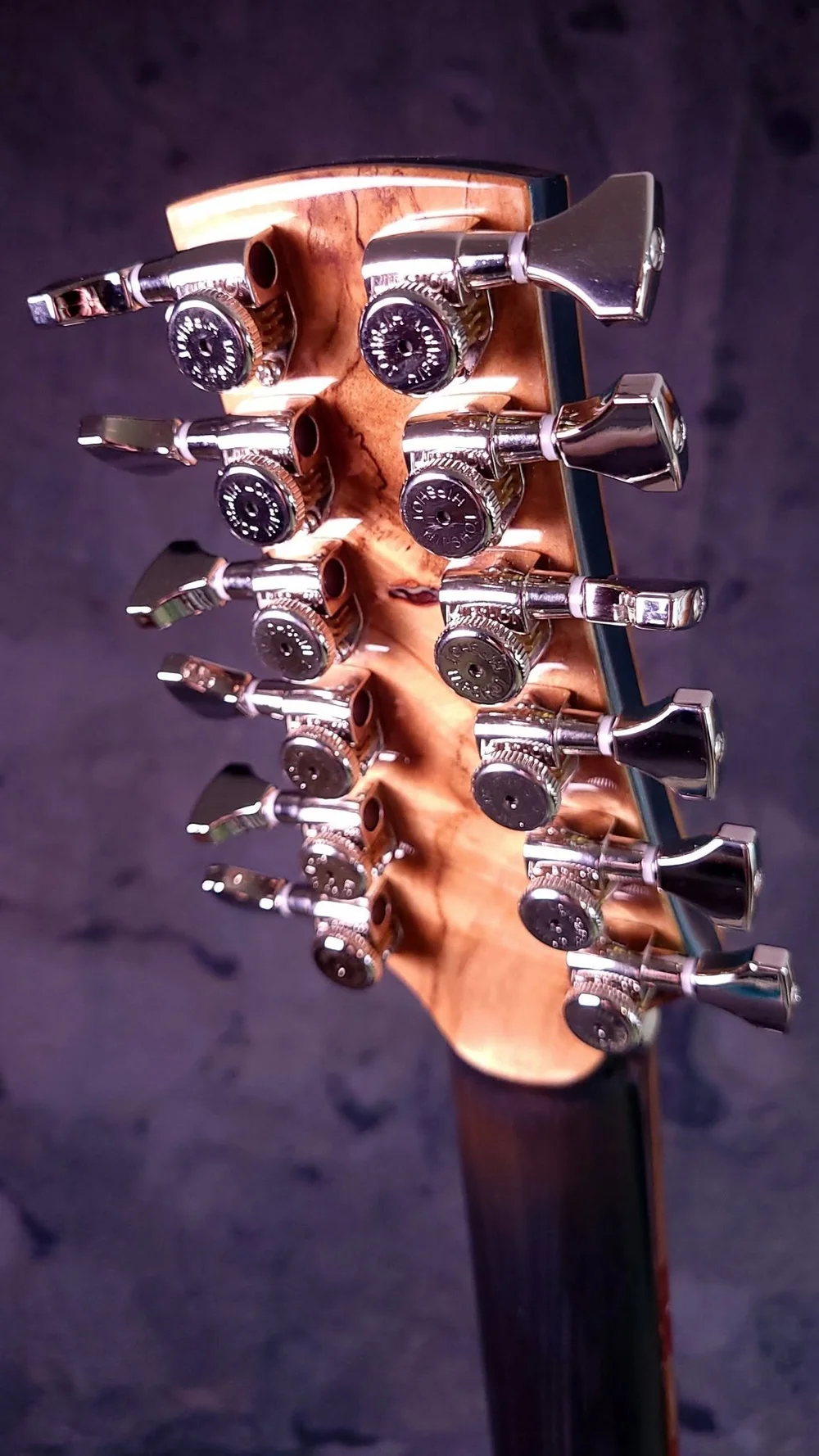
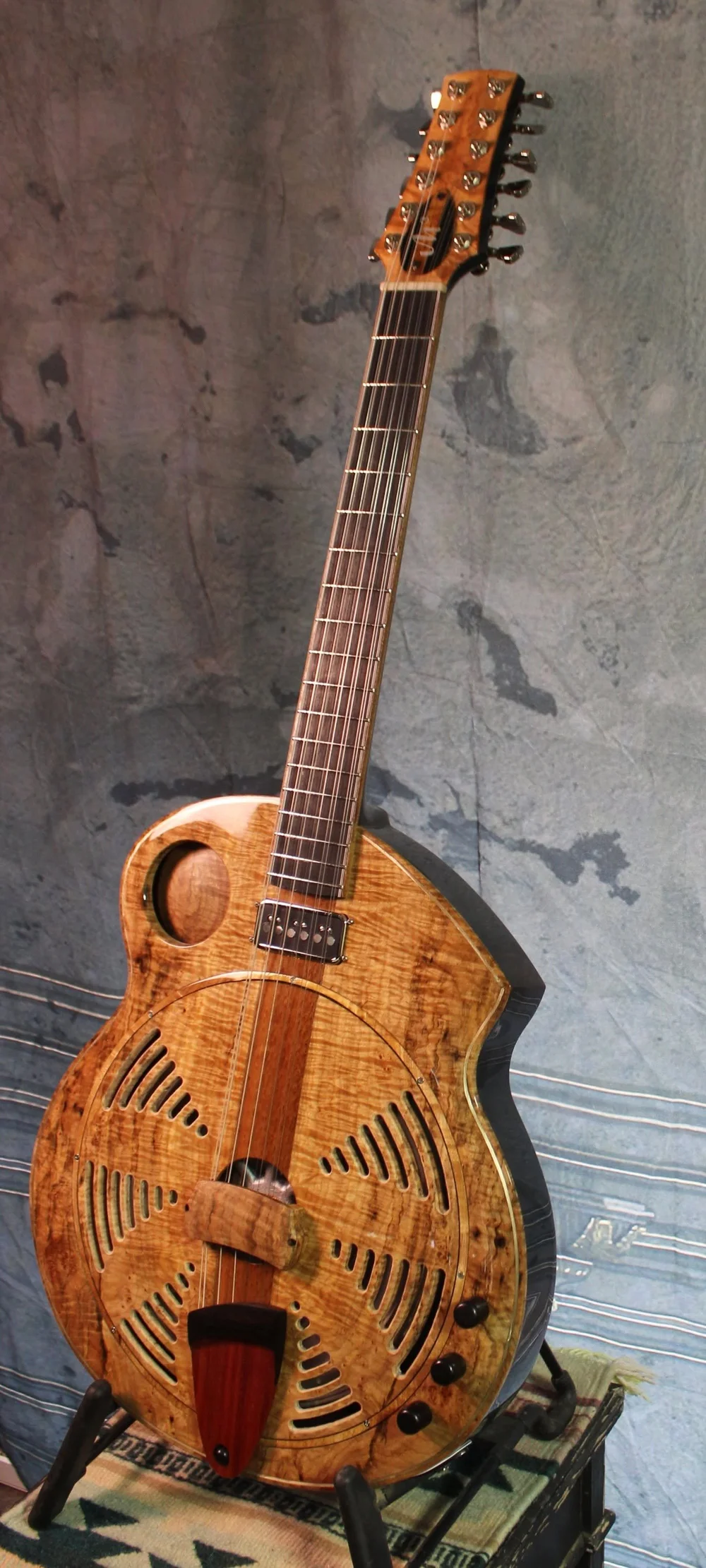
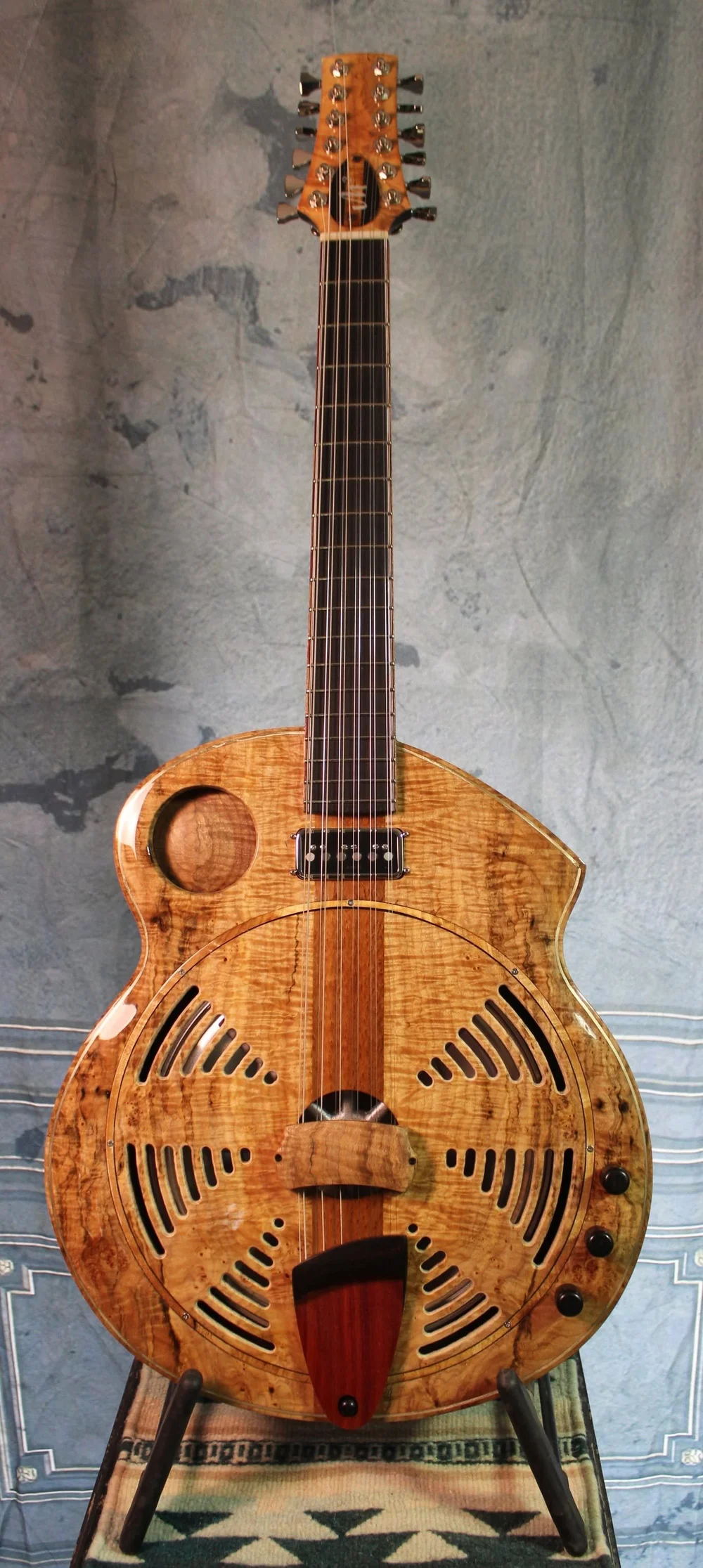
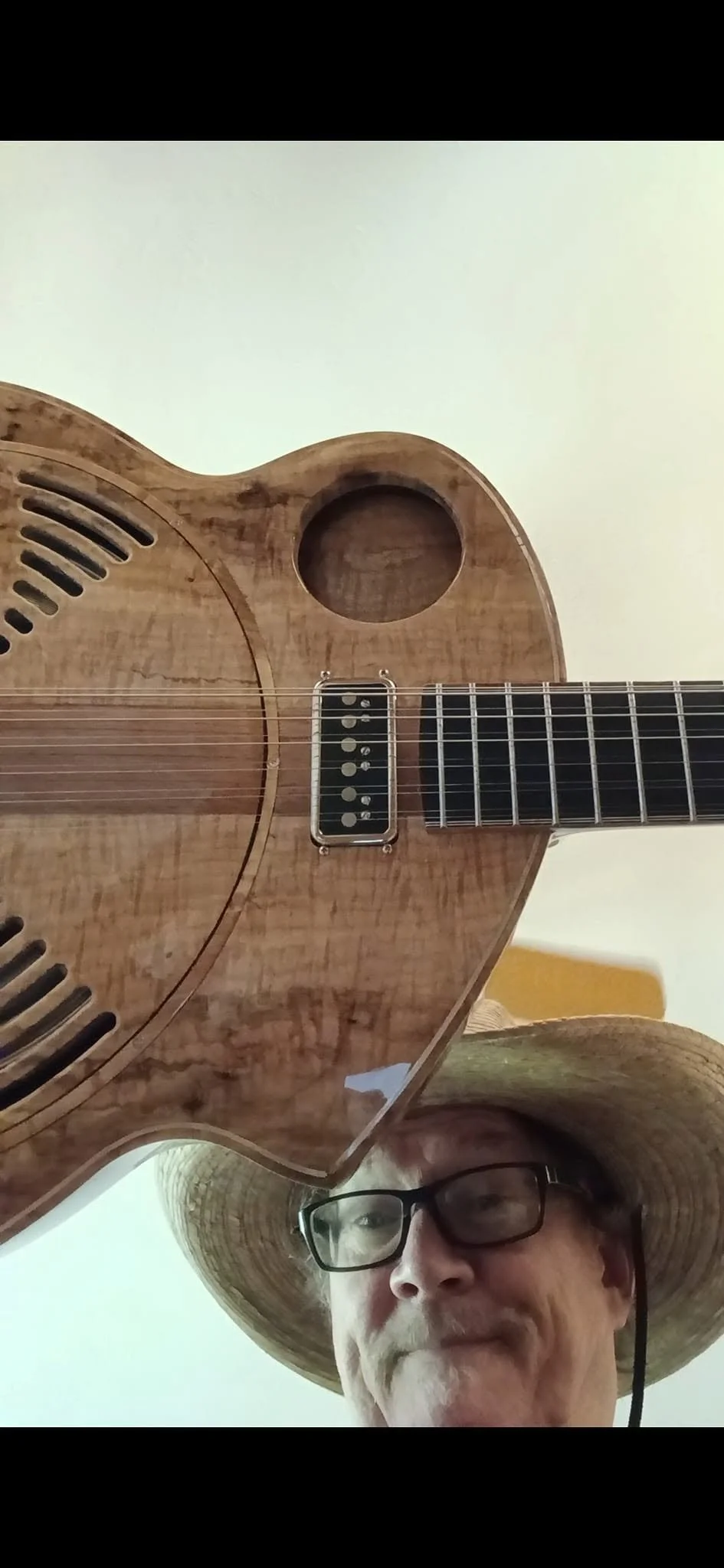
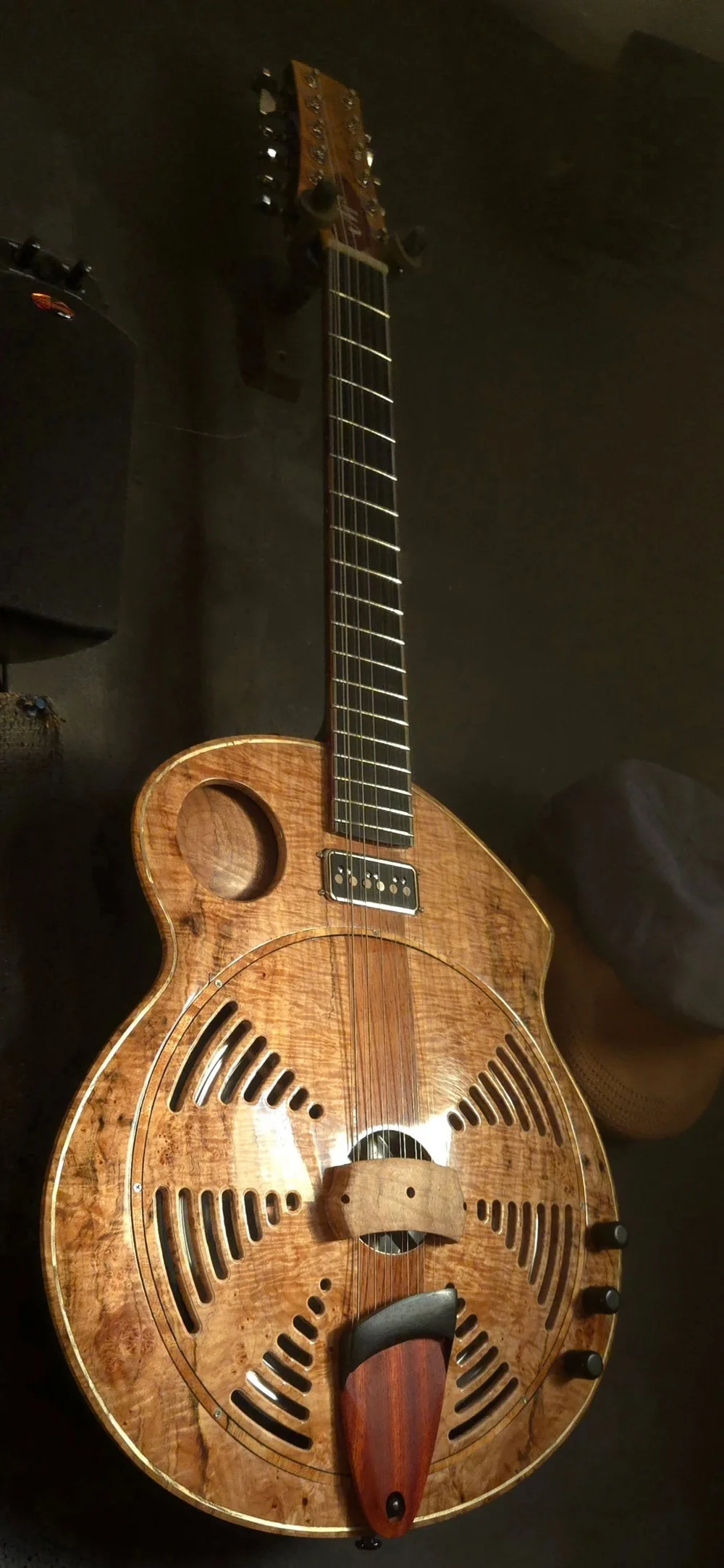
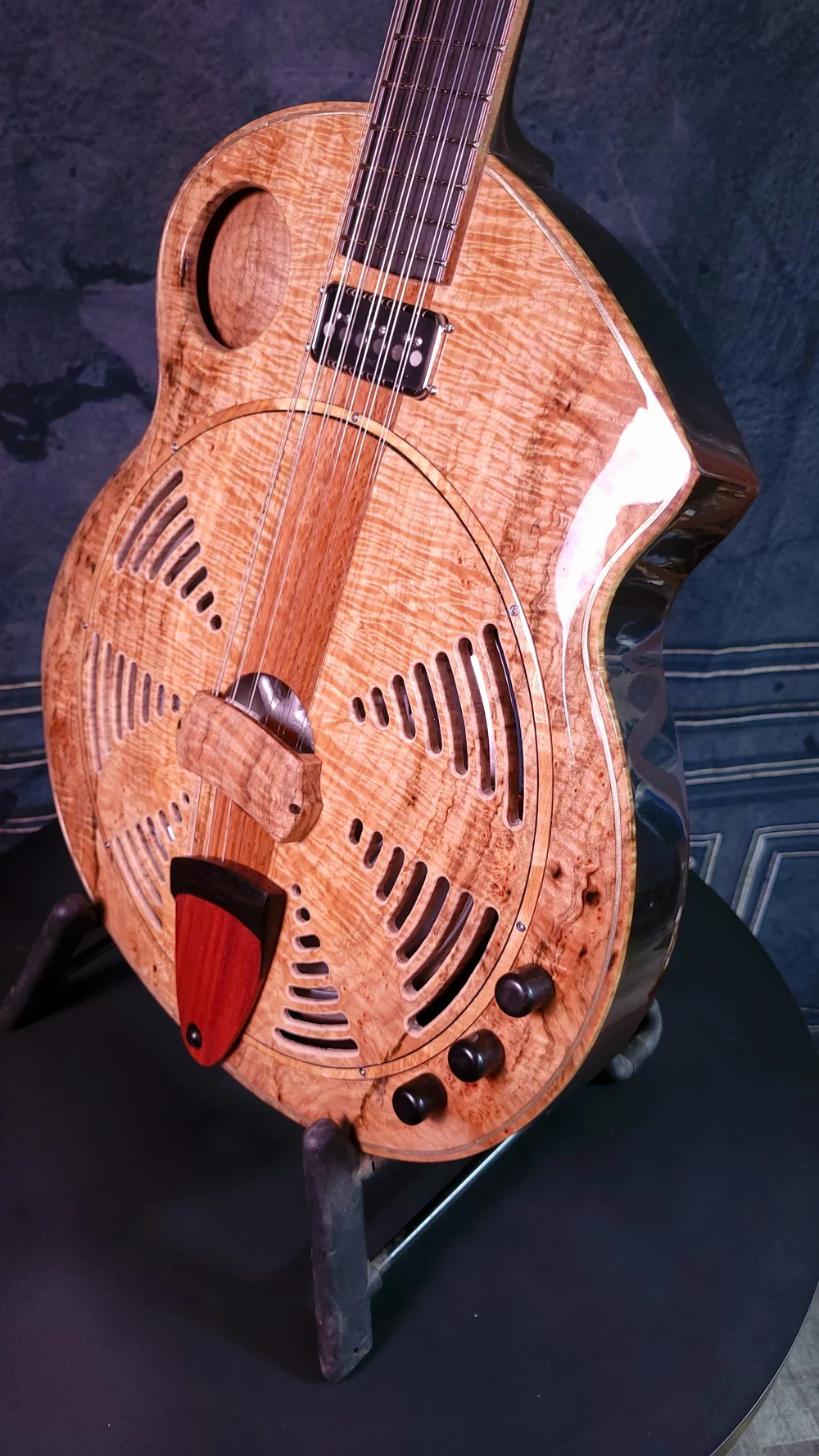
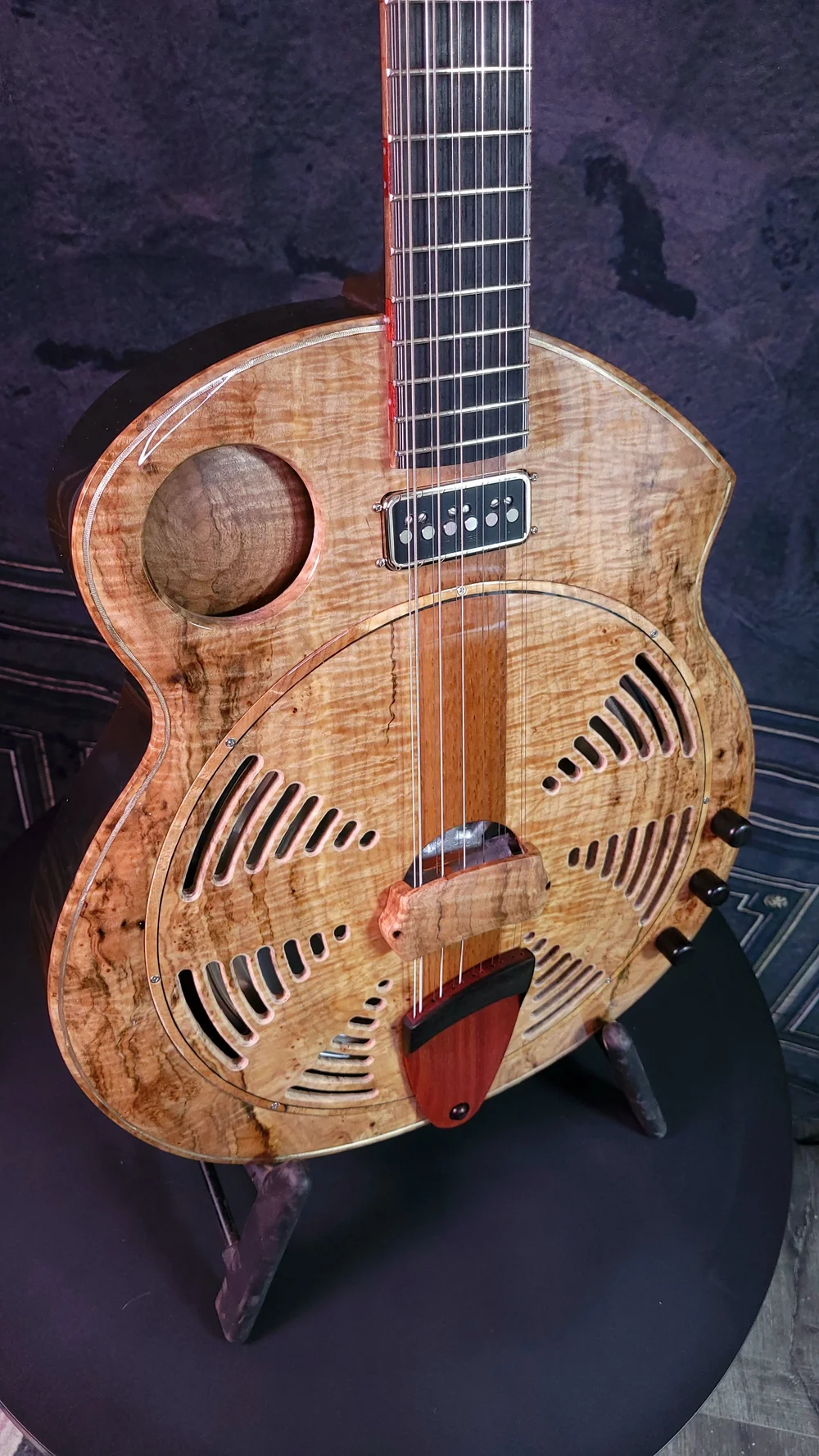
The Bullfrog 12
The first thing it ever played
Orbelín and the Black Widow — a late mix
Bullfrog 12 Bullfrog 12 Bullfrog 12 Bullfrog 12 Bullfrog 12 Bullfrog 12 Bullfrog 12 Bullfrog 12 Bullfrog 12 Bullfrog 12 Bullfrog 12 Bullfrog 12 Bullfrog 12 Bullfrog 12 Bullfrog 12 Bullfrog 12 Bullfrog 12 Bullfrog 12 Bullfrog 12 Bullfrog 12 Bullfrog 12 Bullfrog 12 Bullfrog 12 Bullfrog 12 Bullfrog 12 Bullfrog 12 Bullfrog 12 Bullfrog 12 Bullfrog 12 Bullfrog 12 Bullfrog 12 Bullfrog 12 Bullfrog 12 Bullfrog 12 Bullfrog 12 Bullfrog 12 Bullfrog 12 Bullfrog 12 Bullfrog 12

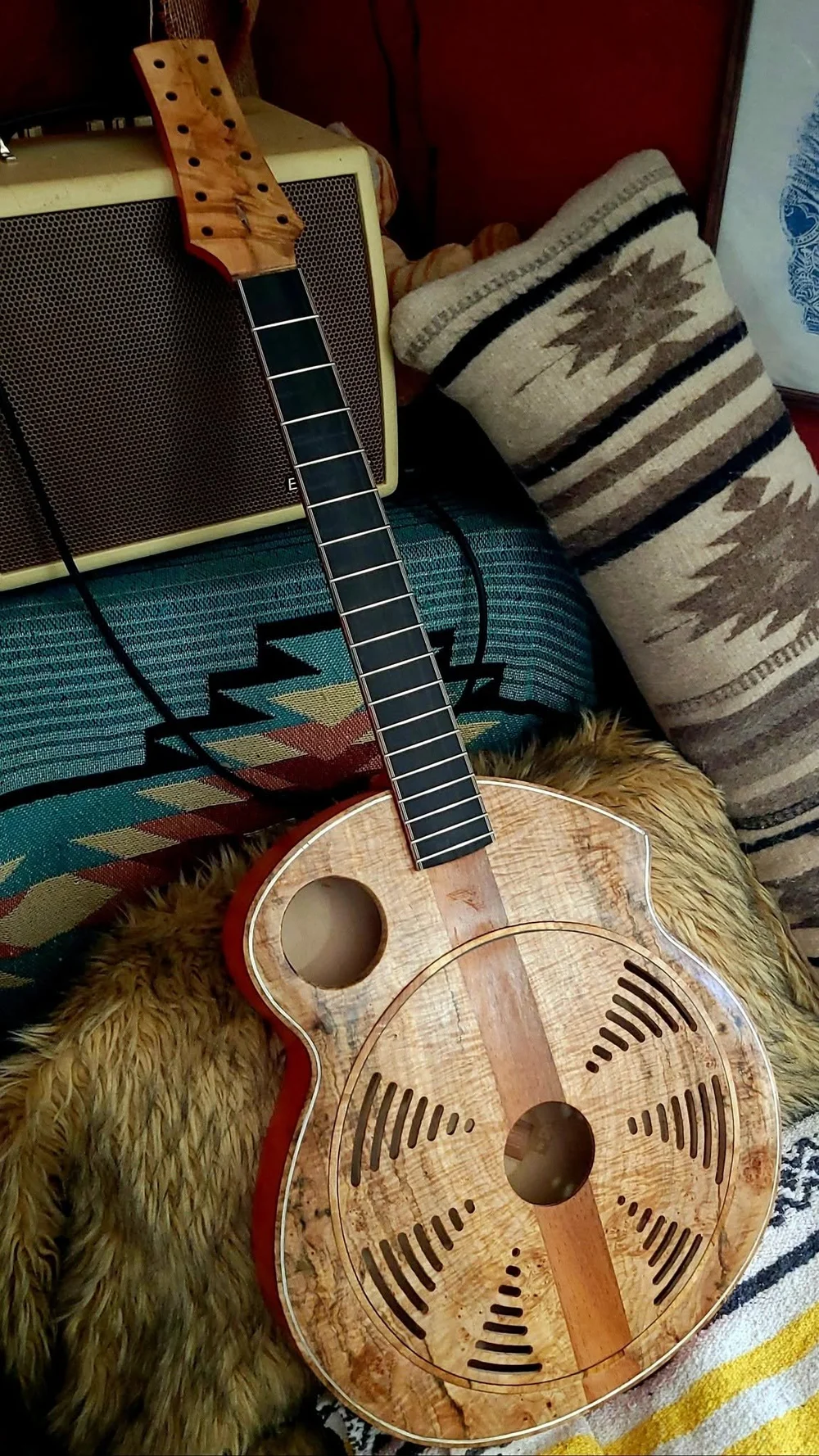
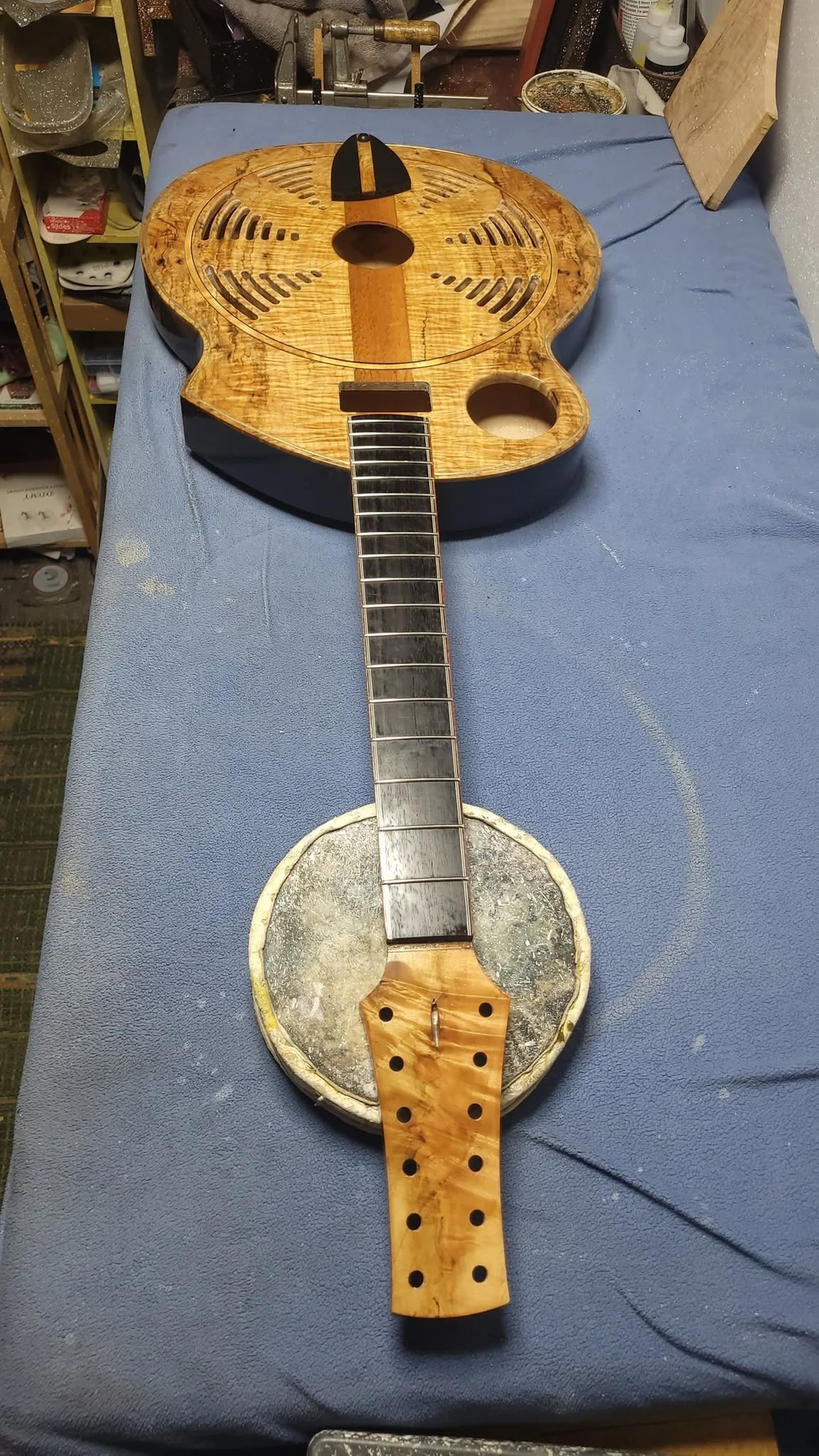
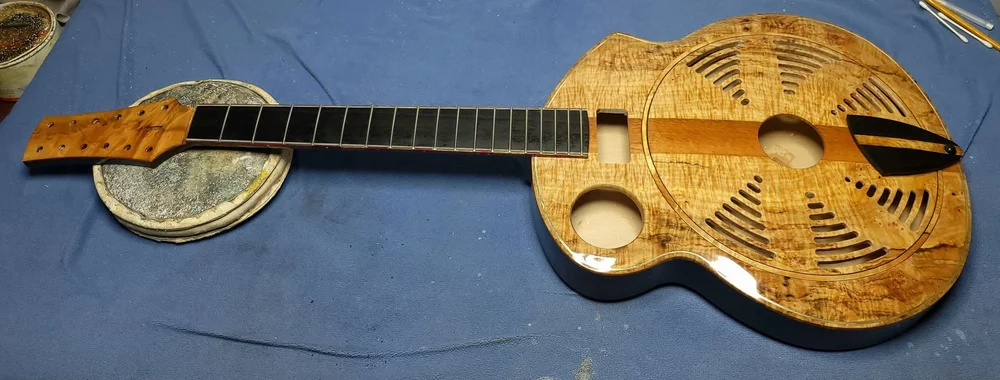
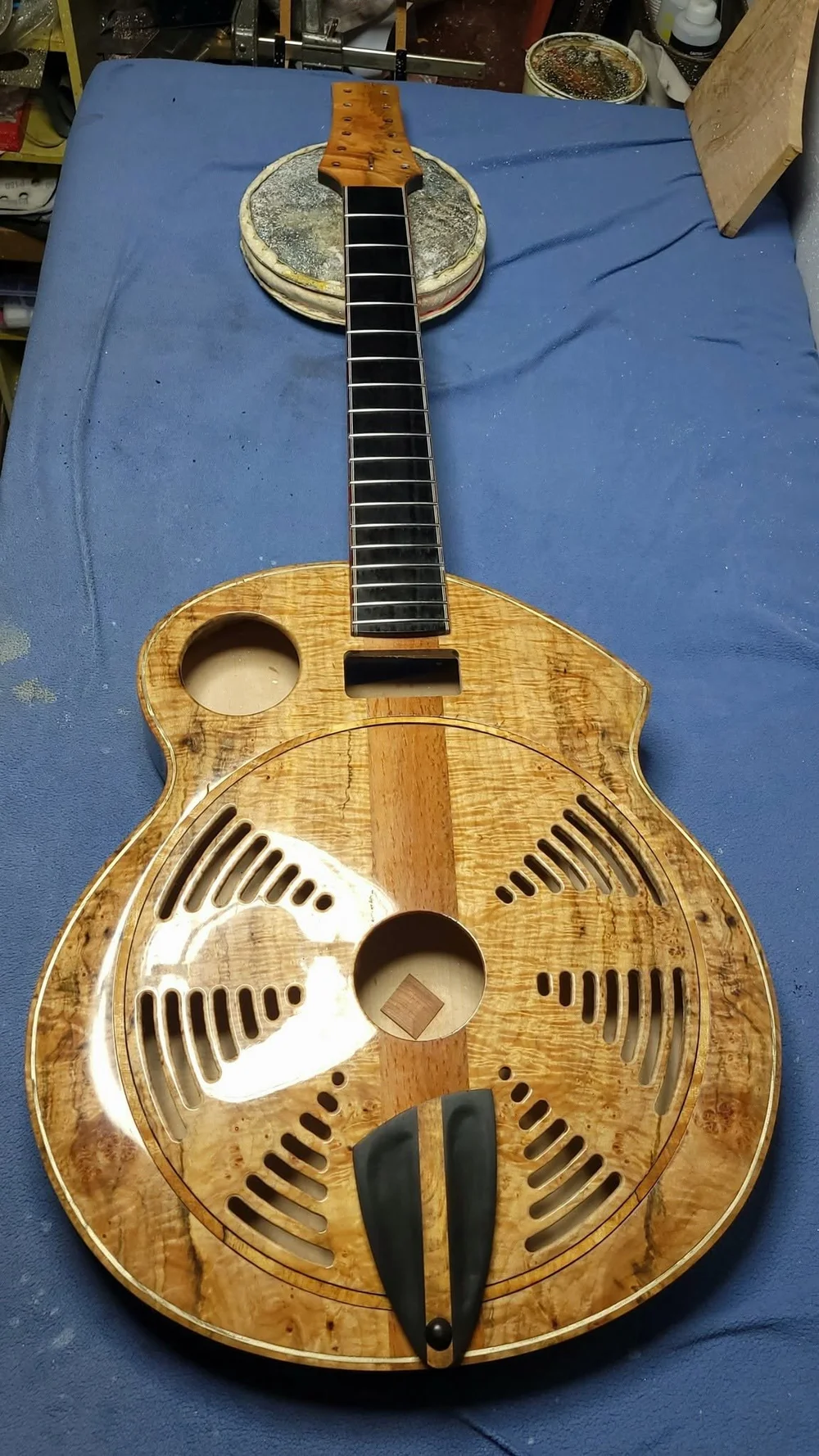
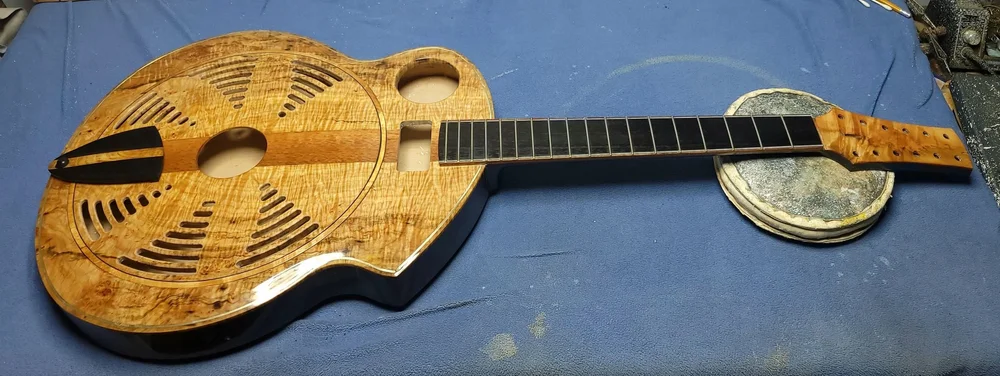
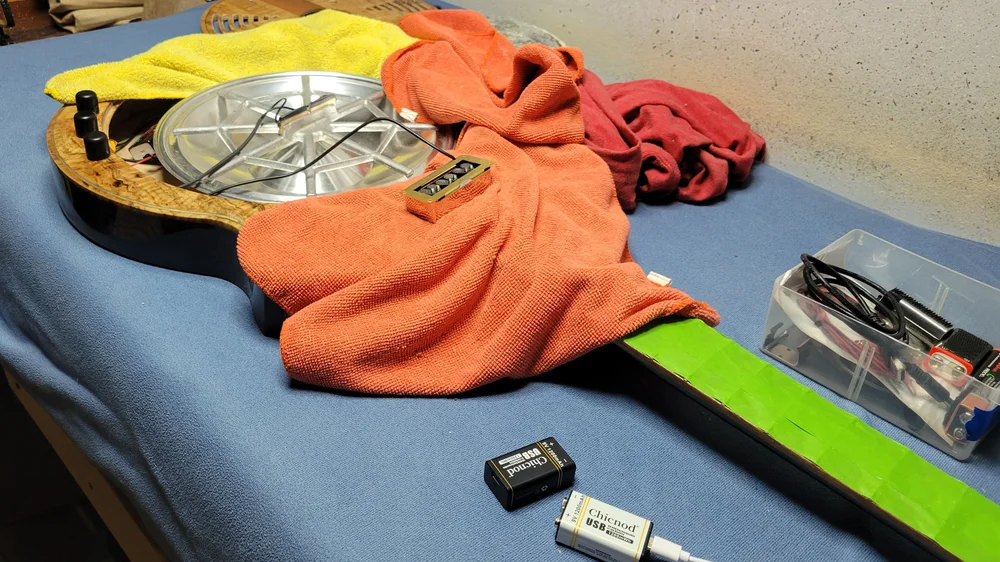
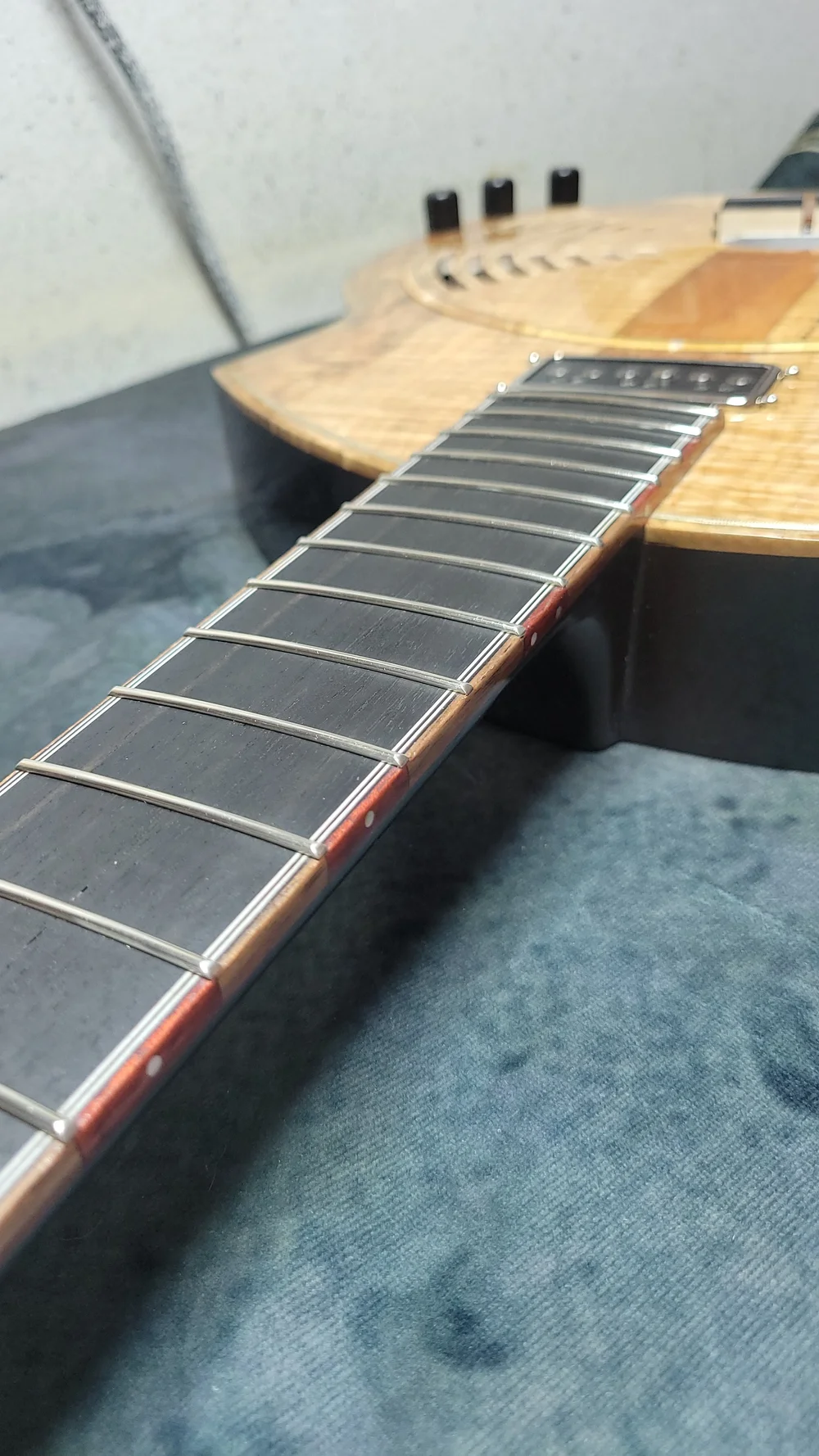
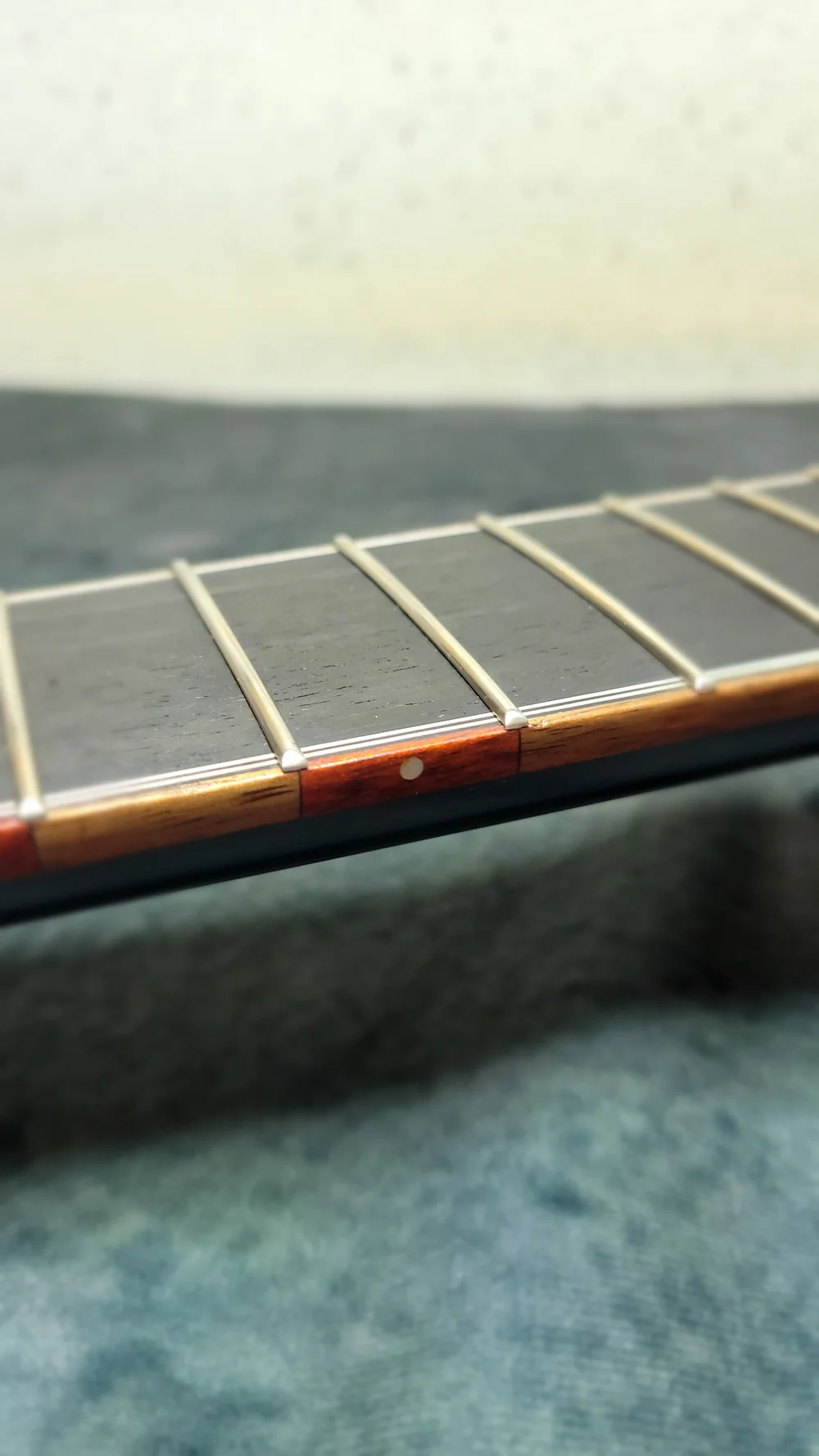
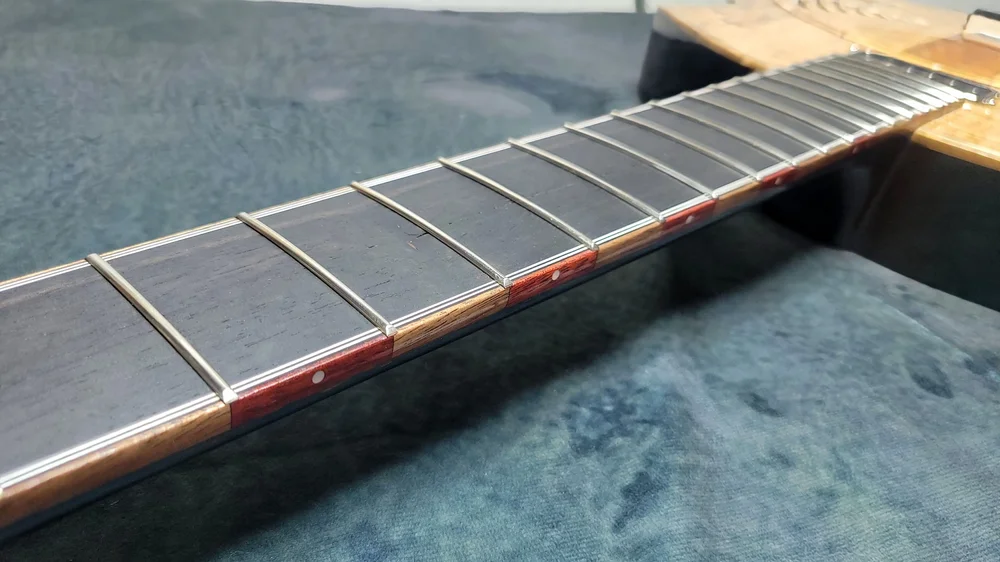
Pre-fitting
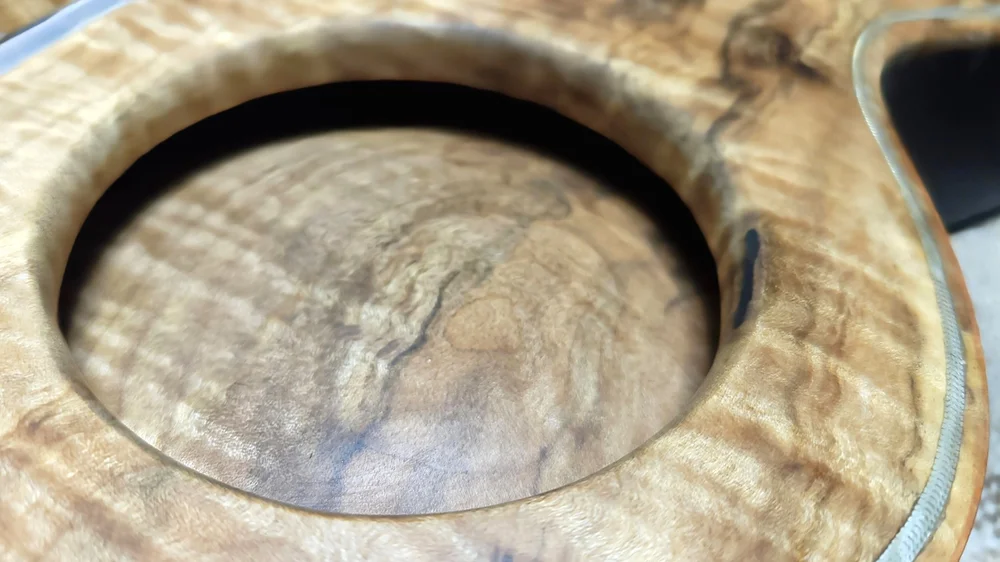
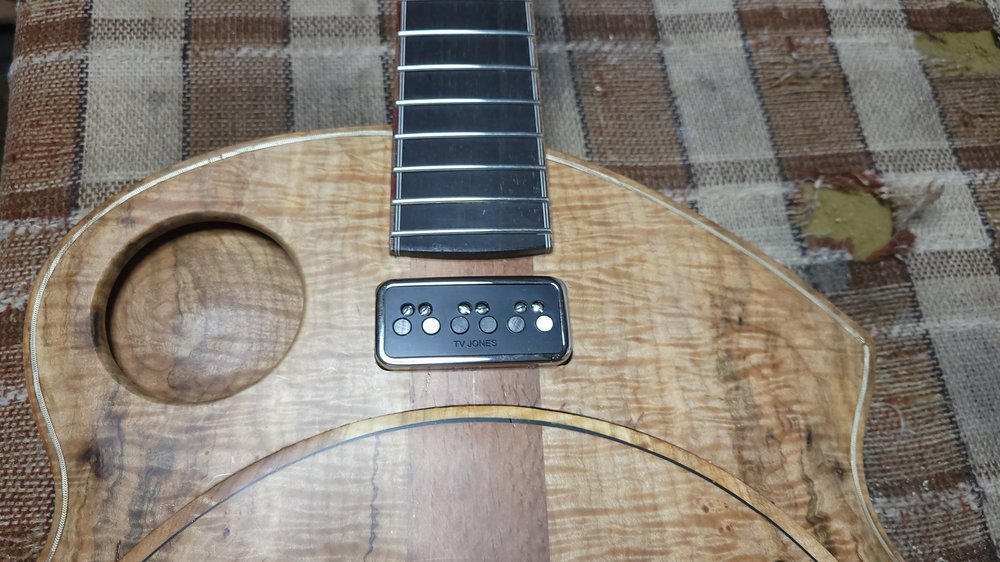
Shaped, sanded, sealed — not yet fretted
Bullfrog 12 Bullfrog 12 Bullfrog 12 Bullfrog 12 Bullfrog 12 Bullfrog 12 Bullfrog 12 Bullfrog 12 Bullfrog 12 Bullfrog 12 Bullfrog 12 Bullfrog 12 Bullfrog 12 Bullfrog 12 Bullfrog 12 Bullfrog 12 Bullfrog 12 Bullfrog 12 Bullfrog 12 Bullfrog 12 Bullfrog 12 Bullfrog 12 Bullfrog 12